
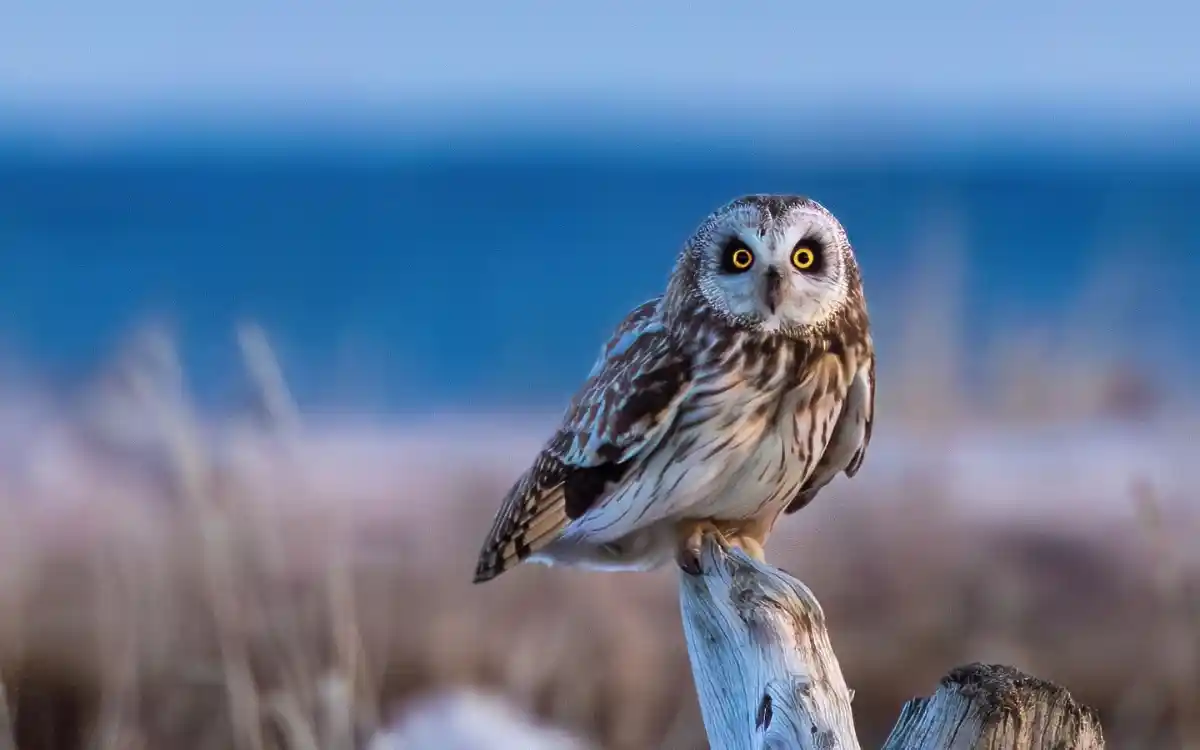
Alaska is one of the best places in North America to observe birds of prey in their natural habitat. With vast wilderness, rugged coastlines, tundra, and dense forests, the state supports an impressive variety of raptors, including eagles, hawks, falcons, owls, and vultures.
These powerful hunters play a vital role in Alaska’s ecosystem, controlling prey populations and indicating environmental health.
This guide highlights 22 birds of prey in Alaska, focusing on identification, habitats, and hunting behaviour for easy year-round recognition.
1. Red-tailed Hawk
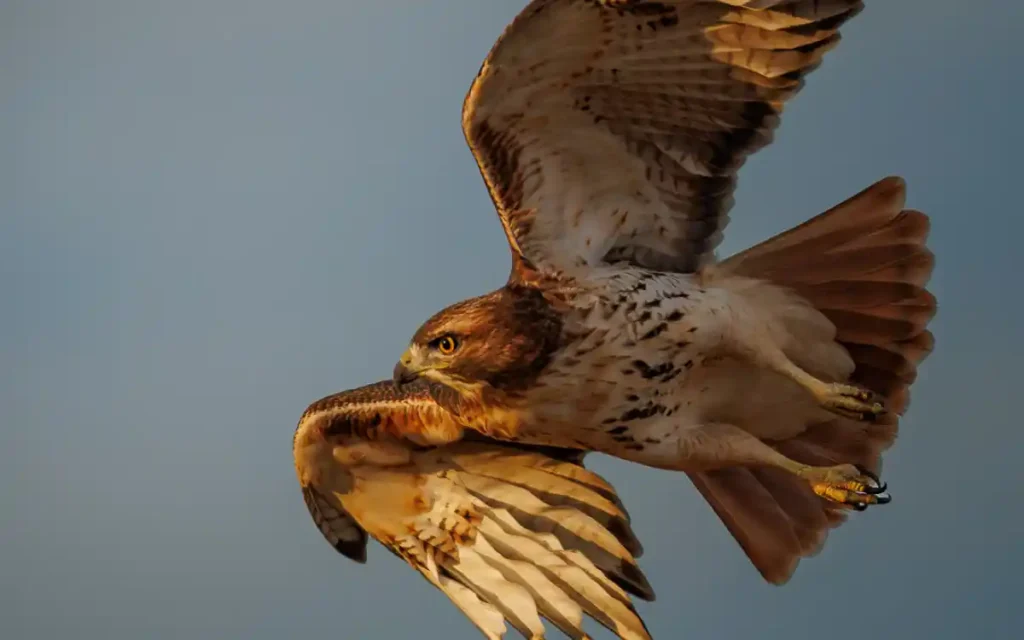
Red-tailed Hawks are one of the most recognizable raptors in Alaska, often seen soaring above highways, open valleys, and forest edges. Their broad wings and slow circling flight make them easy to spot.
In Alaska, they rely heavily on small mammals like voles and ground squirrels. During colder months, some individuals migrate south, while others remain where food is available.
- Scientific Name: Buteo jamaicensis
- Length: 18–26 inches
- Weight: 1.5–3.5 pounds
- Wingspan: 3.5–4.8 feet
2. Sharp-shinned Hawk
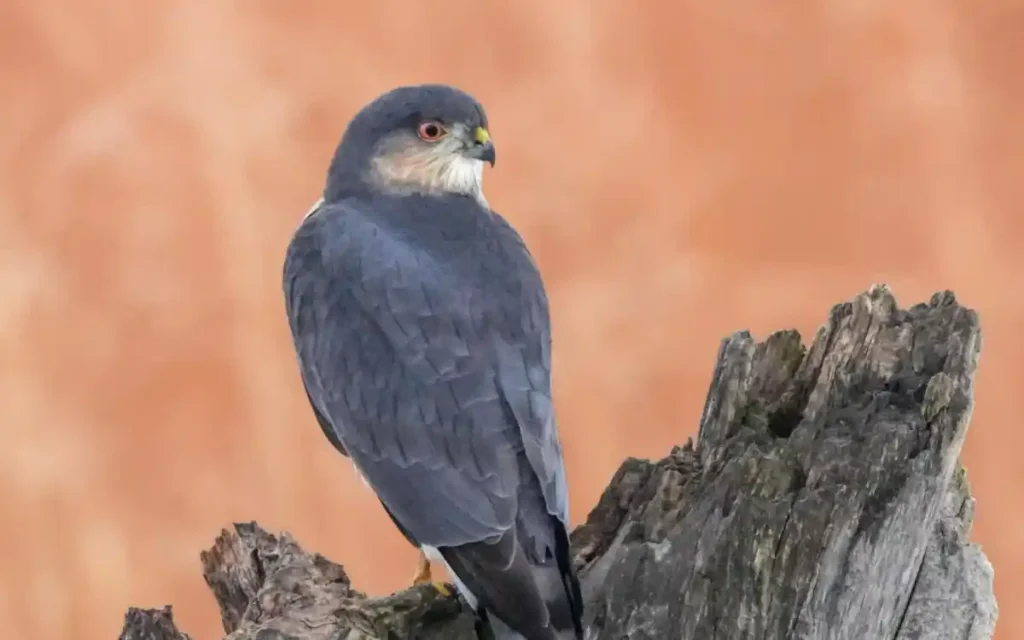
This small but fierce hawk is a forest specialist. Sharp-shinned Hawks are built for speed and agility, allowing them to chase songbirds through dense trees. In Alaska, they are most commonly seen during migration, though some breed in wooded areas. Their quick wingbeats and long tail help them maneuver with precision.
- Scientific Name: Accipiter striatus
- Length: 9–13 inches
- Weight: 3–8 ounces
- Wingspan: 1.5–2.3 feet
3. Northern Goshawk
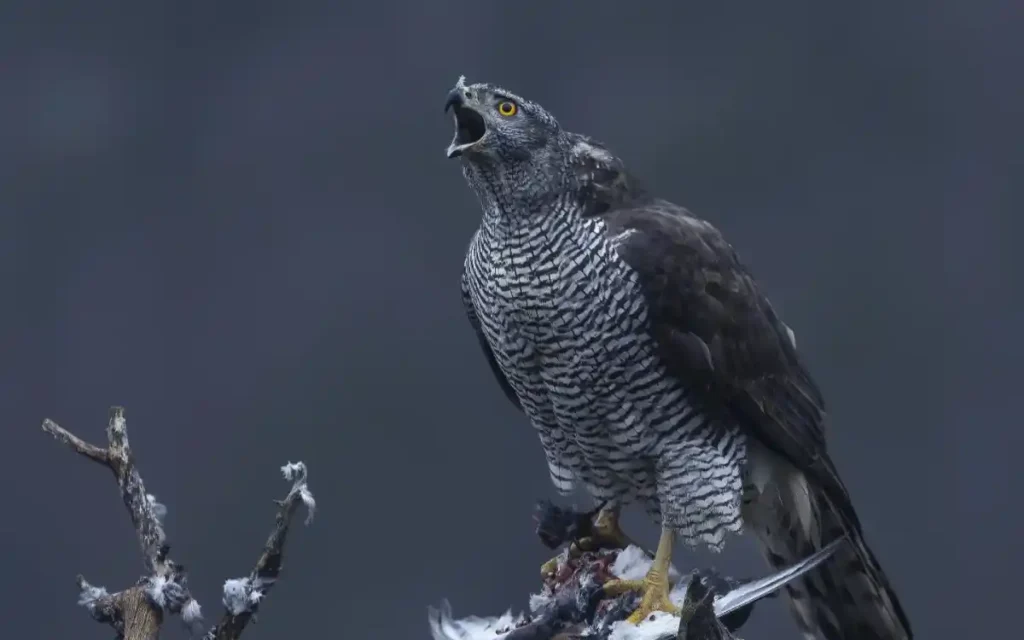
The Northern Goshawk is the largest accipiter in Alaska and a powerful predator. It prefers mature forests where it hunts grouse, hares, and squirrels. Known for its bold nature, this hawk will aggressively defend its nest. Its gray plumage and striking red eyes give it an intense appearance.
- Scientific Name: Accipiter gentilis
- Length: 20–25 inches
- Weight: 1.4–3 pounds
- Wingspan: 3.3–4 feet
4. Northern Harrier
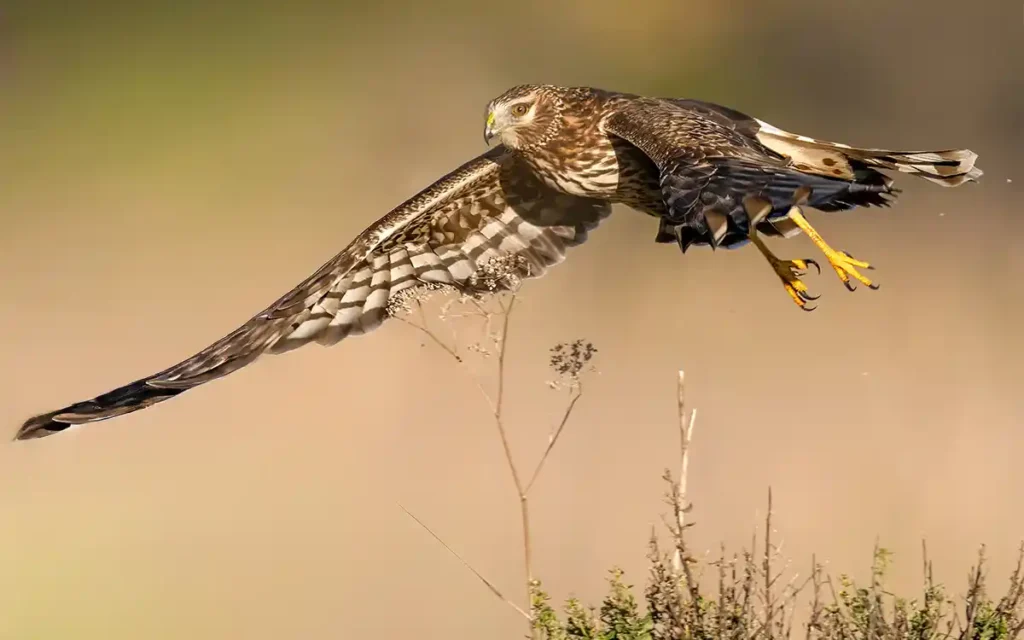
Northern Harriers are unique among hawks because they hunt by flying low over open ground while listening for prey. Their facial disk helps funnel sound, similar to owls. In Alaska, they are often seen over tundra, wetlands, and grasslands, gliding gracefully with wings held in a shallow V-shape.
- Scientific Name: Circus hudsonius
- Length: 16–20 inches
- Weight: 10–26 ounces
- Wingspan: 3.3–3.9 feet
5. Rough-legged Hawk
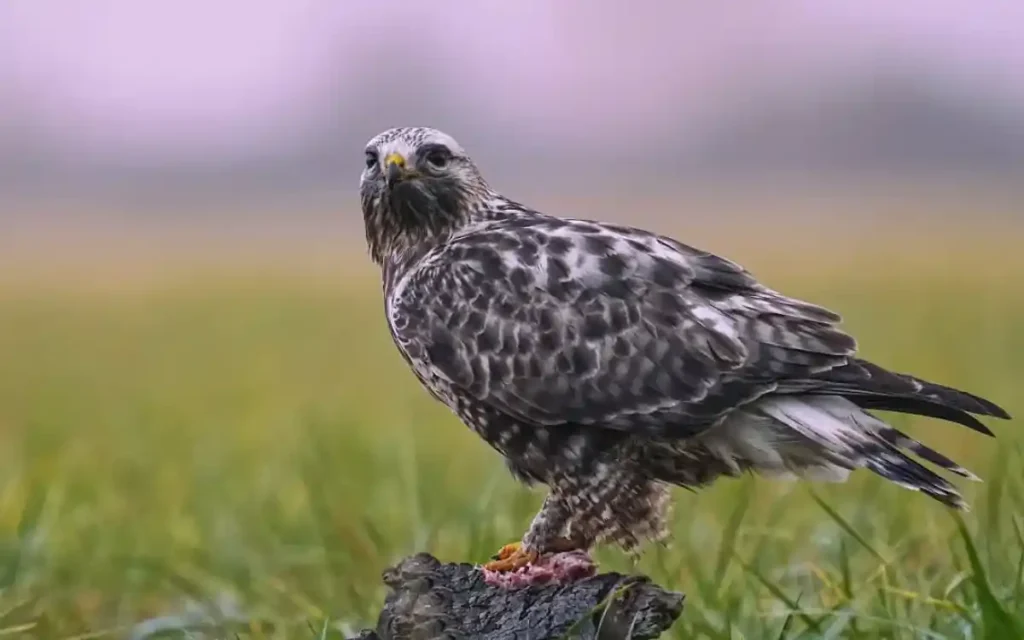
This hawk is perfectly adapted to Arctic conditions. Rough-legged Hawks breed in northern Alaska and migrate south in winter. Their feathered legs provide insulation against cold temperatures. They often hover in place while scanning for rodents, a behavior that makes them stand out from other hawks.
- Scientific Name: Buteo lagopus
- Length: 18–24 inches
- Weight: 1.5–3 pounds
- Wingspan: 4.3–4.9 feet
6. Osprey
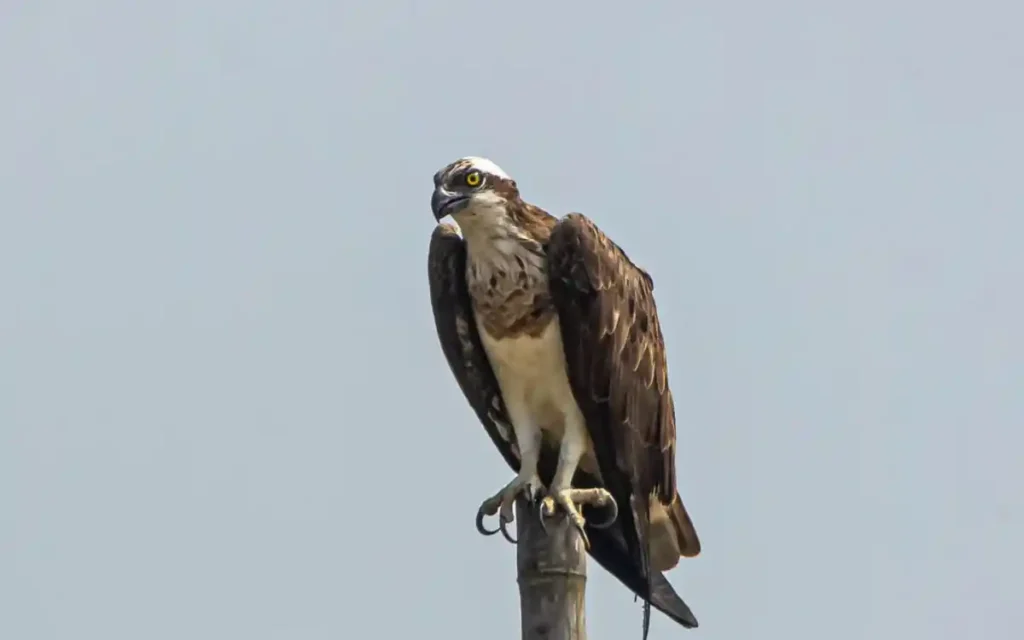
Ospreys are fish specialists and are most often found near rivers, lakes, and coastal waters in Alaska. They dive feet-first into water to catch fish with their curved talons. Their reversible outer toes help grip slippery prey, making them one of the most efficient fishing raptors.
- Scientific Name: Pandion haliaetus
- Length: 21–24 inches
- Weight: 2–4.5 pounds
- Wingspan: 5–6 feet
7. Great Horned Owl
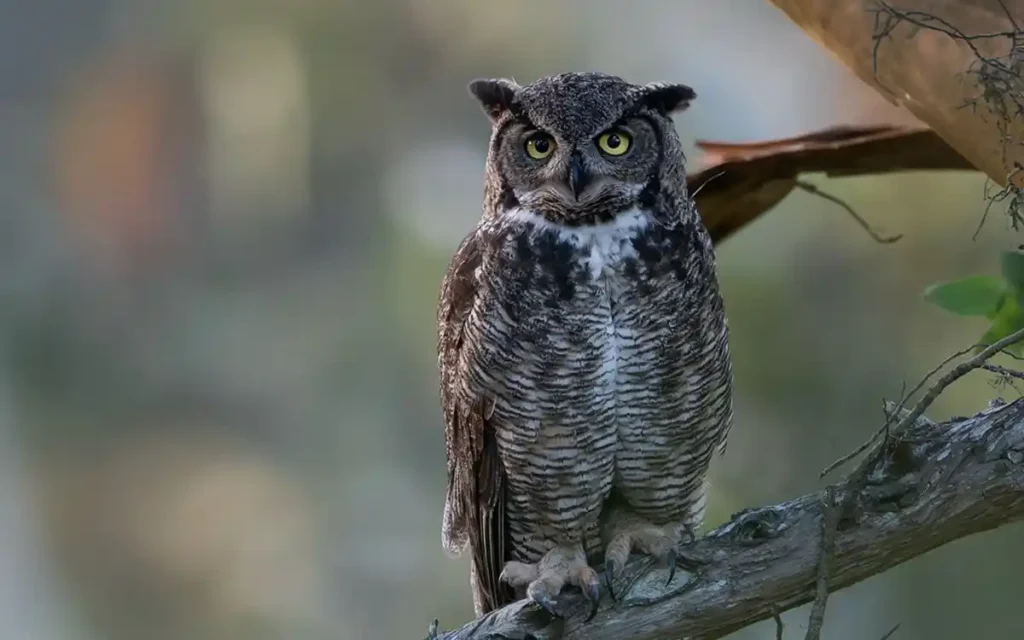
This powerful owl is a year-round resident in much of Alaska. Great Horned Owls are known for their deep hooting calls and impressive strength. They hunt a wide range of prey, including rabbits, birds, and even other raptors. Their feather tufts resemble horns, giving them their name.
- Scientific Name: Bubo virginianus
- Length: 18–25 inches
- Weight: 2–5.5 pounds
- Wingspan: 3.3–4.8 feet
8. Barred Owl
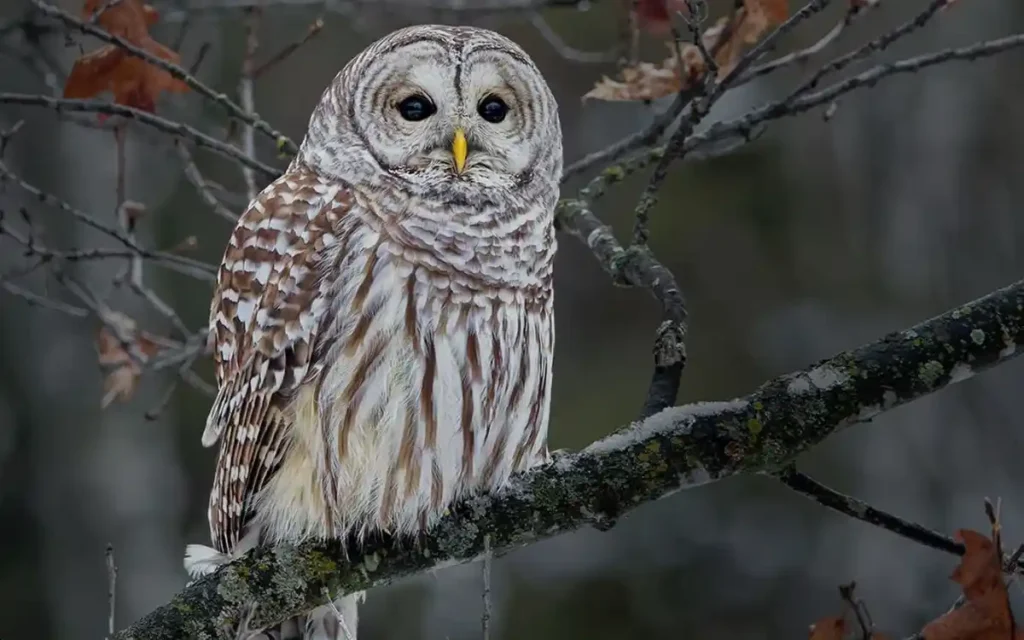
Barred Owls are slowly expanding their range into Alaska. They prefer dense forests near water and are highly vocal, especially at night. Their rounded head, dark eyes, and barred chest pattern make them distinctive. These owls are adaptable hunters that feed on small mammals and birds.
- Scientific Name: Strix varia
- Length: 16–25 inches
- Weight: 1–2.3 pounds
- Wingspan: 3.3–3.7 feet
9. Western Screech-Owl
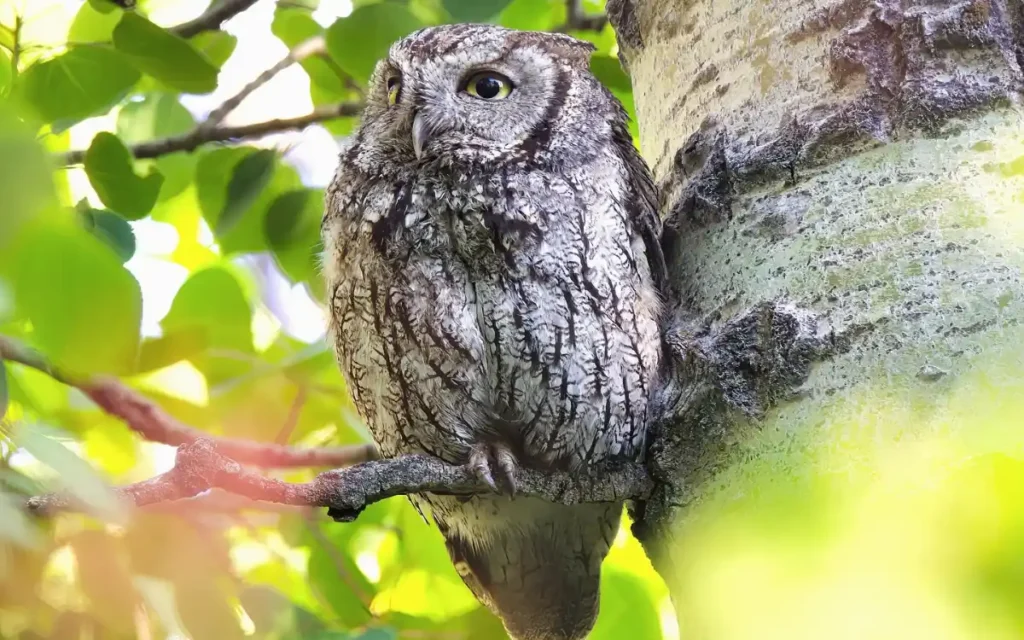
This small owl is rarely seen due to its nocturnal habits and excellent camouflage. Western Screech-Owls inhabit forested areas and wooded suburbs in southern Alaska. Despite their name, they produce soft trills rather than screeches. They feed on insects, rodents, and small birds.
- Scientific Name: Megascops kennicottii
- Length: 7–10 inches
- Weight: 5–9 ounces
- Wingspan: 1.5–2 feet
10. Snowy Owl
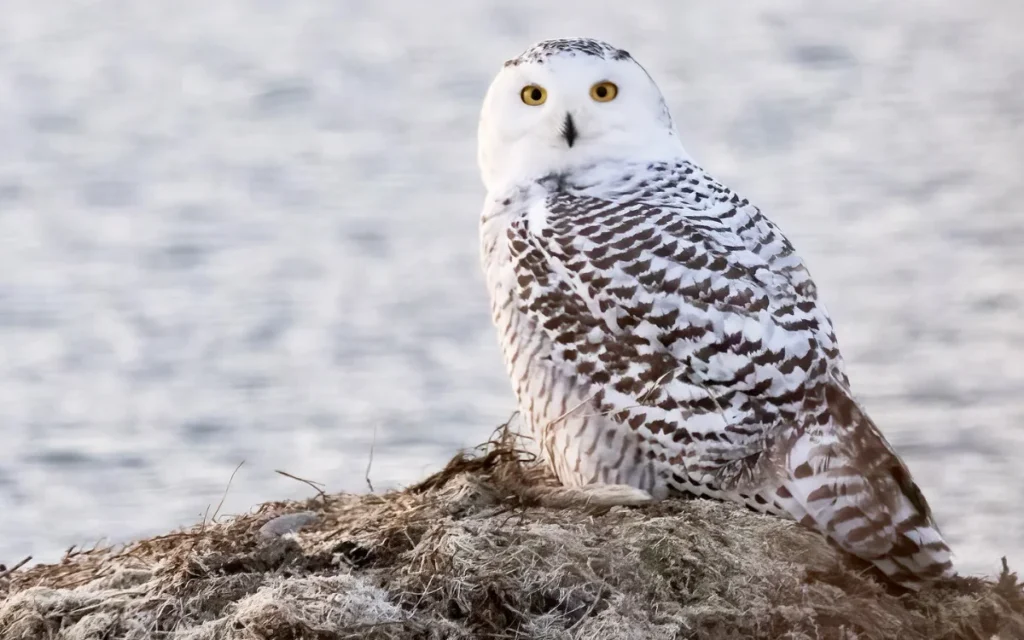
Snowy Owls are iconic Arctic birds that breed in northern Alaska’s tundra. Their white plumage blends perfectly with snowy landscapes. Unlike most owls, they are active during the day. Their presence often depends on lemming populations, which drive breeding success.
- Scientific Name: Bubo scandiacus
- Length: 20–28 inches
- Weight: 3–6.5 pounds
- Wingspan: 4.2–4.8 feet
11. Great Gray Owl
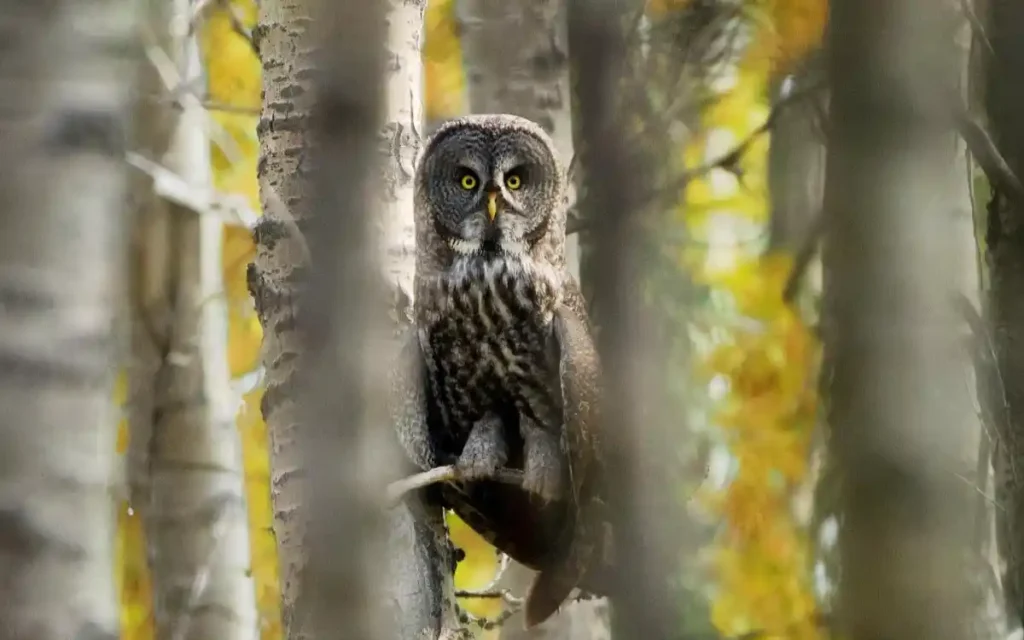
Often called the “phantom of the forest,” the Great Gray Owl is one of the tallest owls in North America. Its large facial disk helps it detect prey beneath deep snow. In Alaska, it lives in boreal forests and hunts mainly voles and small mammals.
- Scientific Name: Strix nebulosa
- Length: 24–33 inches
- Weight: 1.6–4 pounds
- Wingspan: 4.6–5 feet
12. Northern Saw-whet Owl
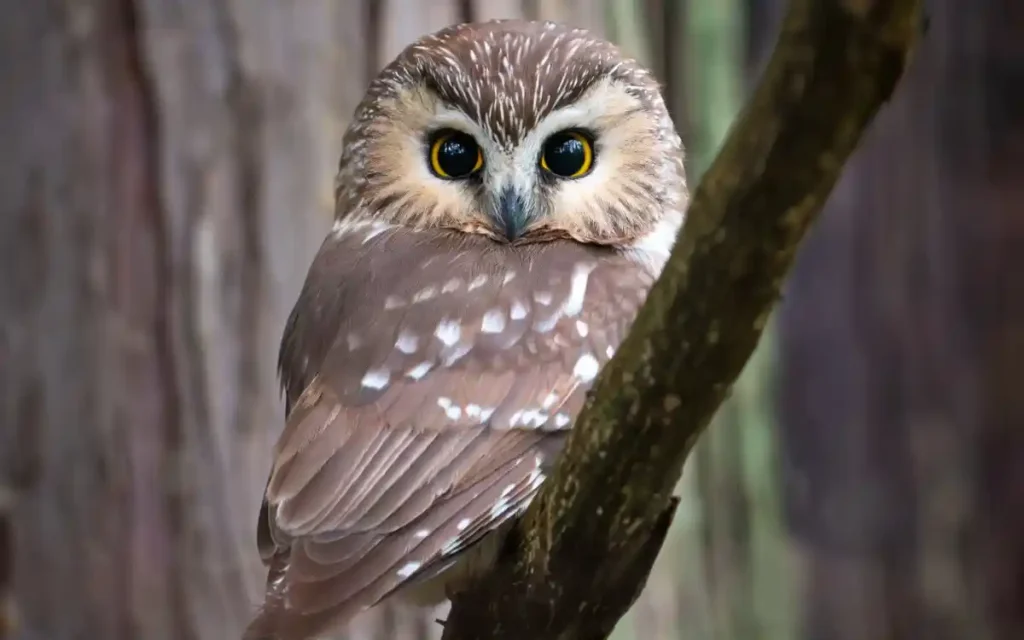
This tiny owl is more often heard than seen. Its repetitive call resembles a sharpening saw, giving it its name. Northern Saw-whet Owls migrate through Alaska and favor dense forests. They prey on insects and small rodents and are extremely well-camouflaged.
- Scientific Name: Aegolius acadicus
- Length: 7–9 inches
- Weight: 2–5 ounces
- Wingspan: 1.4–1.8 feet
13. Northern Pygmy-Owl
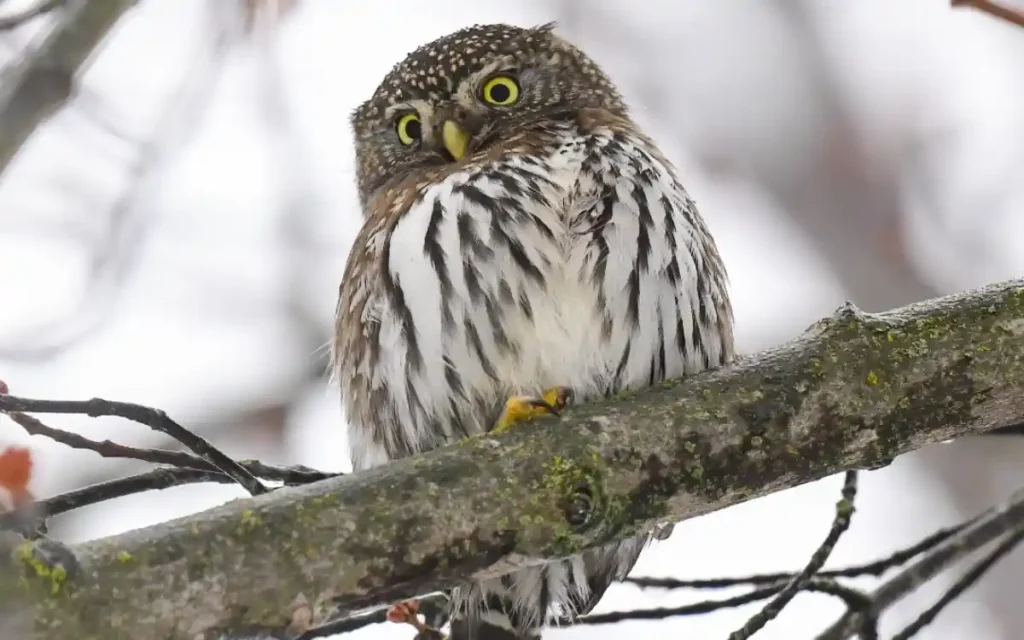
Despite its small size, this owl is an aggressive hunter. Northern Pygmy-Owls hunt during daylight and often take prey larger than expected. In Alaska, they inhabit coniferous forests and are known for the false “eye spots” on the back of their head.
- Scientific Name: Glaucidium gnoma
- Length: 6–7 inches
- Weight: 2–3 ounces
- Wingspan: 1.3–1.6 feet
14. Boreal Owl
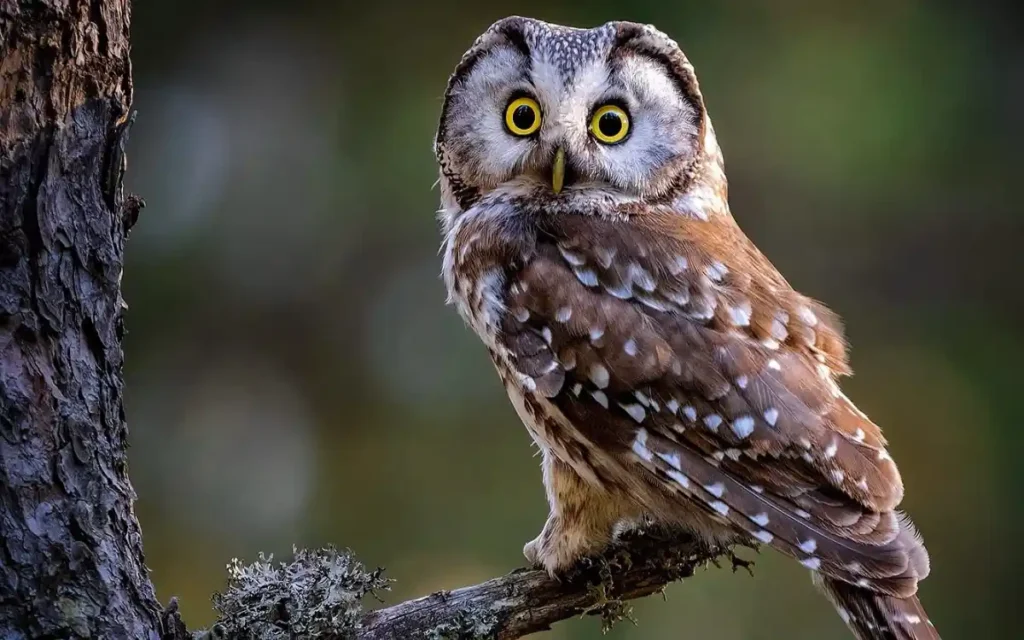
Boreal Owls prefer cold, northern forests and are well adapted to Alaska’s long winters. They nest in tree cavities and rely heavily on rodents. Quiet and elusive, they are rarely seen during the day, making sightings special for birders.
- Scientific Name: Aegolius funereus
- Length: 8–11 inches
- Weight: 3–7 ounces
- Wingspan: 1.8–2.3 feet
15. Northern Hawk Owl
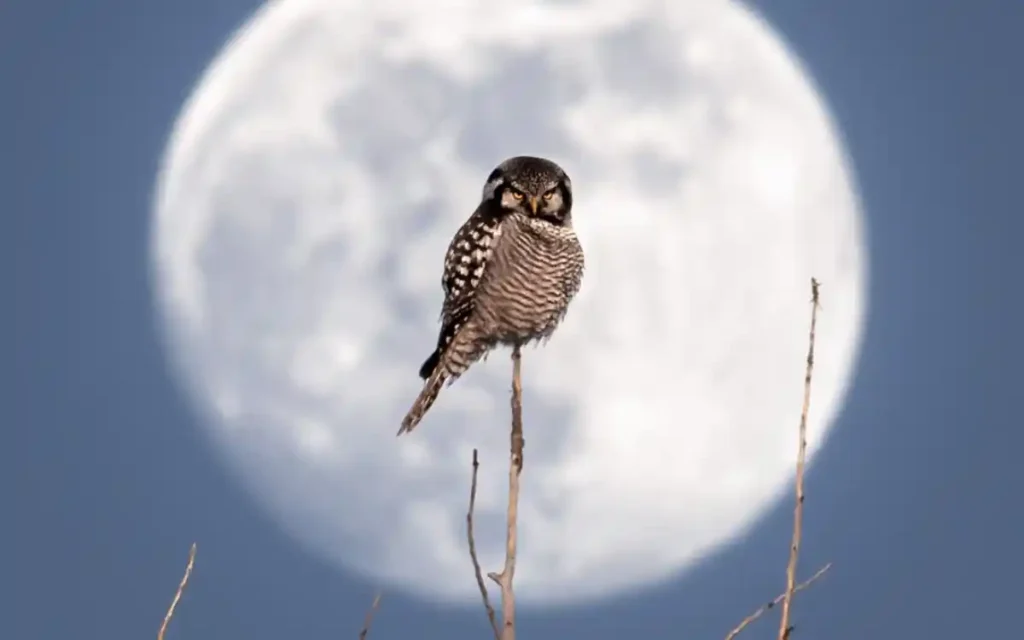
This owl behaves more like a hawk than an owl. Northern Hawk Owls hunt during daylight and perch in open areas scanning for prey. Their long tail and fast flight set them apart from other owls. They thrive in Alaska’s boreal forests.
- Scientific Name: Surnia ulula
- Length: 14–17 inches
- Weight: 9–12 ounces
- Wingspan: 2.3–2.7 feet
16. Short-eared Owl
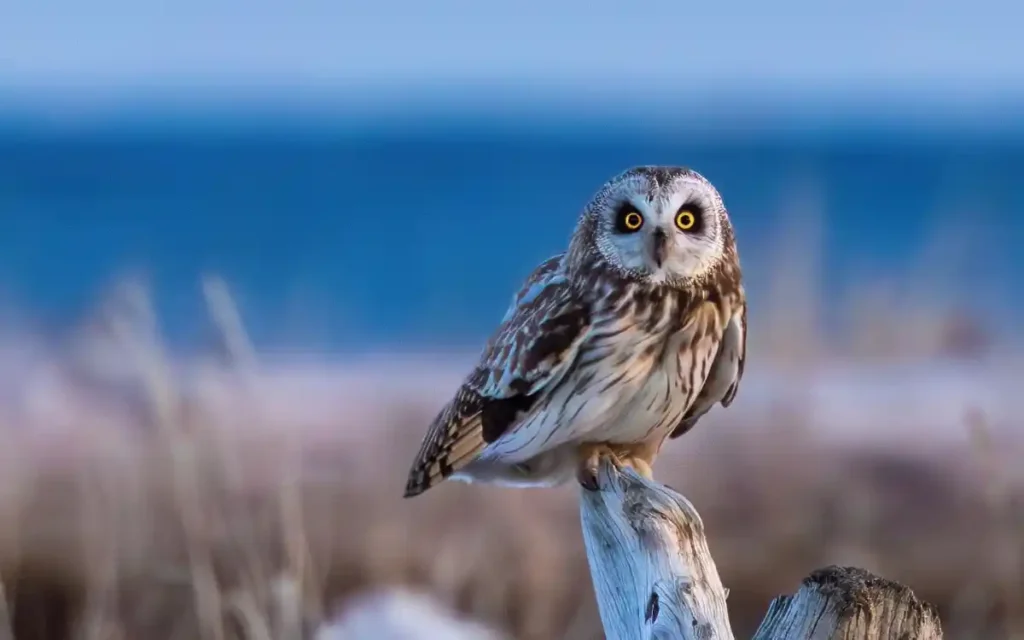
Short-eared Owls prefer open tundra and grasslands. They are often seen flying low at dusk, listening for prey. In Alaska, they breed in open habitats and are active both day and night. Their floppy, moth-like flight is easy to recognize.
- Scientific Name: Asio flammeus
- Length: 13–17 inches
- Weight: 7–17 ounces
- Wingspan: 2.8–3.4 feet
17. Peregrine Falcon
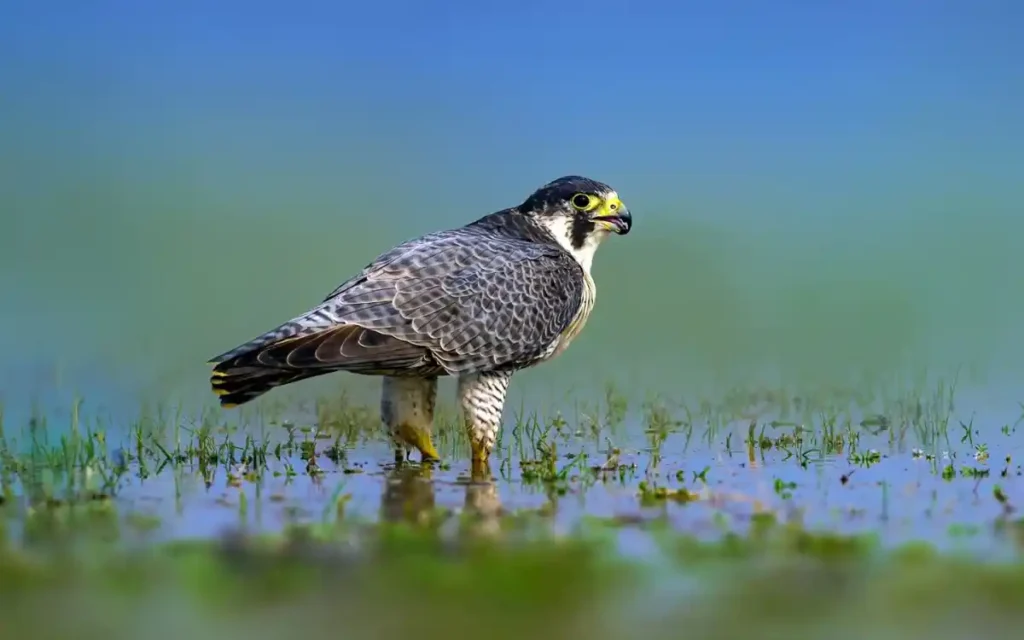
Known for speed, Peregrine Falcons are powerful hunters that nest on cliffs and coastal areas in Alaska. They dive at extreme speeds to strike birds mid-air. Conservation efforts have helped their populations recover strongly in the state.
- Scientific Name: Falco peregrinus
- Length: 14–19 inches
- Weight: 1.1–3.3 pounds
- Wingspan: 3.3–3.7 feet
18. American Kestrel
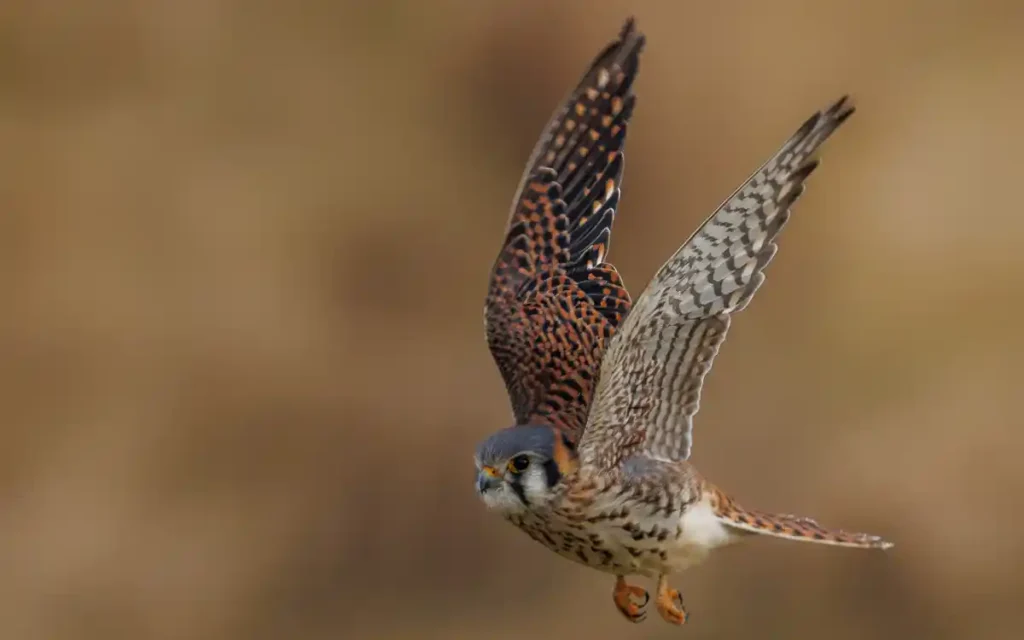
This colorful falcon is the smallest bird of prey in Alaska. American Kestrels hunt insects, rodents, and small birds. They are often seen hovering before dropping onto prey. Their bright plumage and bold markings make them easy to identify.
- Scientific Name: Falco sparverius
- Length: 8–12 inches
- Weight: 2.8–5.8 ounces
- Wingspan: 1.6–2 feet
19. Bald Eagle
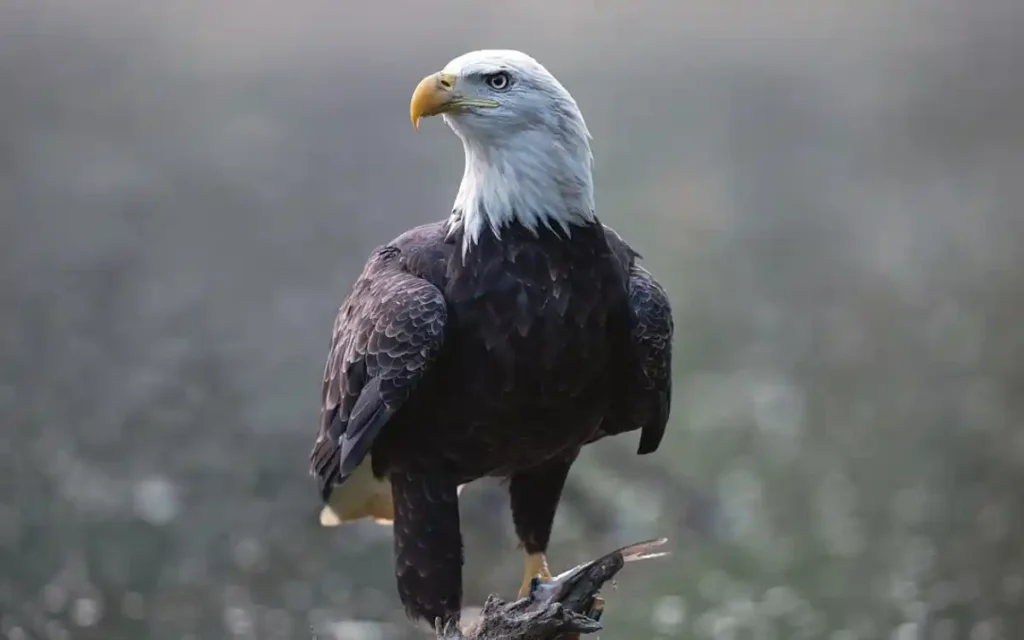
Alaska holds the largest population of Bald Eagles in the world. These massive birds gather near rivers and coastlines where fish are abundant. They are powerful scavengers and hunters, often stealing food from other birds.
- Scientific Name: Haliaeetus leucocephalus
- Length: 28–40 inches
- Weight: 6.5–14 pounds
- Wingspan: 6–7.5 feet
20. Merlin
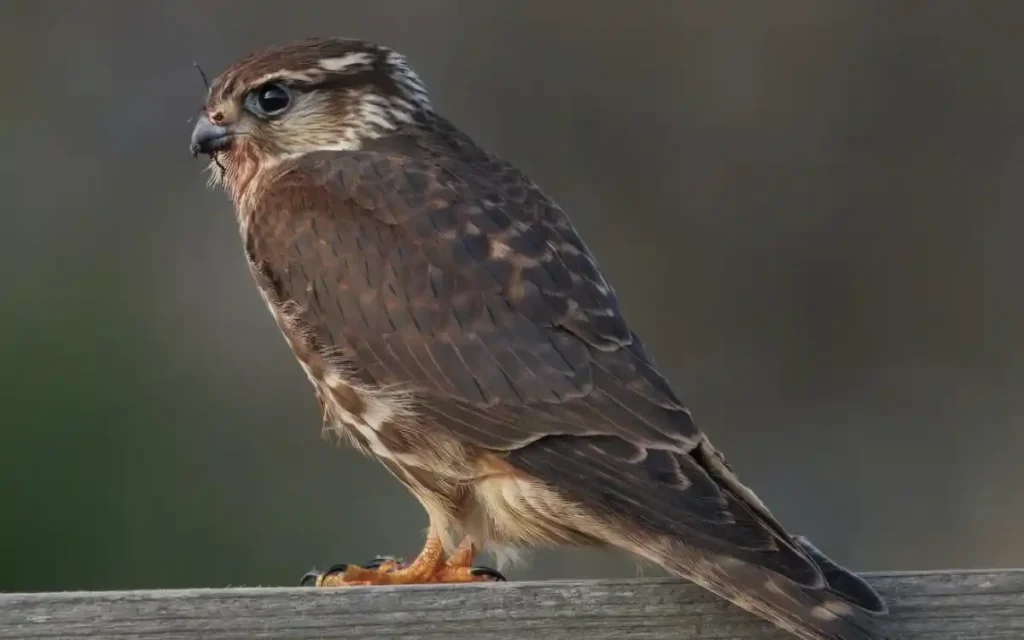
Merlins are small, fast falcons that hunt birds in mid-air. In Alaska, they breed in forested and open areas. Their aggressive flight style and rapid wingbeats make them stand out among falcons.
- Scientific Name: Falco columbarius
- Length: 9–13 inches
- Weight: 5–8 ounces
- Wingspan: 1.7–2.2 feet
21. Golden Eagle
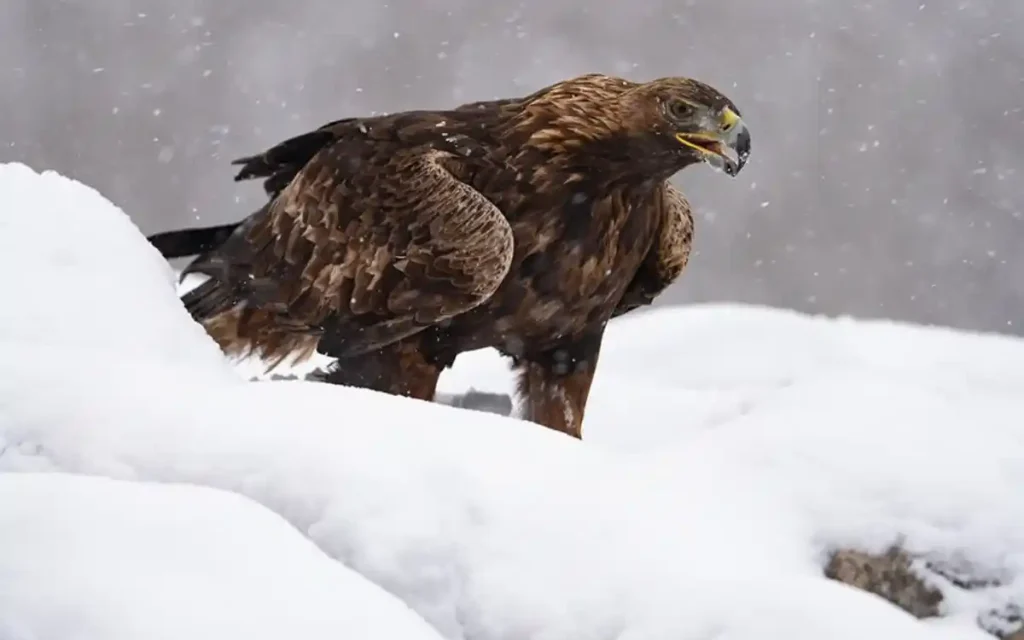
Golden Eagles prefer open landscapes and mountainous regions of Alaska. They are powerful hunters capable of taking large prey. Their golden-brown feathers and massive wings give them an imposing presence.
- Scientific Name: Aquila chrysaetos
- Length: 26–40 inches
- Weight: 6–15 pounds
- Wingspan: 6–7.5 feet
22. Gyrfalcon
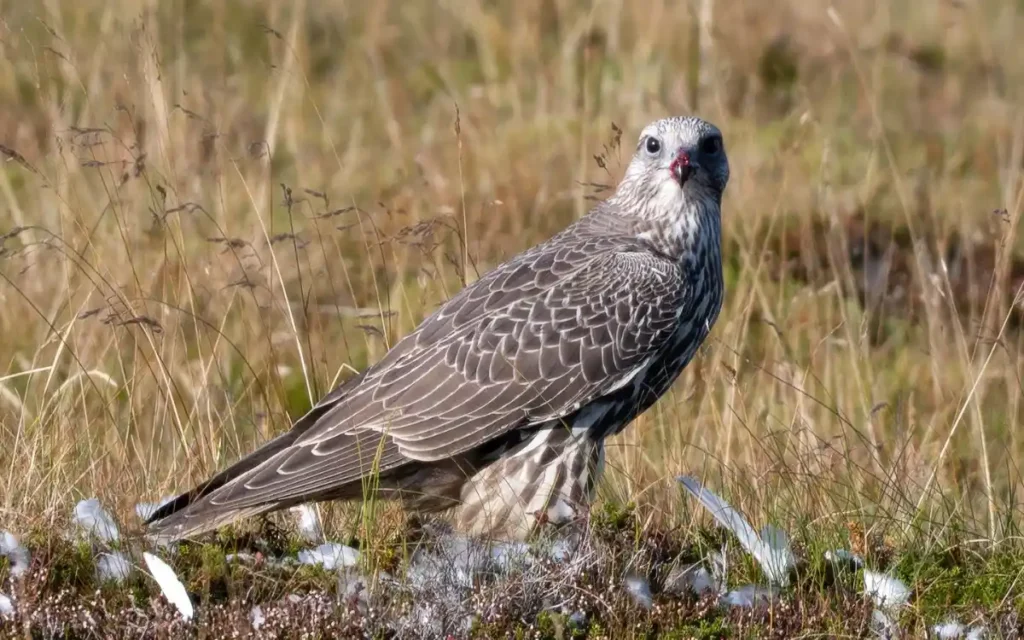
The Gyrfalcon is the largest falcon in the world and a true Arctic predator. Found in northern Alaska, it hunts birds and mammals in harsh conditions. Color varies from dark gray to nearly white, making each individual striking.
- Scientific Name: Falco rusticolus
- Length: 19–26 inches
- Weight: 2.1–4.6 pounds
- Wingspan: 3.9–5.2 feet
Conclusion
Alaska’s birds of prey showcase the state’s incredible biodiversity and wild landscapes. From powerful eagles to silent owls and agile falcons, these raptors play a crucial role in maintaining ecological balance.
Understanding and protecting Alaska’s birds of prey helps preserve the natural ecosystems that make the state truly unique.
