10 Owls in New York: Identification & Seasonal Guide
New York is one of the best states in the Northeast for owl diversity. From backyard tree cavities to windswept beaches along Long Island, owls appear in more habitats than most people expect. Some live here year-round. Others arrive only in winter. And a few show up so rarely that a single sighting makes local birding news.
If you’ve ever heard a hoot in the dark and wondered what species it was, this guide will walk you through all 10 owl species recorded in New York, including how to identify them and when you’re most likely to see each one.
Owls Found in New York
| Owl Species | Residency Status | Best Season to See | Primary Habitat | Rarity Level |
| Great Horned Owl | Year-round | Winter–Spring | Forests, parks, suburbs | Common |
| Eastern Screech-Owl | Year-round | Fall–Winter | Woodlands, neighborhoods | Common |
| Barred Owl | Year-round | Spring | Mature forests, wetlands | Fairly common |
| Northern Saw-whet Owl | Winter migrant | Oct–March | Dense conifers | Seasonal |
| American Barn Owl | Year-round (localized) | Summer | Farmland, grasslands | Uncommon |
| Long-eared Owl | Winter resident | Nov–March | Dense thickets | Uncommon |
| Short-eared Owl | Winter resident | Nov–March | Marshes, open fields | Seasonal |
| Snowy Owl | Winter irruption | Dec–Feb | Beaches, airports | Rare/irregular |
| Northern Hawk-Owl | Rare winter visitor | Irruption years | Open northern forests | Very rare |
| Great Gray Owl | Extremely rare | Irruption years | Northern forests | Exceptional |
1. Great Horned Owl
Scientific Name: Bubo virginianus
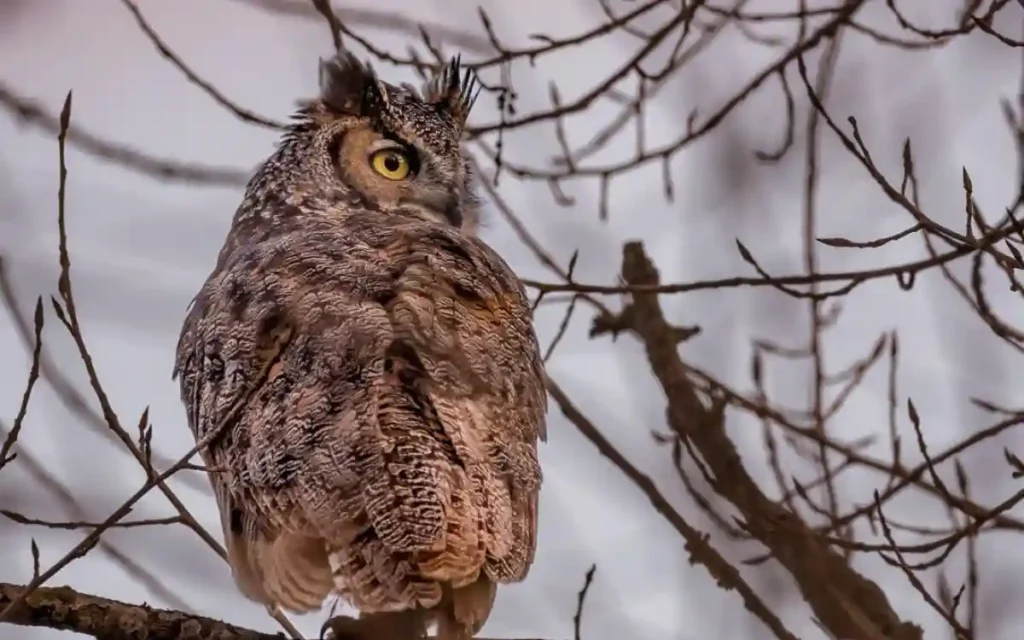
The Great Horned Owl is New York’s most powerful and widespread owl. Large, confident, and adaptable, this species thrives in forests, parks, farmland, and even suburban neighborhoods. It’s often the first owl people hear because it begins nesting very early – sometimes in January when snow still blankets the ground. These owls don’t build their own nests; they reuse old hawk or crow nests. If you’ve heard a deep, steady hoot during winter nights, chances are you were listening to this bird.
Identification
- Large body (nearly 2 feet tall)
- Prominent ear tufts (“horns”)
- Yellow eyes
- Deep, resonant hoot
Seasonal Occurrence in New York
- Year-round resident
- Most vocal from January to March
- Nests earlier than most other birds
2. Eastern Screech-Owl
Scientific Name: Megascops asio
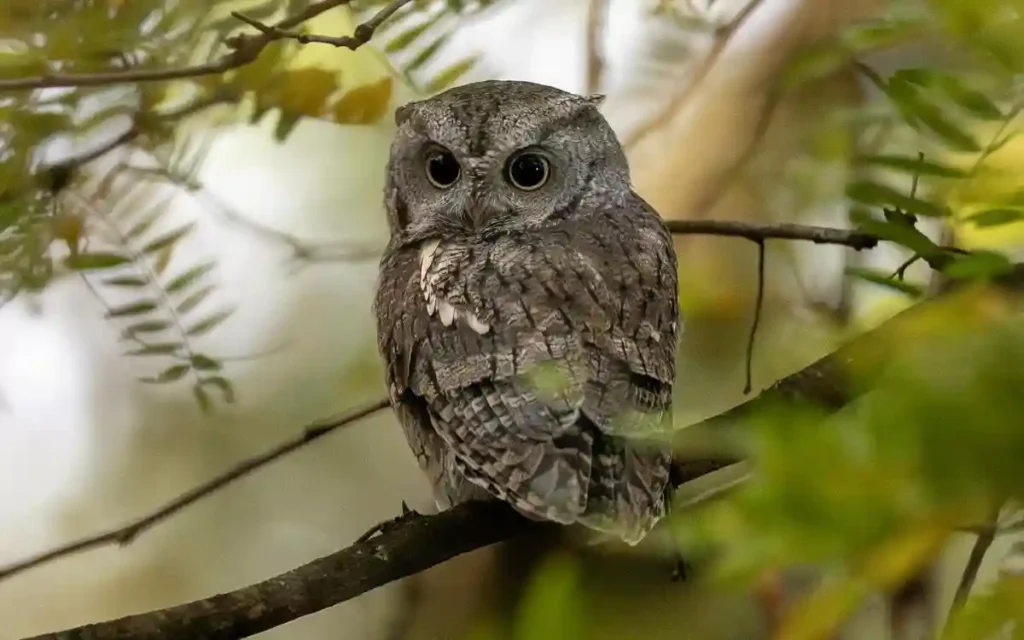
Small and well-camouflaged, the Eastern Screech-Owl often lives quietly in residential neighborhoods. Many New Yorkers have one nearby without realizing it. During the day, it blends perfectly into tree bark. Despite the name, it doesn’t screech – its call is a soft descending trill that sounds almost eerie at night. They use natural tree cavities or nest boxes and are surprisingly tolerant of human activity.
Identification
- Small, compact owl
- Gray or red color morph
- Short ear tufts
- Yellow eyes
Seasonal Occurrence
- Year-round resident
- Most active vocally in fall
- Common in suburban areas
3. Barred Owl
Scientific Name: Strix varia
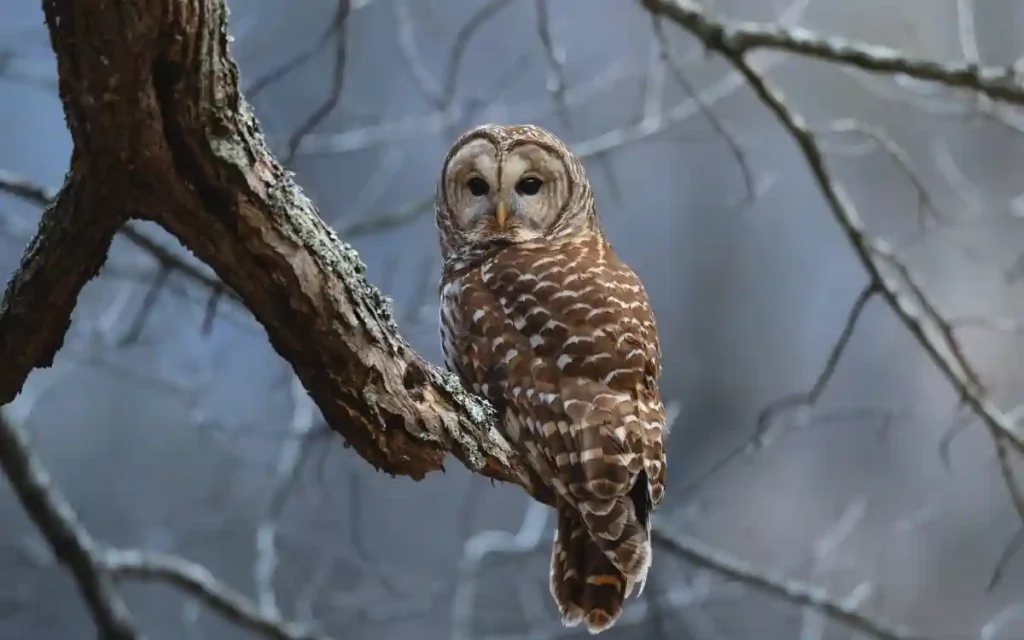
The Barred Owl prefers mature forests and swampy woodlands. It has become more common in parts of upstate New York over recent decades. Known for its distinctive “Who cooks for you?” call, this owl is often heard before it’s seen. It hunts mostly at night but may be active on cloudy days. Unlike many owls, it has dark brown eyes rather than yellow.
Identification
- Round head (no ear tufts)
- Dark brown eyes
- Vertical barring on chest
- Loud rhythmic call
Seasonal Occurrence
- Year-round resident
- Most vocal in early spring
- Prefers mature forests and wetlands
4. Northern Saw-whet Owl
Scientific Name: Aegolius acadicus
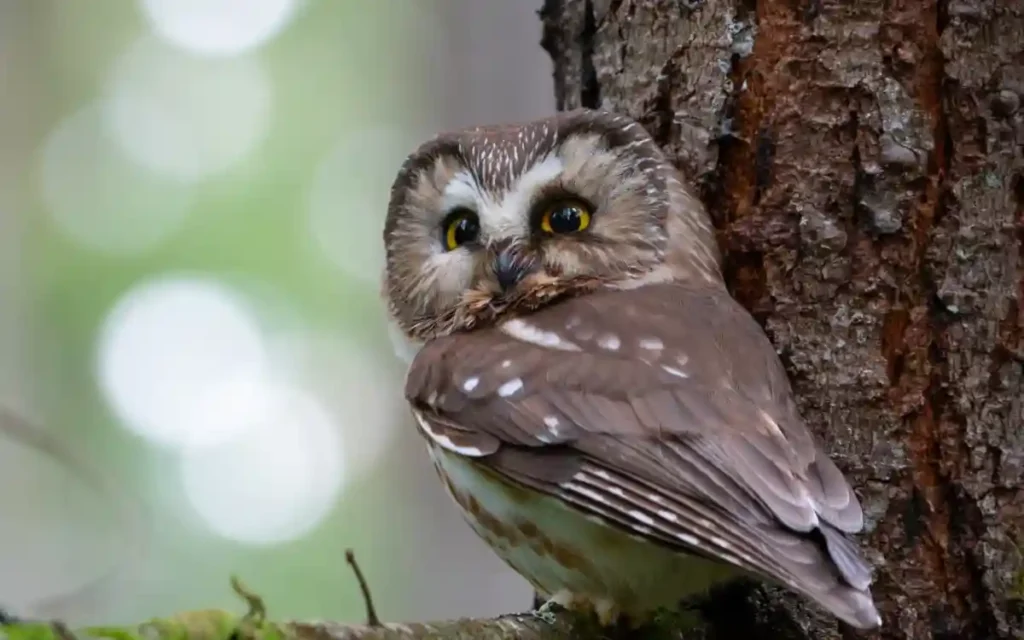
One of the smallest owls in New York, the Northern Saw-whet Owl migrates through the state in large numbers each fall. Most people never notice them because they travel at night and roost in dense evergreens during the day. Dedicated birders search known winter roost sites once leaves have dropped. Their name comes from their call, which was once compared to the sound of sharpening a saw.
Identification
- Tiny size
- Large rounded head
- Bright yellow eyes
- No ear tufts
Seasonal Occurrence
- Fall migrant
- Winters October through March
- Rare breeder in northern NY
5. American Barn Owl
Scientific Name: Tyto furcata
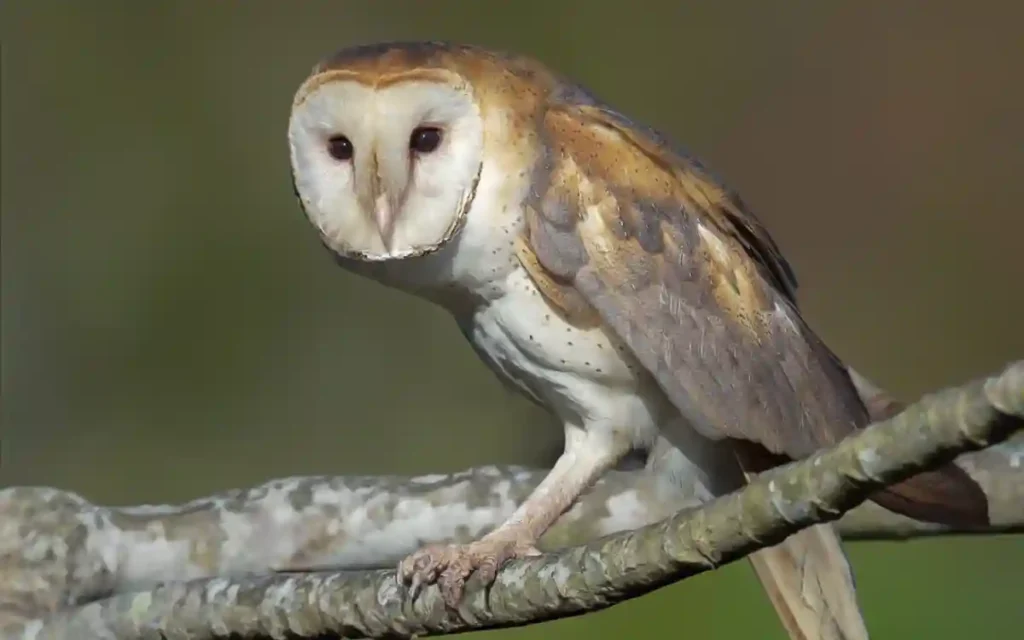
The American Barn Owl stands out immediately because of its pale body and heart-shaped face. Unlike forest owls, it prefers open farmland and grasslands. In New York, most sightings occur on Long Island and parts of southern NY. Unfortunately, Barn Owl numbers have declined due to habitat loss and fewer nesting sites. Seeing one glide silently over a field at dusk is unforgettable.
Identification
- White heart-shaped face
- Pale underparts
- Long wings
- Dark eyes
Seasonal Occurrence
- Year-round but localized
- Most active at dusk
- Limited mainly to southern NY
6. Long-eared Owl
Scientific Name: Asio otus
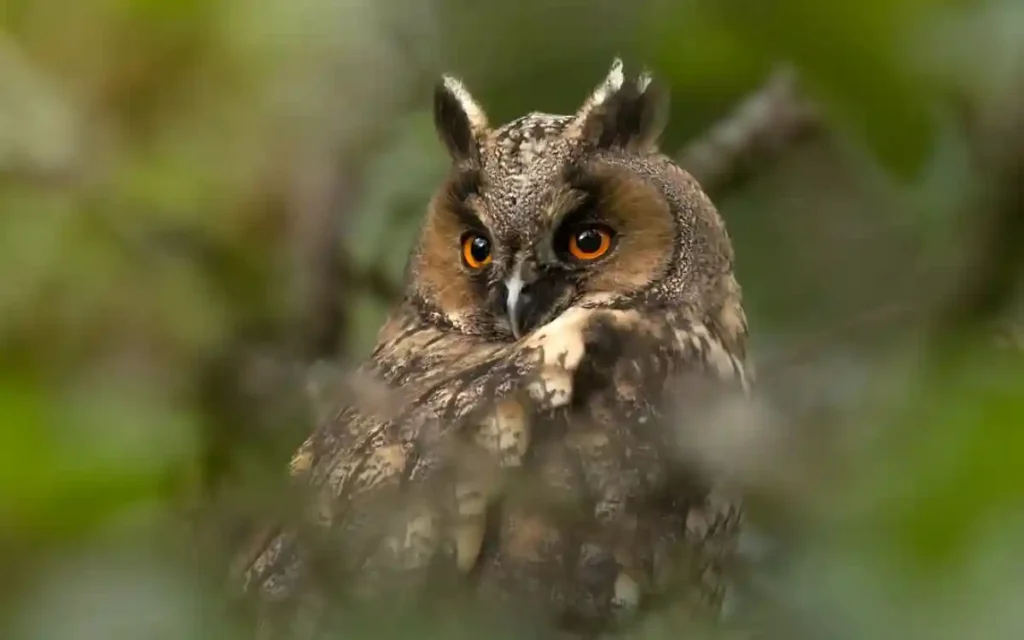
Long-eared Owls are secretive and excellent at hiding. During winter, they sometimes gather in communal roosts inside dense conifers. They rely on camouflage and often sit motionless against tree trunks. Birders usually locate them by carefully scanning known roosting areas in winter months when foliage is thinner.
Identification
- Tall ear tufts
- Slender body
- Orange facial disk
- Yellow eyes
Seasonal Occurrence
- Winter resident (November–March)
- Rare breeder in parts of NY
- More visible in winter
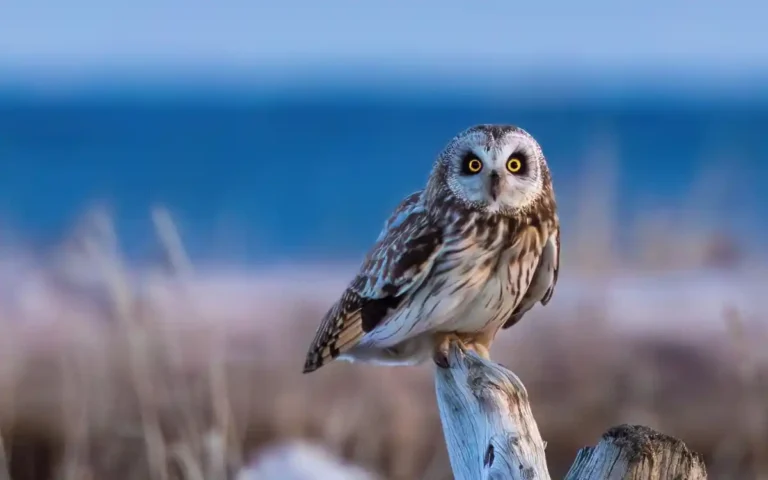
7. Short-eared Owl
Scientific Name: Asio flammeus
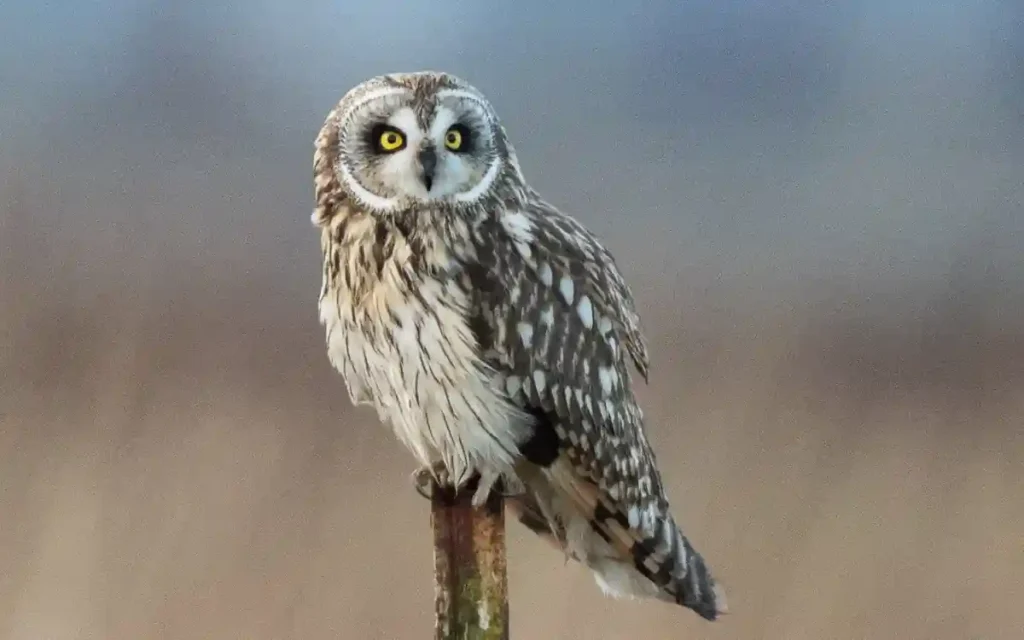
Unlike most owls, the Short-eared Owl is active before full darkness. It hunts low over marshes and grasslands, especially at sunset. In winter, coastal areas and open fields in New York host these energetic hunters. Their flight pattern is buoyant and moth-like, making them easier to spot compared to forest owls.
Identification
- Pale face with dark eye patches
- Short ear tufts (barely visible)
- Broad wings
- Yellow eyes
Seasonal Occurrence
- Winter visitor (November–March)
- Rare summer breeder in northern NY
- Best seen at dusk
8. Snowy Owl
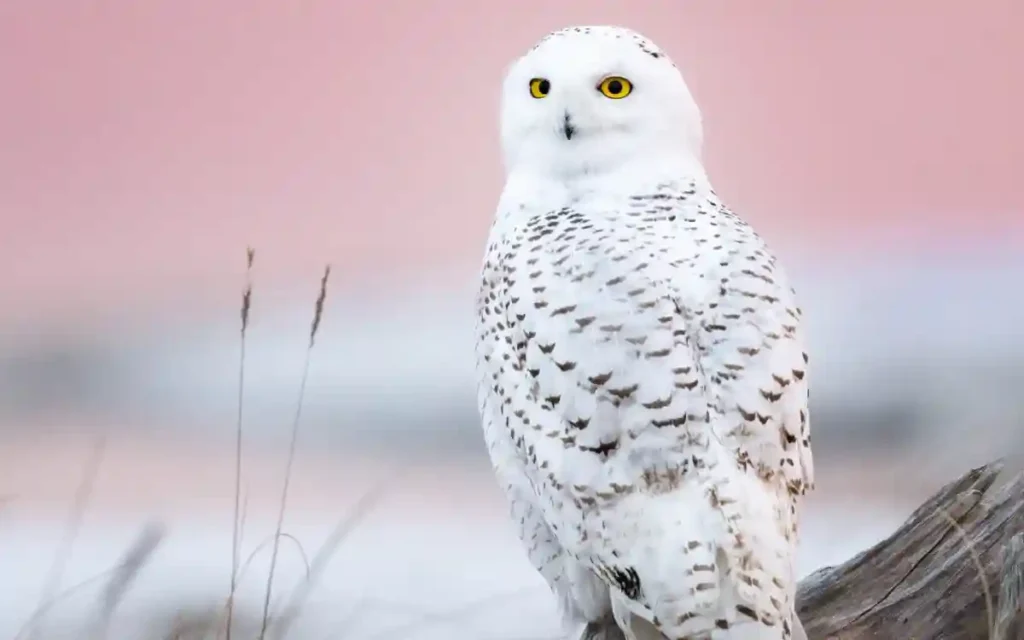
Scientific Name: Bubo scandiacus
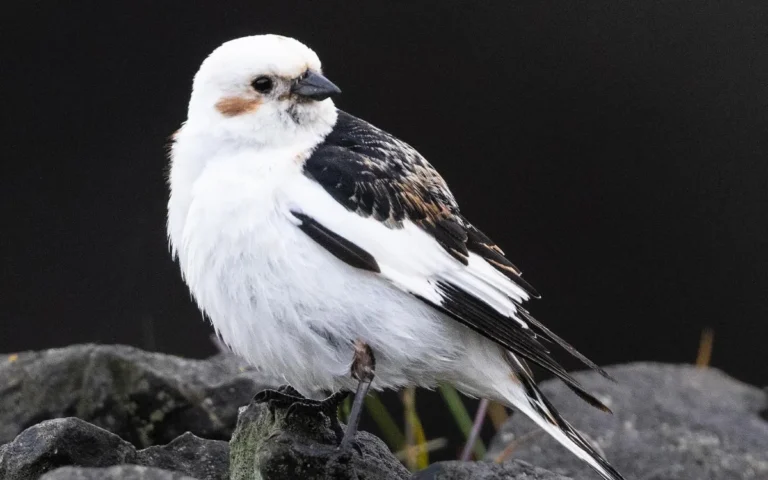
The Snowy Owl arrives from the Arctic during certain winters when food supplies fluctuate. Some years bring only a few individuals; others bring noticeable irruptions along Long Island beaches and open coastal areas. Their white plumage stands out dramatically against snow or sand. Birders monitor winter reports closely, as these appearances vary from year to year.
Identification
- Large white owl
- Yellow eyes
- Females show heavier dark barring
- Rounded head (no ear tufts visible)
Seasonal Occurrence
- Winter visitor (December–February)
- Appears during irruption years
- Most common along coast
9. Northern Hawk-Owl
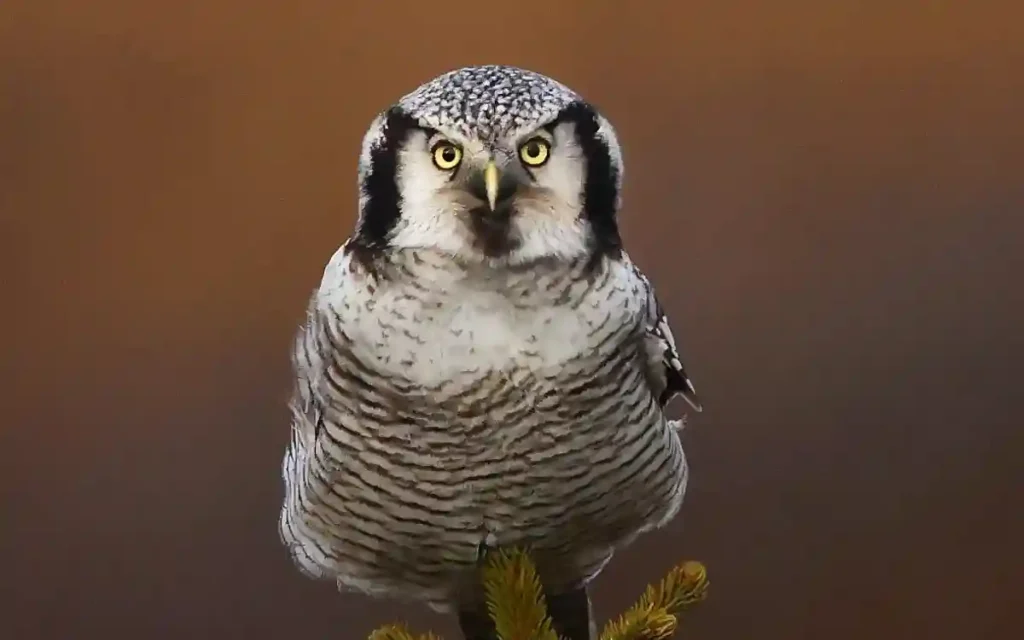
Scientific Name: Surnia ulula
The Northern Hawk-Owl is a rare winter visitor to northern New York. Unlike most owls, it hunts during daylight and perches prominently at treetops. Its long tail and upright posture resemble a hawk. Sightings are irregular and usually tied to prey shortages in Canada.
Identification
- Long tail
- Bold facial markings
- Yellow eyes
- Diurnal (daytime hunter)
Seasonal Occurrence
- Rare winter irruption visitor
- Mostly northern NY
- Unpredictable appearance
10. Great Gray Owl
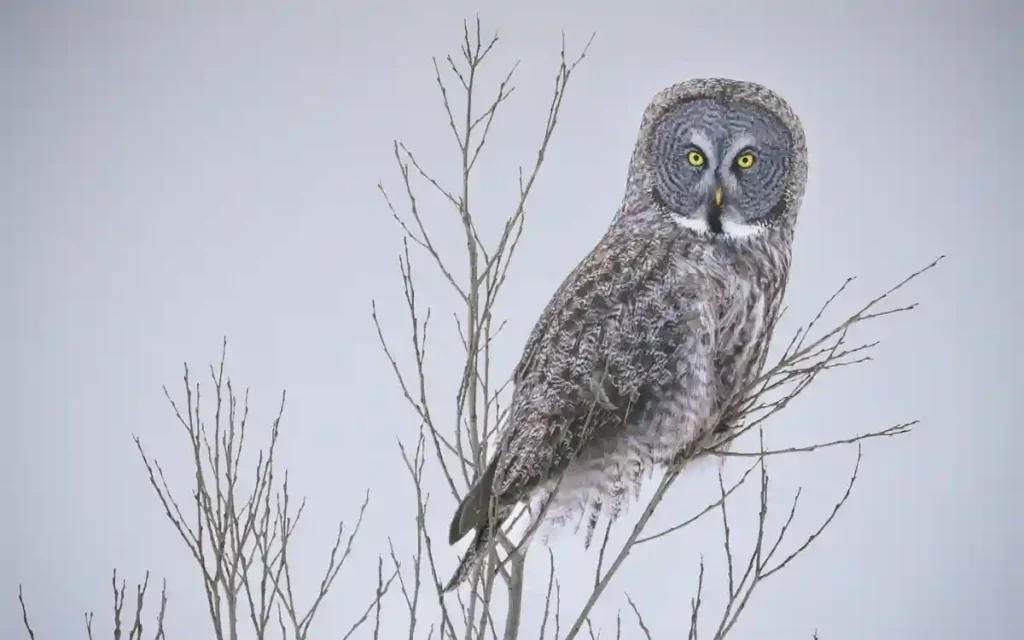
Scientific Name: Strix nebulosa
The Great Gray Owl is one of the rarest owls ever recorded in New York. Massive in appearance due to its enormous facial disk, it normally lives in boreal forests far north of the state. Only during significant prey shortages does it move south. Each confirmed sighting attracts attention from birders statewide.
Identification
- Huge facial disk
- Yellow eyes
- Gray plumage
- Appears very large
Seasonal Occurrence
- Extremely rare winter visitor
- Appears during major irruptions
- Mostly northern regions
Best Season for Owl Watching in New York
Winter is the best overall season. From December through February, trees are bare, making owls easier to spot. This is also when winter visitors like Snowy Owls and Short-eared Owls arrive. At the same time, Great Horned Owls begin nesting and become more vocal, which helps with locating them by sound.
Early spring is also productive, especially for hearing Barred Owls calling in forested areas. Summer is the most difficult season due to thick foliage and quieter behavior.
For the best results, go at dawn or dusk and focus on open habitats in winter and mature forests in early spring.
Ethical Owl Watching Tips
Always observe from a respectful distance. If an owl reacts to your presence, you’re too close. Avoid approaching nests, especially during late winter and spring.
Do not overuse recorded calls, as they can stress territorial birds. Stay on established paths, and never flush an owl for a better photo.
Where to Go Owl Watching in New York
Adirondack Park (Northern NY) – Best for forest species like Great Horned Owl and Barred Owl. Visit at dusk in late winter for calling activity.
Montezuma National Wildlife Refuge (Central NY) – A strong winter location for Short-eared Owls in open marshes and fields.
Long Island Beaches – The top winter spot for Snowy Owls during irruption years.
Central Park (NYC) – Surprisingly good for Eastern Screech-Owls and occasional winter visitors.
Rural Farmland (Southern NY) – Open fields can attract Barn Owls and wintering Short-eared Owls.
Match the habitat to the species: forests, marshes, beaches, or open farmland.
FAQs
What is the most common owl in New York?
The Great Horned Owl and Eastern Screech-Owl are the most widespread year-round species.
Are Snowy Owls in New York every winter?
No. They appear mainly during irruption years when food is scarce in the Arctic.
What owl hoots at night in suburbs?
Most often the Great Horned Owl or Barred Owl.
When is the best month to see owls?
January is typically the best month overall.