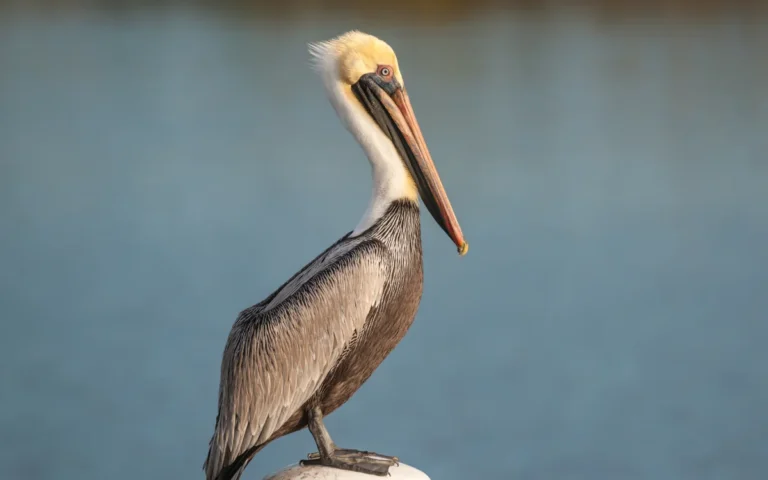
15 Shorebirds in Alabama (With Size & Wingspan)
Alabama’s coastline is home to a diverse range of shorebirds, thanks to its sandy beaches, tidal flats, and coastal wetlands. From year-round residents to long-distance migrants, these birds play an important role in the coastal ecosystem and are commonly seen along beaches, bays, and marshes.
1. Willet
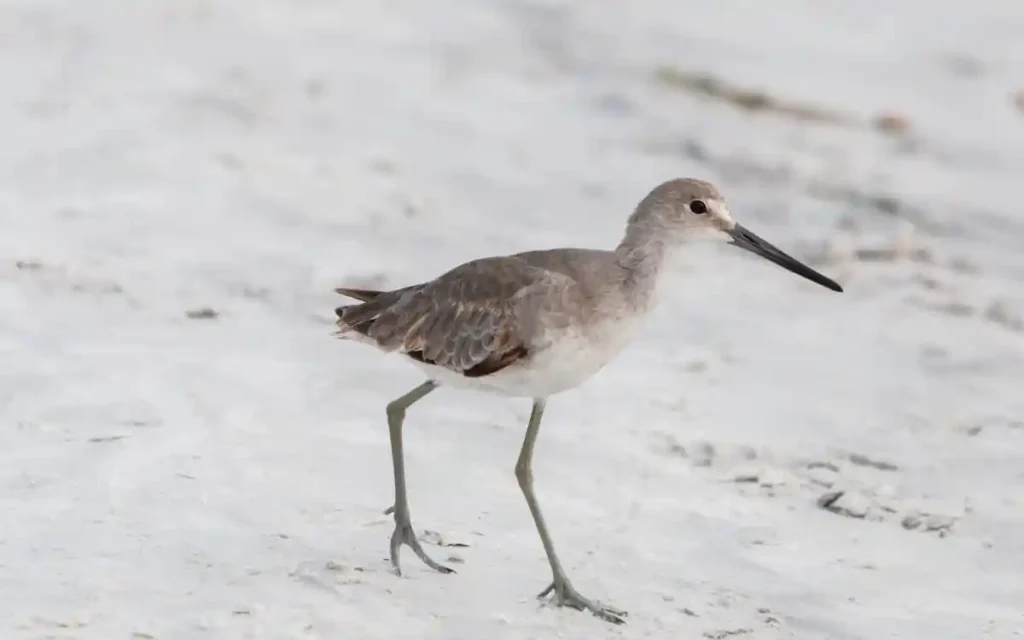
Length: 14–16 in
Wingspan: 27–29 in
Weight: 10–12 oz
Scientific Name: Tringa semipalmata
Willets are large, sturdy shorebirds commonly found along Alabama’s beaches and salt marshes. They appear plain gray-brown but reveal a bold black-and-white wing pattern in flight. Willets forage by probing sand and mud for crabs, worms, and small shellfish.
2. Sanderling
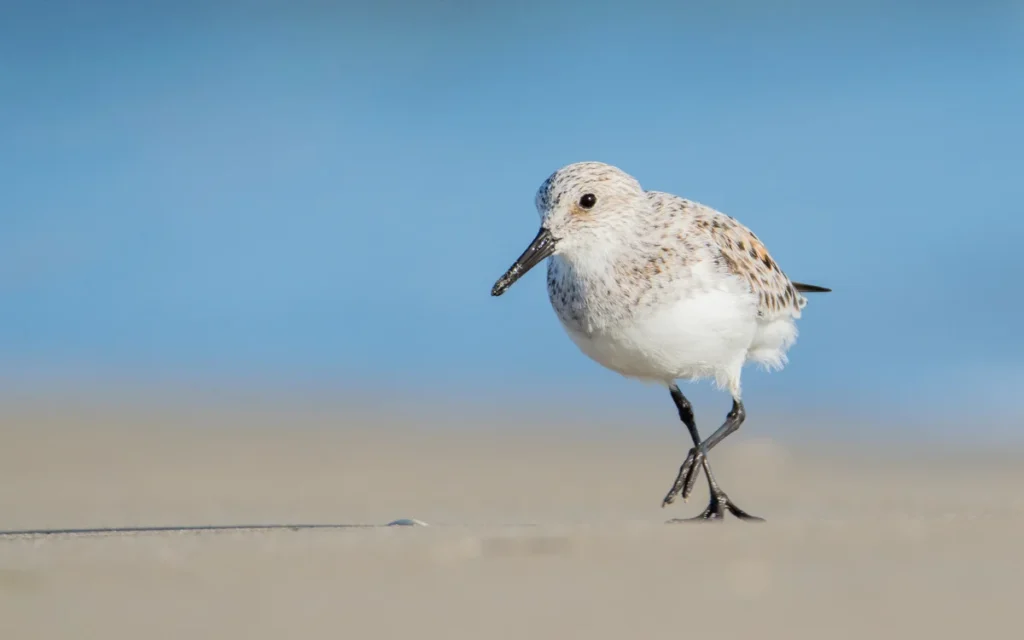
Length: 7–8 in
Wingspan: 14–15 in
Weight: 1.4–3.5 oz
Scientific Name: Calidris alba
Sanderlings are energetic shorebirds often seen running along Alabama’s shoreline chasing retreating waves. Their pale plumage blends with sandy beaches. During winter, they form small flocks and feed on tiny crustaceans, insects, and marine worms exposed by the surf.
3. Ruddy Turnstone
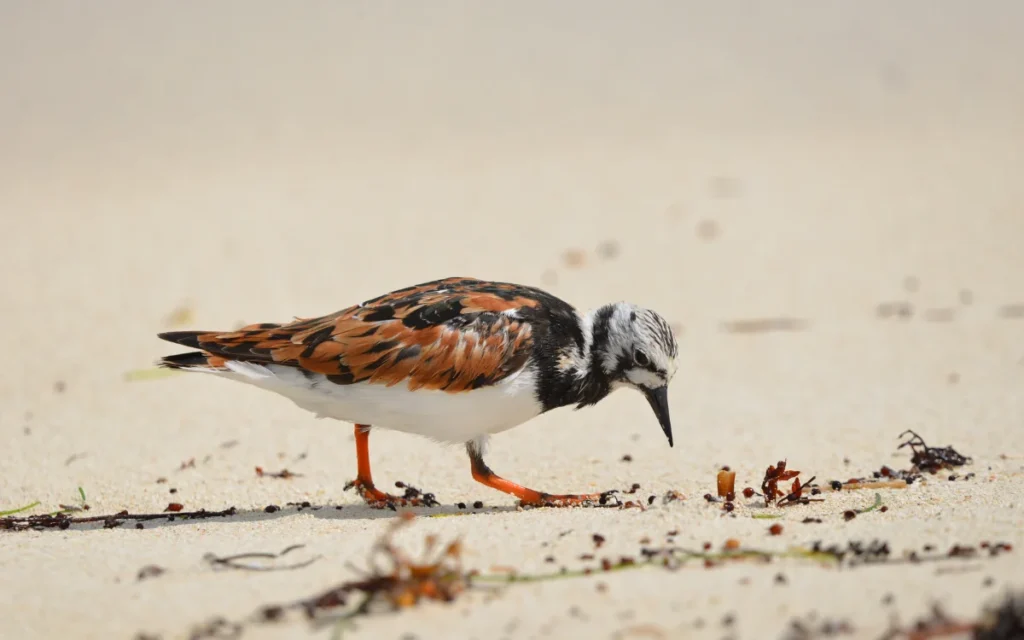
Length: 8–9 in
Wingspan: 20–22 in
Weight: 3–6 oz
Scientific Name: Arenaria interpres
Ruddy Turnstones are compact, colorful shorebirds known for flipping stones and shells while foraging. In Alabama, they appear along rocky shorelines and beaches during migration and winter. Their bold patterns and orange legs make them easy to identify among mixed shorebird flocks.
4. Black-bellied Plover
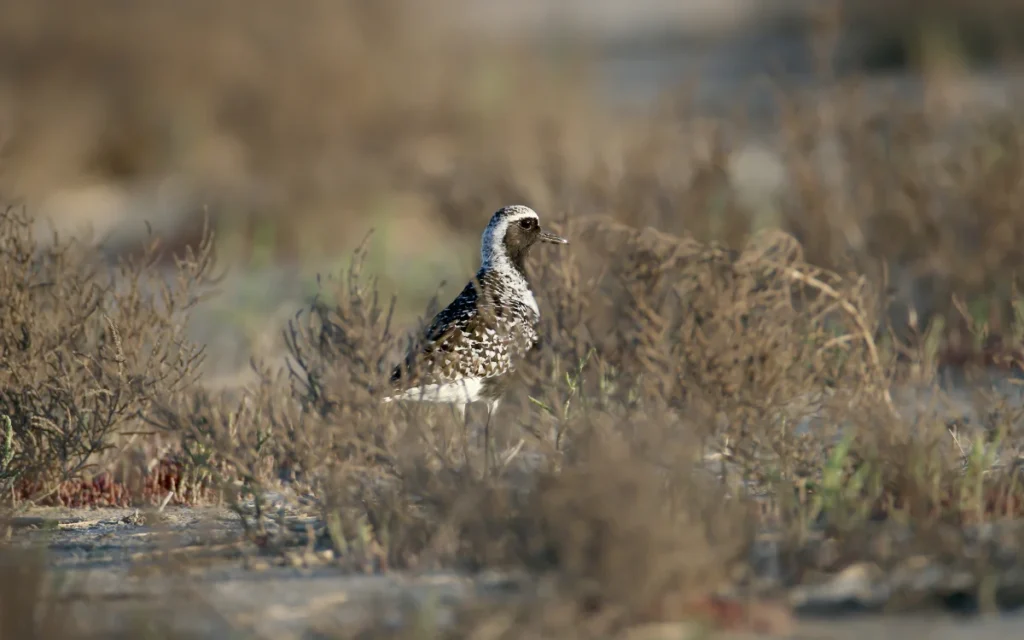
Length: 10–12 in
Wingspan: 28–30 in
Weight: 6–9 oz
Scientific Name: Pluvialis squatarola
This is one of the largest plovers seen in Alabama. In winter, Black-bellied Plovers appear gray and white with a thick bill. They favor open beaches, mudflats, and tidal flats, feeding on marine worms, mollusks, and crustaceans.
5. Semipalmated Plover
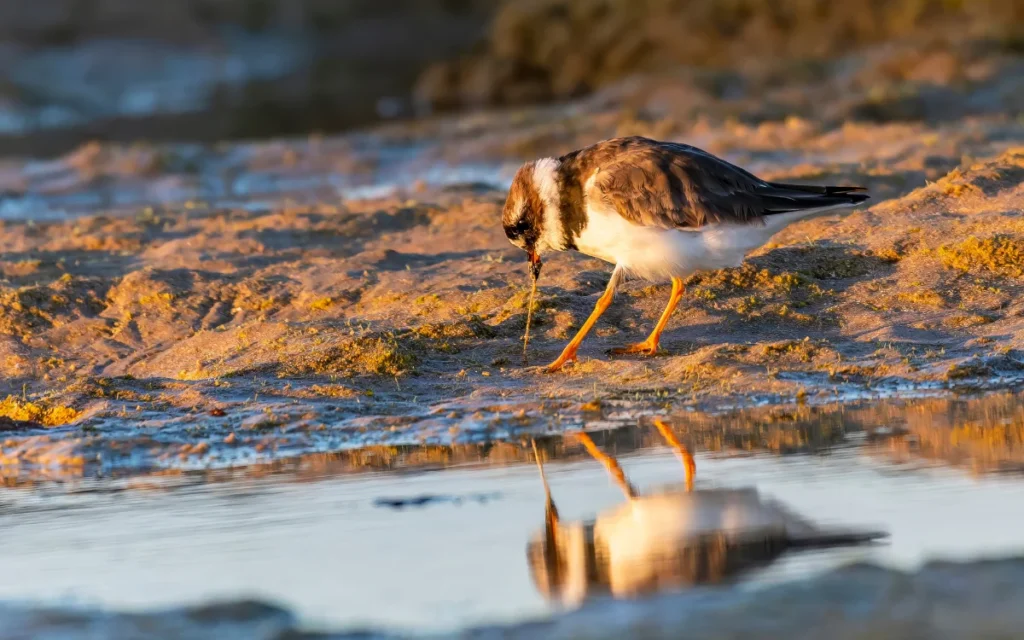
Length: 6–7 in
Wingspan: 14–15 in
Weight: 1.5–2.2 oz
Scientific Name: Charadrius semipalmatus
Semipalmated Plovers are small, alert birds with a single dark chest band. They migrate through Alabama in spring and fall, stopping along sandy beaches and mudflats. These plovers feed visually, quickly darting forward to catch insects and tiny invertebrates.
6. Least Sandpiper
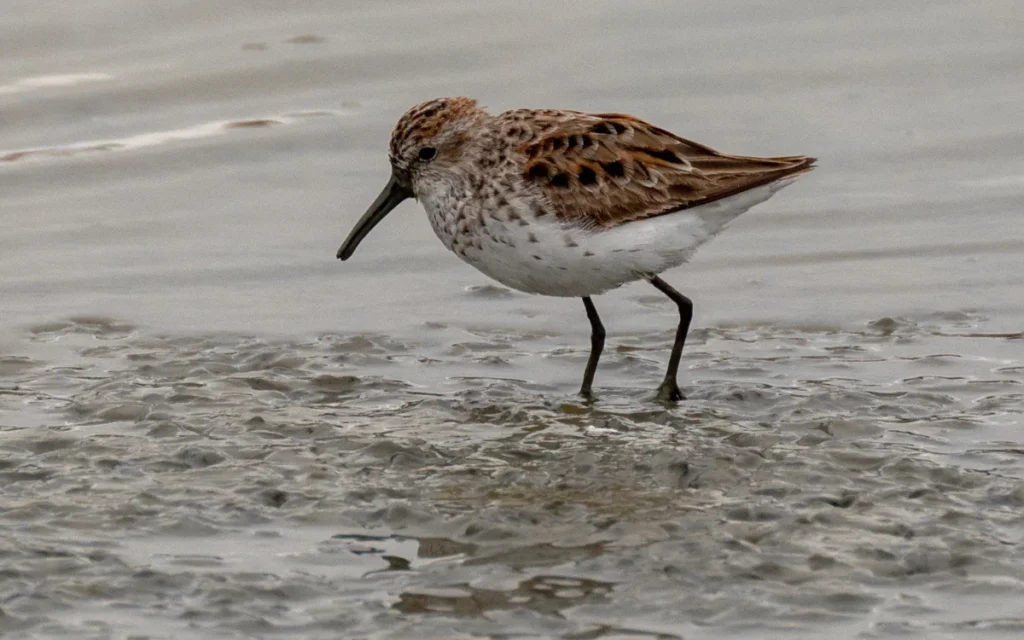
Length: 5–6 in
Wingspan: 13–14 in
Weight: 0.7–1.2 oz
Scientific Name: Calidris minutilla
The Least Sandpiper is the smallest shorebird in North America. In Alabama, it prefers muddy marsh edges and shallow wetlands. Its yellowish legs help distinguish it from similar species. These birds feed by picking insects and small crustaceans from wet mud.
7. Western Sandpiper
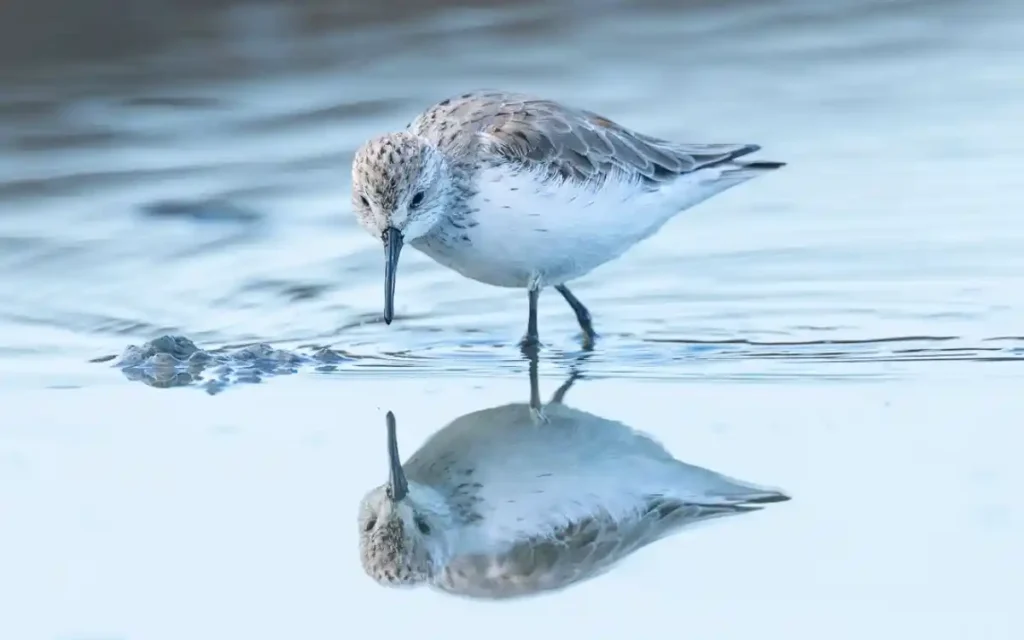
Length: 6–7 in
Wingspan: 14–15 in
Weight: 0.8–1.5 oz
Scientific Name: Calidris mauri
Western Sandpipers pass through Alabama during long-distance migrations. They often gather in dense flocks on tidal flats. Slightly curved bills help them probe mud for tiny invertebrates. Their presence highlights Alabama’s importance as a migratory stopover habitat.
8. Spotted Sandpiper
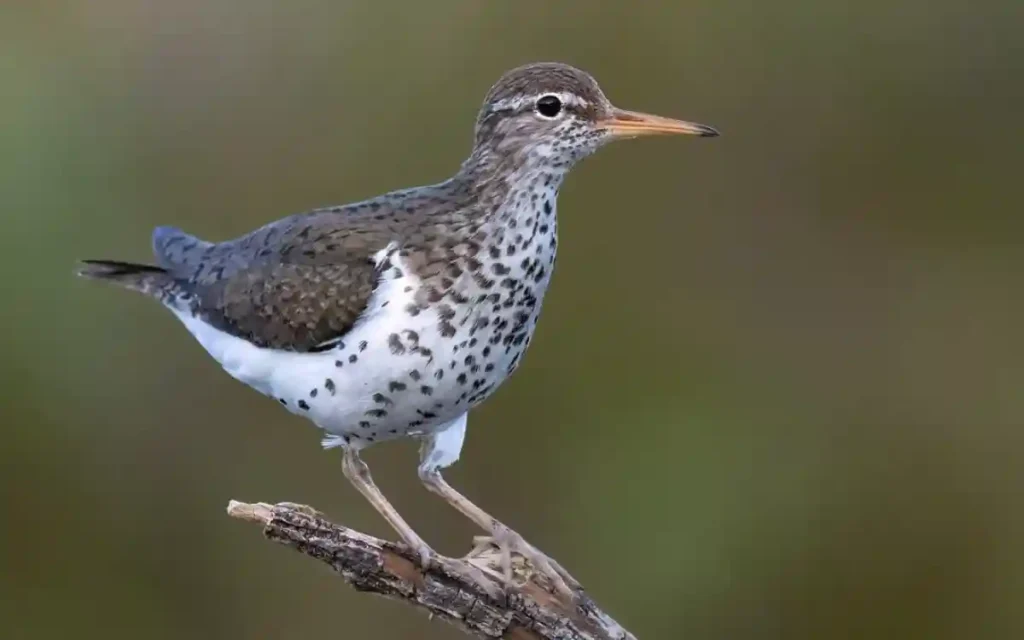
Length: 7–8 in
Wingspan: 14–15 in
Weight: 1–2 oz
Scientific Name: Actitis macularius
Spotted Sandpipers are easily recognized by their constant tail-bobbing motion. During breeding season, they show bold black spots on their chest. In Alabama, they are found near freshwater shores, ponds, and coastal edges, feeding on insects and small aquatic prey.
9. Dunlin
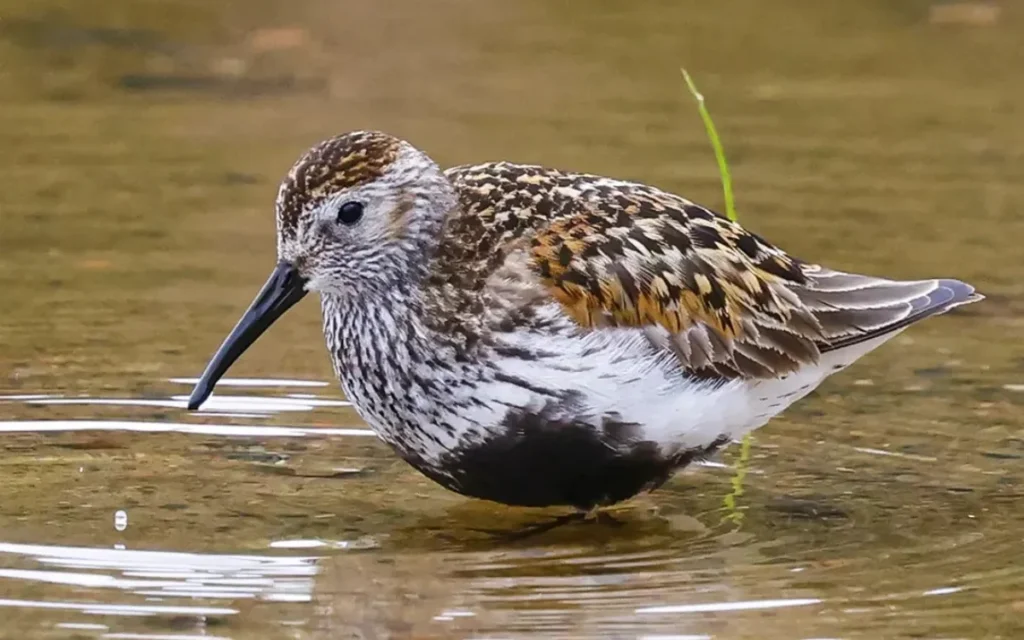
Length: 8–9 in
Wingspan: 17–18 in
Weight: 1.6–4 oz
Scientific Name: Calidris alpina
Dunlins are common winter shorebirds along Alabama’s mudflats and estuaries. They have long, slightly curved bills ideal for probing soft mud. Often seen in large flocks, Dunlins feed on worms, crustaceans, and other small invertebrates in shallow coastal areas.
10. American Oystercatcher
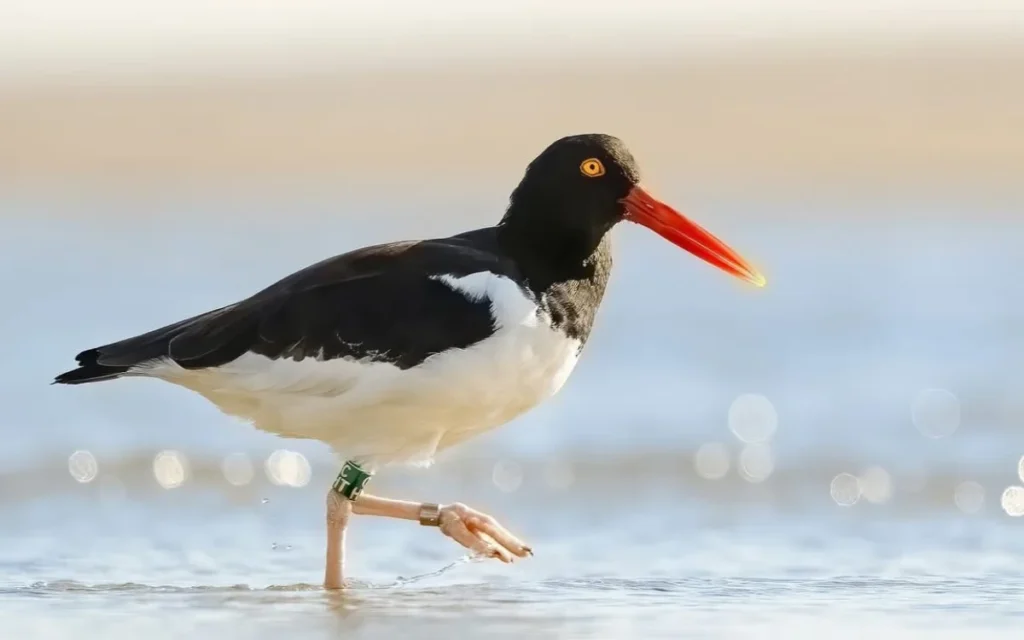
Length: 16–18 in
Wingspan: 32–35 in
Weight: 14–24 oz
Scientific Name: Haematopus palliatus
This striking shorebird has a bold black-and-white body and a bright orange bill. In Alabama, American Oystercatchers inhabit oyster reefs and barrier islands. Their strong bills are used to pry open shellfish, making them closely tied to healthy coastal ecosystems.
11. Wilson’s Plover
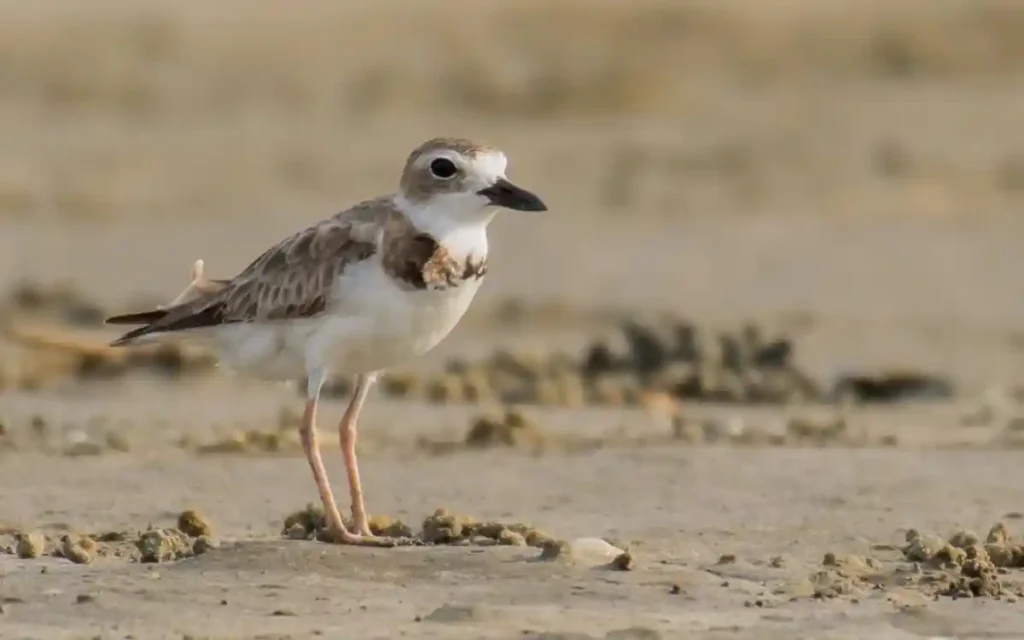
Length: 7–8 in
Wingspan: 15–16 in
Weight: 2–3 oz
Scientific Name: Charadrius wilsonia
Wilson’s Plovers are stocky birds with thick black bills. They nest directly on sandy beaches in Alabama, making them vulnerable to disturbance. These plovers feed on small crabs and marine invertebrates, relying heavily on undisturbed shoreline habitats for survival.
12. Snowy Plover
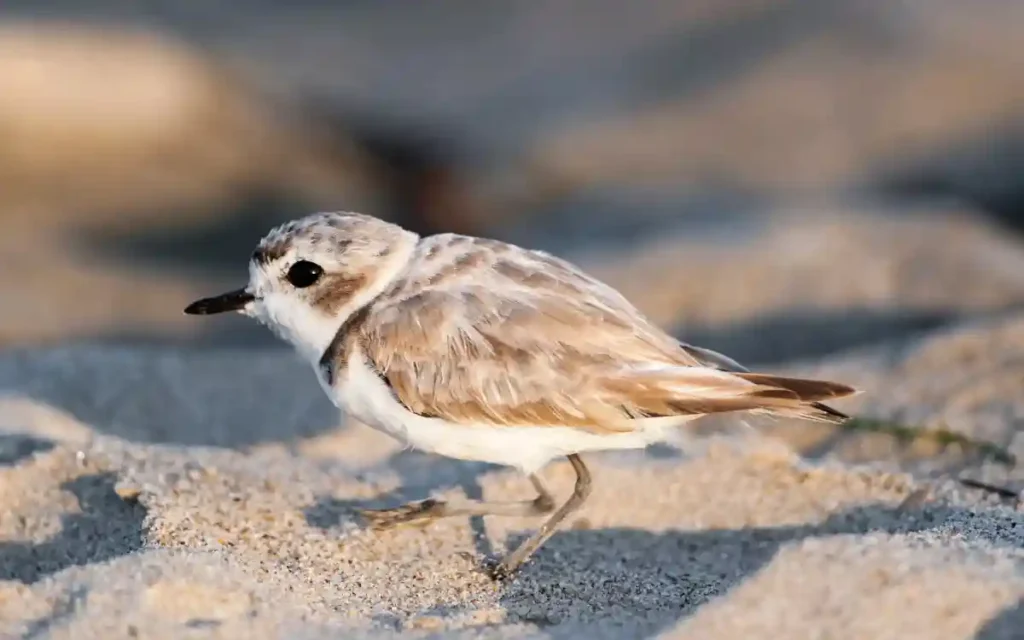
Length: 6–7 in
Wingspan: 15 in
Weight: 1.2–1.5 oz
Scientific Name: Charadrius nivosus
Snowy Plovers are pale, delicate shorebirds adapted to open sandy beaches. In Alabama, they are protected due to declining populations. Their excellent camouflage helps them avoid predators, but human activity can threaten nesting sites during the breeding season.
13. Greater Yellowlegs
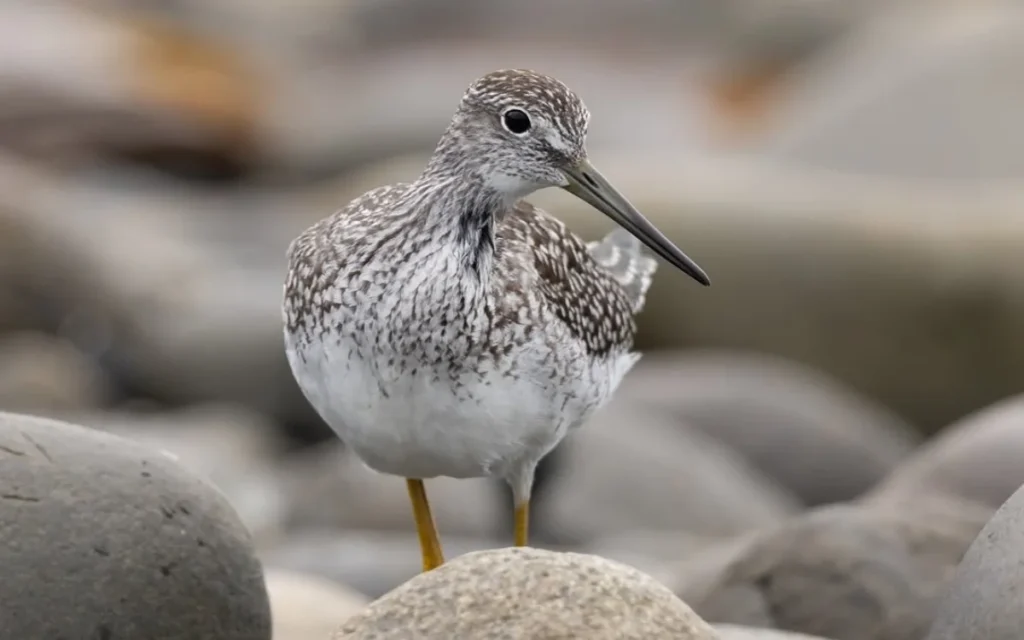
Length: 14–15 in
Wingspan: 23–24 in
Weight: 5–7 oz
Scientific Name: Tringa melanoleuca
Greater Yellowlegs are tall, elegant shorebirds with bright yellow legs. They are often seen wading in shallow water along Alabama’s wetlands. Known for their loud calls, they feed on fish, insects, and crustaceans using quick stabbing motions.
14. Lesser Yellowlegs
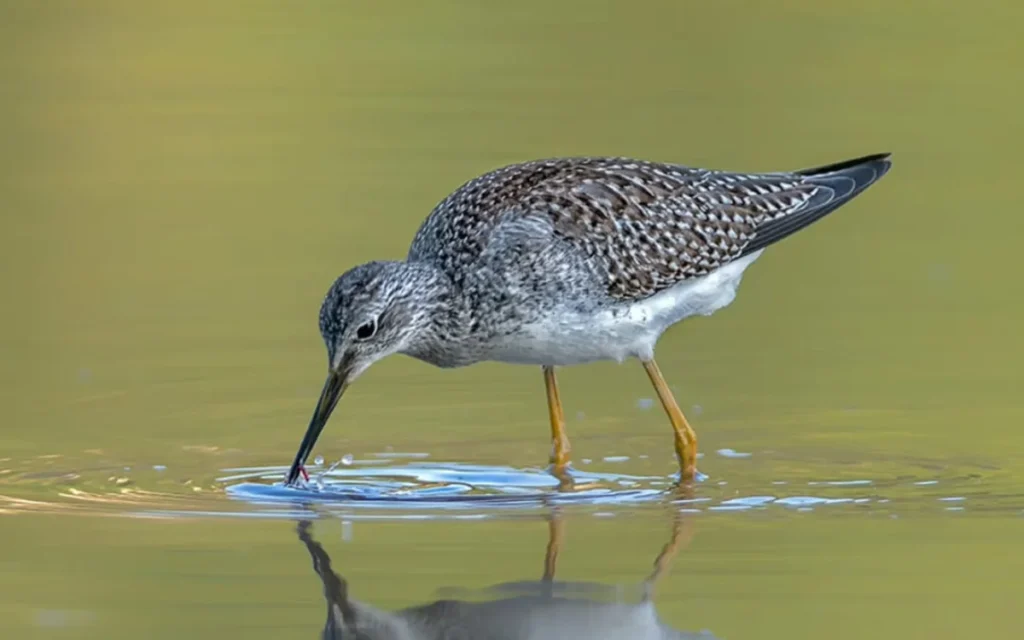
Length: 9–10 in
Wingspan: 18–19 in
Weight: 3–4 oz
Scientific Name: Tringa flavipes
Smaller and slimmer than their larger relative, Lesser Yellowlegs migrate through Alabama in large numbers. They favor shallow marshes and flooded fields. These birds feed actively, often running through water to catch insects and small aquatic prey.
15. Red Knot
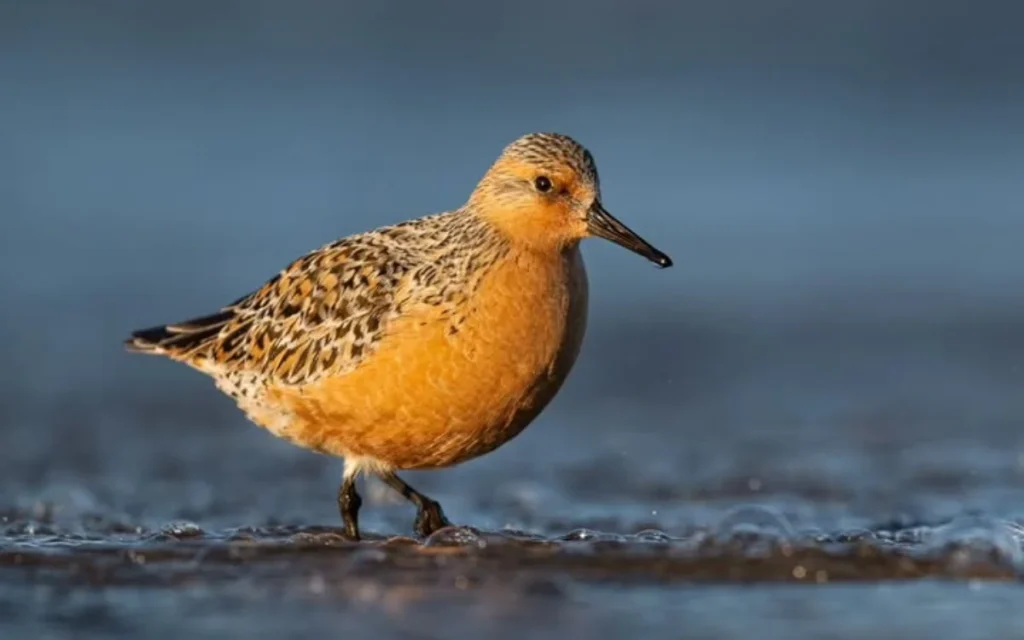
Length: 9–10 in
Wingspan: 20–22 in
Weight: 4–6 oz
Scientific Name: Calidris canutus
Red Knots are famous for their extreme long-distance migrations. Alabama’s coast provides vital stopover habitat where they rest and refuel. During migration, they feed heavily on shellfish and small marine organisms, building energy reserves for their remarkable journeys.
FAQ
What shorebirds are commonly found in Alabama?
Common shorebirds in Alabama include Willets, Sanderlings, Black-bellied Plovers, American Oystercatchers, Least Sandpipers, Dunlins, and Red Knots. These birds are frequently seen along beaches, tidal flats, marshes, and coastal wetlands throughout the year.
When is the best time to see shorebirds in Alabama?
The best time to see shorebirds in Alabama is during spring and fall migration. Winter also offers excellent viewing, as many species overwinter along the Gulf Coast, especially on beaches and mudflats.
Where can you see shorebirds in Alabama?
Shorebirds in Alabama are commonly seen along the Gulf Coast, including sandy beaches, tidal flats, marshes, and bays. Popular locations include barrier islands, coastal wildlife refuges, and shallow wetlands near the shoreline.
Are any shorebirds in Alabama protected?
Yes, some shorebirds in Alabama are protected, including Snowy Plovers and Wilson’s Plovers. These species are sensitive to human disturbance, especially during nesting season, and rely on undisturbed sandy beach habitats.
What do shorebirds in Alabama eat?
Shorebirds in Alabama feed on small marine invertebrates such as worms, crustaceans, mollusks, and insects. Many species forage by probing sand or mud, while others visually hunt along the shoreline.
Why are Alabama’s beaches important for migrating shorebirds?
Alabama’s beaches provide critical resting and feeding areas for migrating shorebirds. These stopover habitats allow birds to refuel during long migrations, making the state’s coastline vital for their survival.
Can you see shorebirds in Alabama year-round?
Yes, some shorebirds live in Alabama year-round, while others visit seasonally. Species such as Willets and American Oystercatchers are often present throughout the year, especially along coastal habitats.
How can people help protect shorebirds in Alabama?
People can help protect shorebirds by respecting posted nesting areas, avoiding disturbing birds on beaches, keeping dogs leashed, and supporting coastal habitat conservation efforts.
Conclusion
Shorebirds are an essential part of Alabama’s coastal wildlife, using its shores for feeding, nesting, and migration stopovers. Protecting beaches and wetlands helps ensure these birds continue to thrive. Whether you’re birdwatching or visiting the coast, spotting these shorebirds adds to Alabama’s natural beauty.