
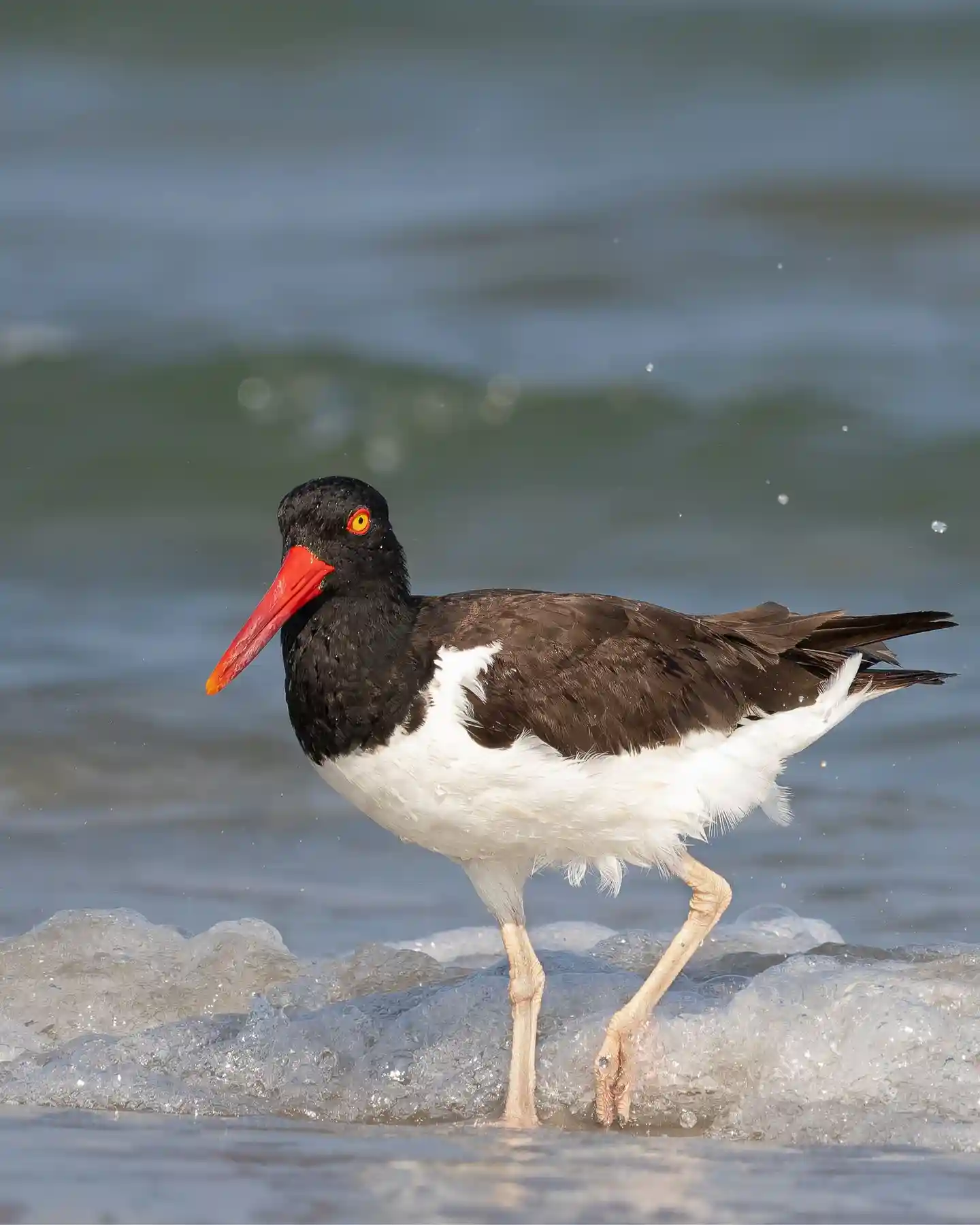
Black and white plumage can make a bird appear easy to identify, but many species share this color pattern. A bird at your feeder might be a chickadee, nuthatch, or Downy Woodpecker. Near water, the possibilities include loons, ducks, and skimmers.
This guide covers 17 black and white birds found across North America. You will learn their main field marks, size, habitat, range, and the places where you are most likely to see them.
Quick Identification Chart
| Bird | Size | Best field mark | Where to look |
| Black-capped Chickadee | 4.7–5.9 in | Black cap and white cheeks | Woodlands and feeders |
| Carolina Chickadee | 3.9–4.7 in | Small black bib and gray wings | Southeastern backyards |
| White-breasted Nuthatch | 5.1–5.5 in | White face and black crown | Tree trunks |
| Downy Woodpecker | 5.5–6.7 in | Small bill and white back | Backyards and woodlands |
| Hairy Woodpecker | 7.1–10.2 in | Long, heavy bill | Mature forests |
| Black-and-white Warbler | 4.3–5.1 in | Bold striped plumage | Forest trunks and branches |
| Black-billed Magpie | 17.7–23.6 in | Very long tail | Open western country |
| Eastern Kingbird | 7.5–9.1 in | White-tipped black tail | Fields and wetlands |
| Bobolink | 5.9–8.3 in | White back and buff nape | Grasslands |
| Lark Bunting | 5.5–7.1 in | Black body with white wing patch | Western grasslands |
| Rose-breasted Grosbeak | 7.1–8.3 in | Red chest patch on male | Deciduous woods |
| Black-throated Gray Warbler | 4.7–5.1 in | Black throat and striped face | Western forests |
| Common Loon | 26–36 in | Checkered back and pointed bill | Northern lakes |
| Bufflehead | 12.6–15.8 in | Large white head patch | Ponds and sheltered bays |
| Common Goldeneye | 15.8–20.1 in | White cheek spot and golden eye | Lakes and rivers |
| Razorbill | 16.9–18.5 in | Thick, blunt black bill | North Atlantic coast |
| Black Skimmer | 15.8–19.7 in | Lower bill longer than upper bill | Coastal beaches |
1. Black-capped Chickadee
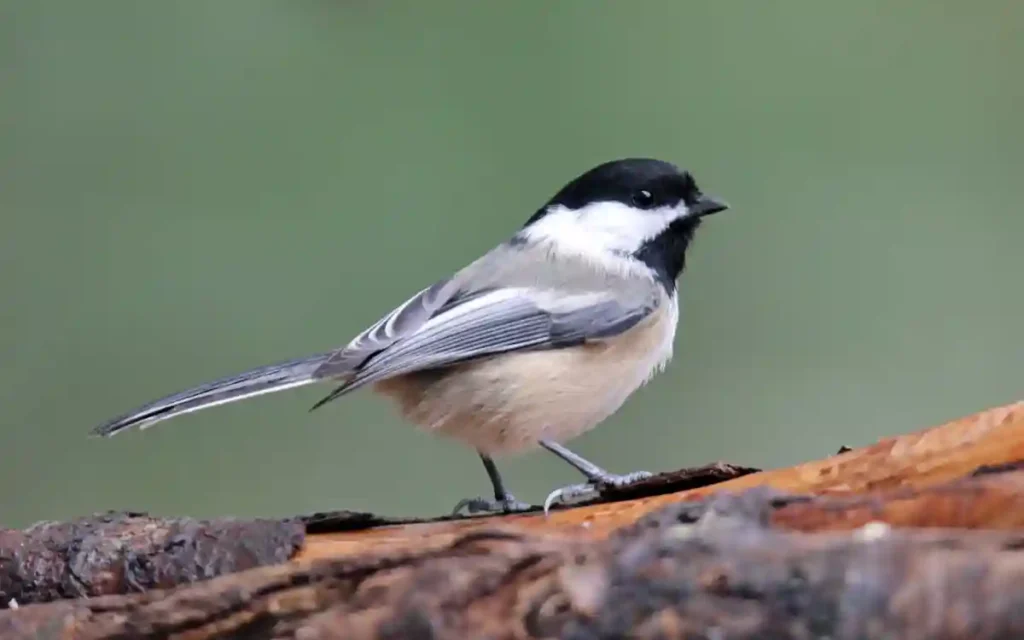
The Black-capped Chickadee is one of the most familiar black and white backyard birds in northern North America. It has a black cap, black throat, white cheeks, gray back, and pale underparts. Its small size and oversized round head give it a friendly appearance.
These chickadees move quickly through tree branches, often hanging upside down while searching for insects. They also visit feeders for sunflower seeds, peanuts, and suet. Listen for the recognizable chick-a-dee-dee-dee call or the clear two-note whistle commonly heard in spring.
- Scientific name: Poecile atricapillus
- Length: 4.7–5.9 inches
- Range: Canada, Alaska, northern United States, and Appalachian Mountains
- Habitat: Woodlands, forest edges, parks, and backyards
2. Carolina Chickadee
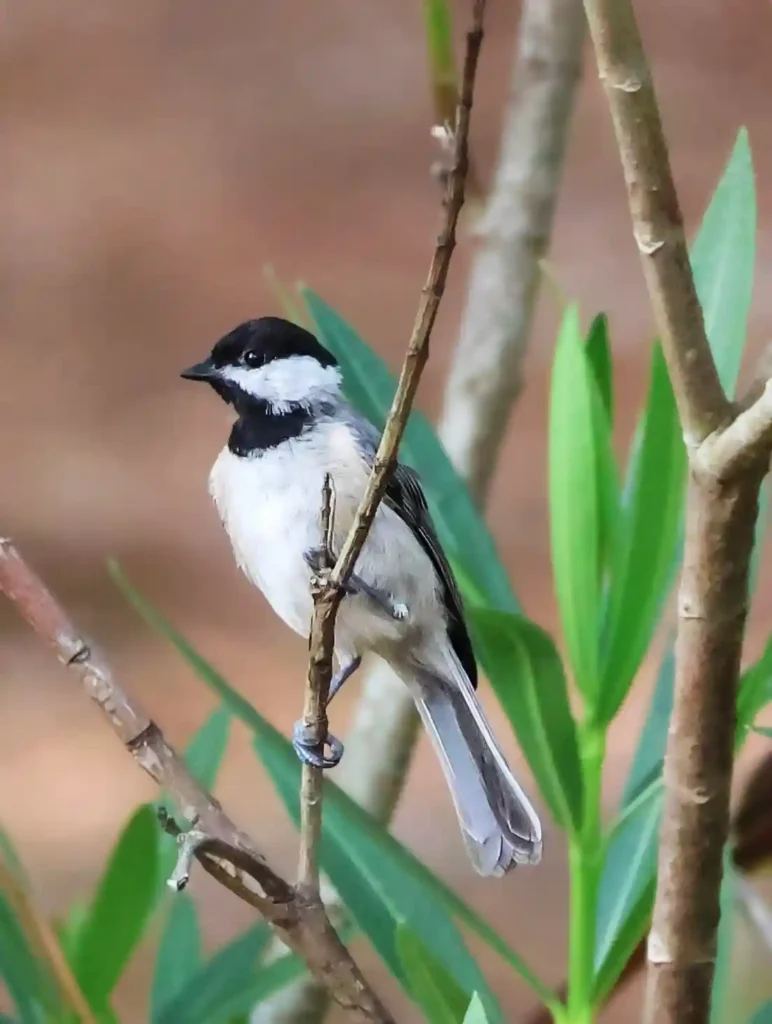
Carolina Chickadees look much like Black-capped Chickadees, but they live mainly in the southeastern United States. They have a black cap and bib, white cheeks, a gray back, and whitish underparts. Their wings usually appear plainer and less white-edged than those of Black-capped Chickadees.
One helpful clue is location. Carolina Chickadees occur from the Mid-Atlantic states south to Florida and west into Texas. Their call is faster and higher than the Black-capped Chickadee’s call. You may see them taking a single seed from a feeder before carrying it to a nearby branch.
- Scientific name: Poecile carolinensis
- Length: 3.9–4.7 inches
- Range: Southeastern and south-central United States
- Habitat: Deciduous woods, parks, suburbs, and backyards
3. White breasted Nuthatch
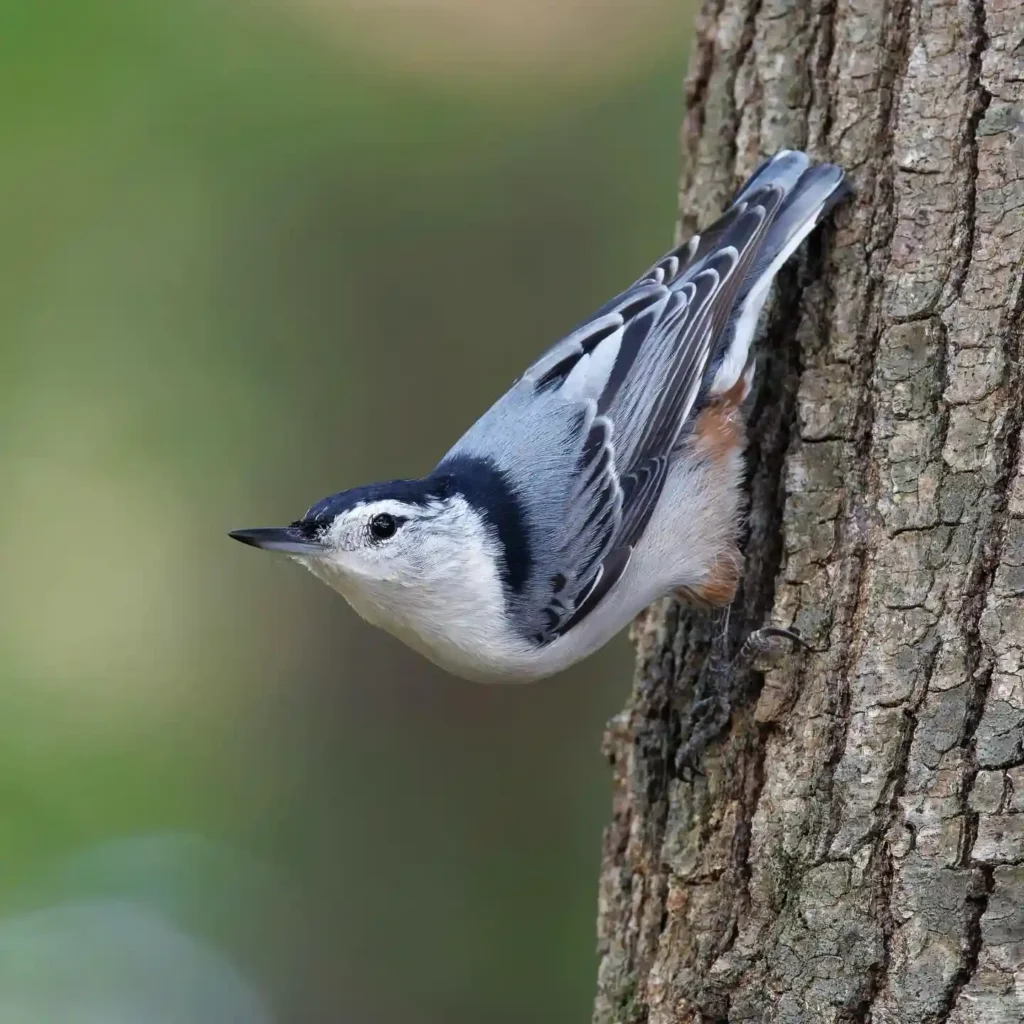
The White-breasted Nuthatch has a white face and chest, blue-gray back, and black or dark gray crown. Its short tail, long pointed bill, and habit of walking headfirst down tree trunks separate it from chickadees and small woodpeckers.
Nuthatches search bark crevices for beetles, larvae, and other small prey. They also eat seeds and frequently visit feeders. Their nasal yank-yank call can reveal their presence before you find them on a tree. White-breasted Nuthatches are widespread, although their exact appearance varies slightly between regions.
- Scientific name: Sitta carolinensis
- Length: 5.1–5.5 inches
- Range: Much of the United States, southern Canada, and Mexico
- Habitat: Mature deciduous woods, open forests, parks, and yards
4. Downy Woodpecker
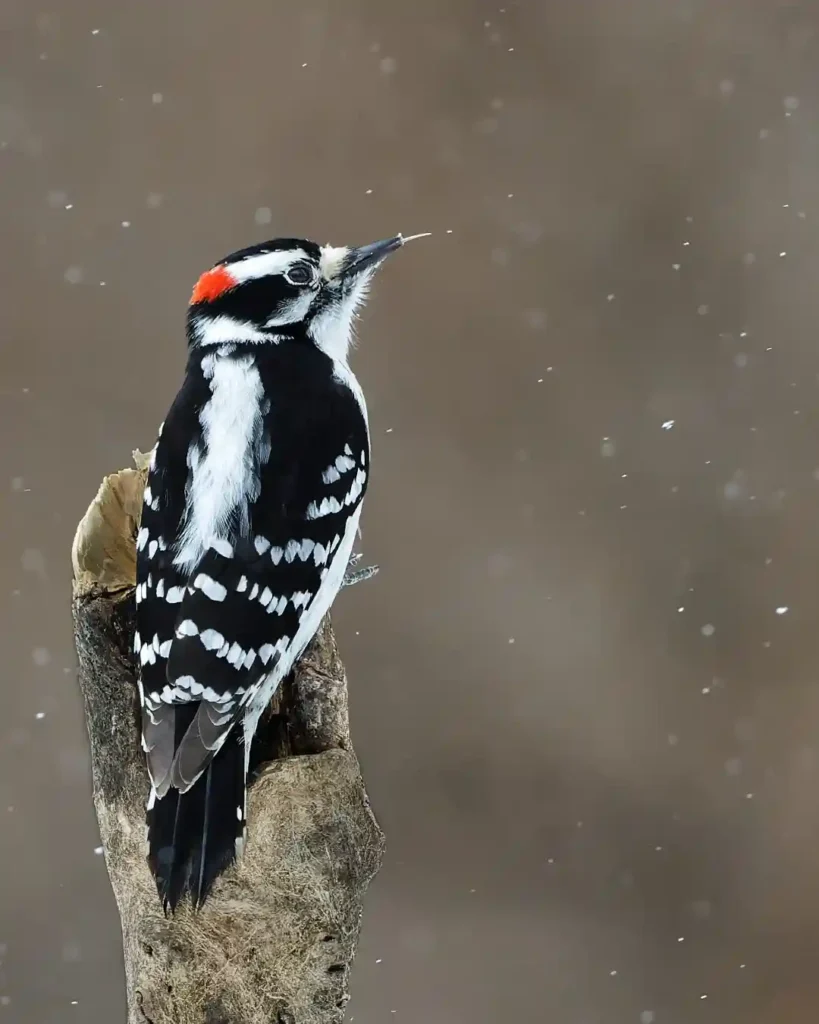
Downy Woodpeckers are small black and white birds commonly seen on backyard trees and suet feeders. They have black wings marked with white spots, a broad white stripe down the back, and white underparts. Males have a small red patch on the back of the head.
The short bill is one of the easiest ways to identify this woodpecker. It is noticeably shorter than the length of the bird’s head. Downy Woodpeckers explore narrow limbs, weed stalks, and shrubs that larger woodpeckers cannot use easily. They are usually comfortable living near people.
- Scientific name: Dryobates pubescens
- Length: 5.5–6.7 inches
- Range: Across most of the United States and Canada
- Habitat: Open woods, orchards, parks, gardens, and suburbs
5. Hairy Woodpecker
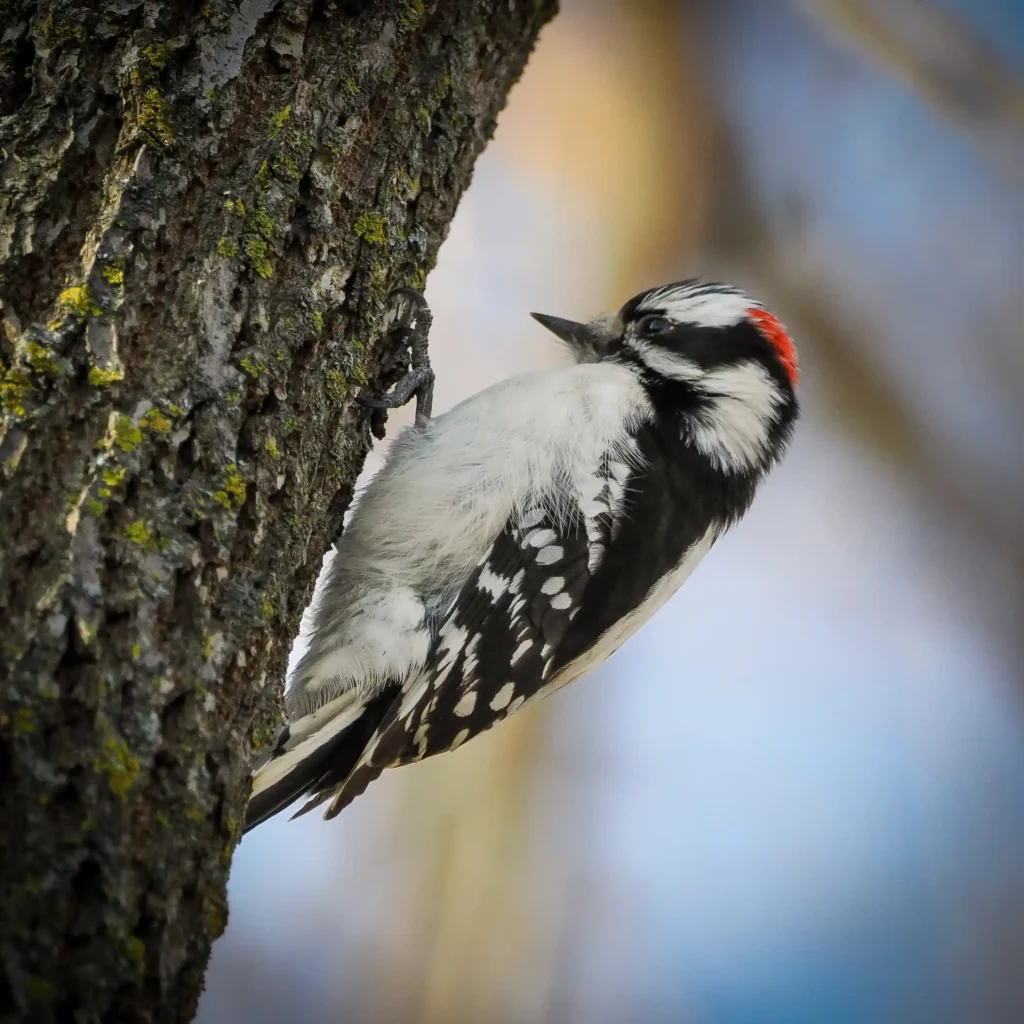
The Hairy Woodpecker resembles a larger version of the Downy Woodpecker. Both have spotted black wings, white underparts, and a white stripe along the center of the back. Male Hairy Woodpeckers also have a red patch behind the crown.
Look closely at the bill. A Hairy Woodpecker has a long, sturdy bill nearly as long as its head. It also prefers larger branches and tree trunks. Hairy Woodpeckers are often found in mature forests, although they may visit yards with large trees or suet feeders. Their sharp call sounds louder and stronger than that of a Downy.
- Scientific name: Leuconotopicus villosus
- Length: 7.1–10.2 inches
- Range: Throughout much of North America
- Habitat: Mature forests, wooded parks, burned forests, and large backyards
6. Black and white Warbler
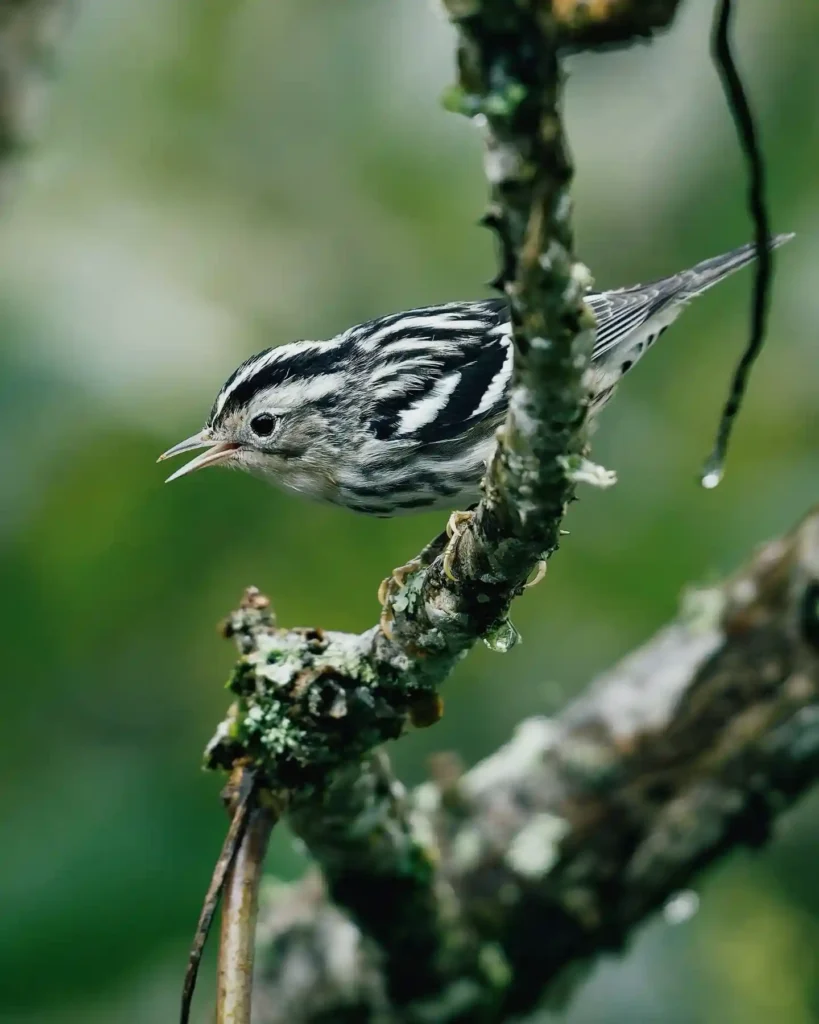
Few birds match their name as closely as the Black-and-white Warbler. Narrow black and white stripes cover its crown, back, wings, and underparts. Adult males have darker cheeks and throats, while females usually look paler.
Unlike most warblers, this species creeps along trunks and thick branches in a manner similar to a nuthatch. It searches under bark for insects and larvae rather than catching prey among leaves. Black-and-white Warblers breed in eastern and northern forests and travel through much of the eastern United States during migration.
- Scientific name: Mniotilta varia
- Length: 4.3–5.1 inches
- Range: Breeds across eastern North America and winters farther south
- Habitat: Deciduous and mixed forests
- Best ID clue: Creeping along trunks and branches
7. Black billed Magpie
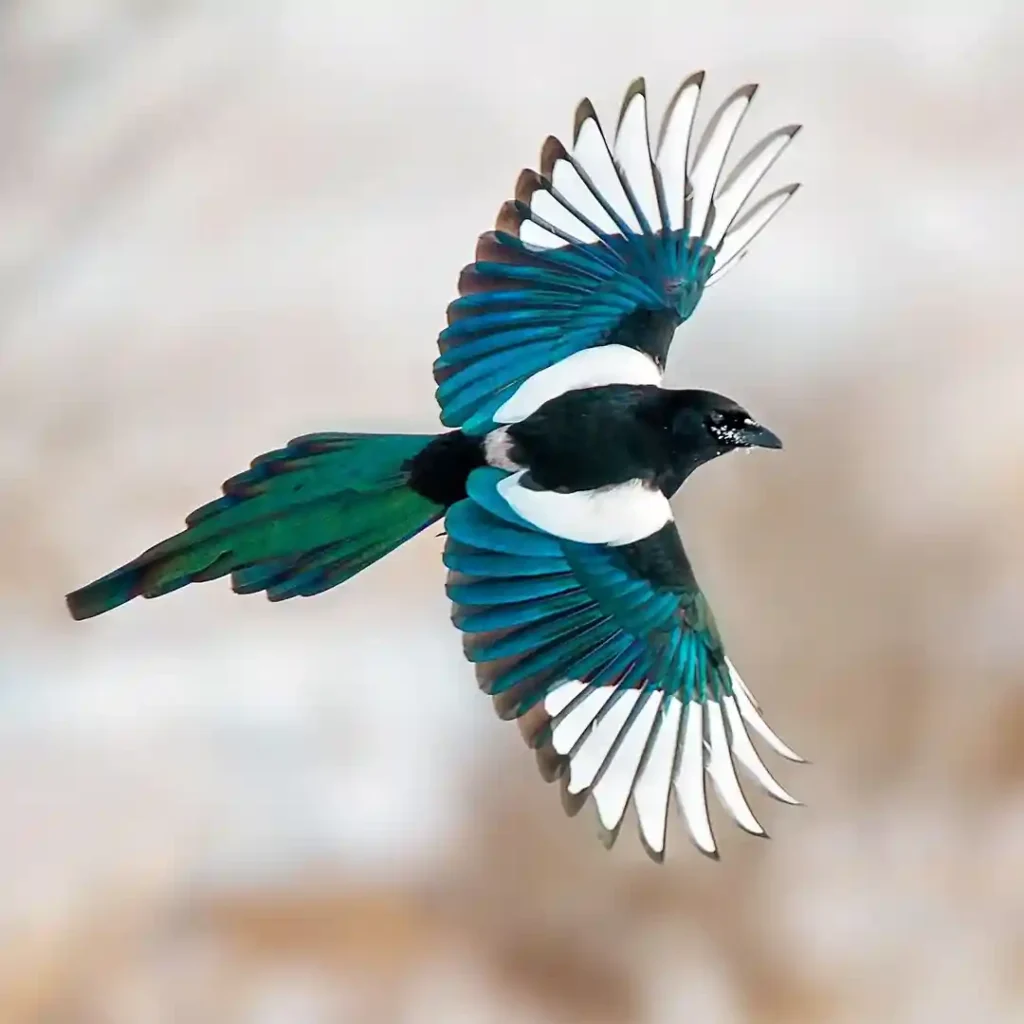
Black-billed Magpies are large, unmistakable birds with white bellies, black heads, and extremely long black tails. Their dark feathers can show blue, green, or purple tones when sunlight catches them.
These intelligent relatives of crows often walk across fields, perch on fence posts, or gather along roads. They eat insects, seeds, fruit, carrion, and small animals. Their bold behavior makes them easy to notice in western North America. A bulky, domed stick nest in a tree may also signal that magpies live nearby.
- Scientific name: Pica hudsonia
- Length: 17.7–23.6 inches
- Range: Western and central North America
- Habitat: Open country, farmland, grasslands, and towns
- Best ID clue: Long tail and white shoulder patches
8. Eastern Kingbird
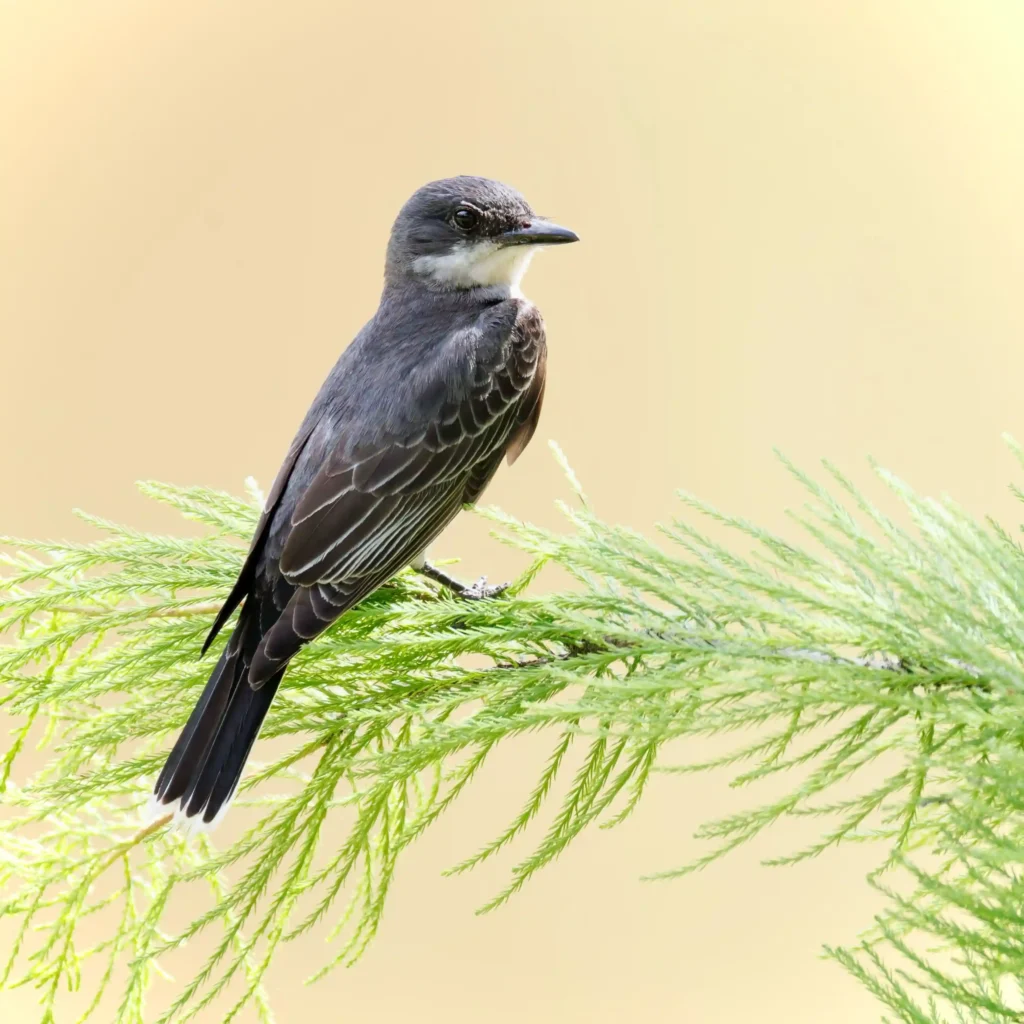
The Eastern Kingbird has a dark gray to black head and back, clean white underparts, and a square tail tipped with white. A small red-orange crown patch is usually hidden beneath its feathers.
You will often see this flycatcher sitting upright on an exposed fence, wire, branch, or dead tree. From that perch, it flies out to catch an insect before returning to the same spot. Eastern Kingbirds are highly defensive around their nests and may chase crows, ravens, and hawks much larger than themselves.
- Scientific name: Tyrannus tyrannus
- Length: 7.5–9.1 inches
- Range: Widespread across North America during summer
- Habitat: Fields, farms, wetlands, forest edges, and shorelines
- Best ID clue: White band across the end of the tail
9. Bobolink
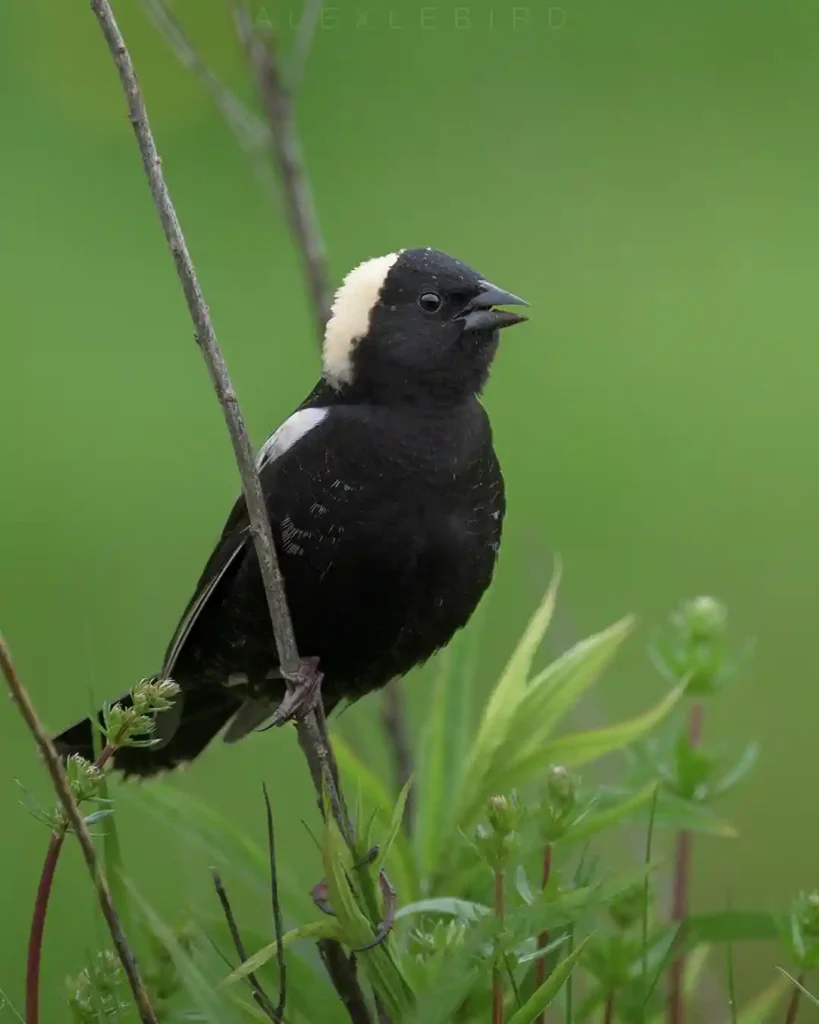
A breeding male Bobolink looks as if it is wearing its plumage backward. Most songbirds are darker above and lighter below, but this bird has black underparts, a white back, white shoulders, and a buff-colored patch behind the head.
Bobolinks live in hayfields, meadows, and other open grasslands. Males perform fluttering display flights while producing a bubbling series of notes. After breeding, their appearance changes dramatically. Males molt into brown, streaked plumage that looks much like the female’s, so the black and white pattern is seasonal.
- Scientific name: Dolichonyx oryzivorus
- Length: 5.9–8.3 inches
- Range: Breeds in northern United States and southern Canada
- Habitat: Meadows, prairies, and hayfields
- Best ID clue: White back with black underparts
10. Lark Bunting
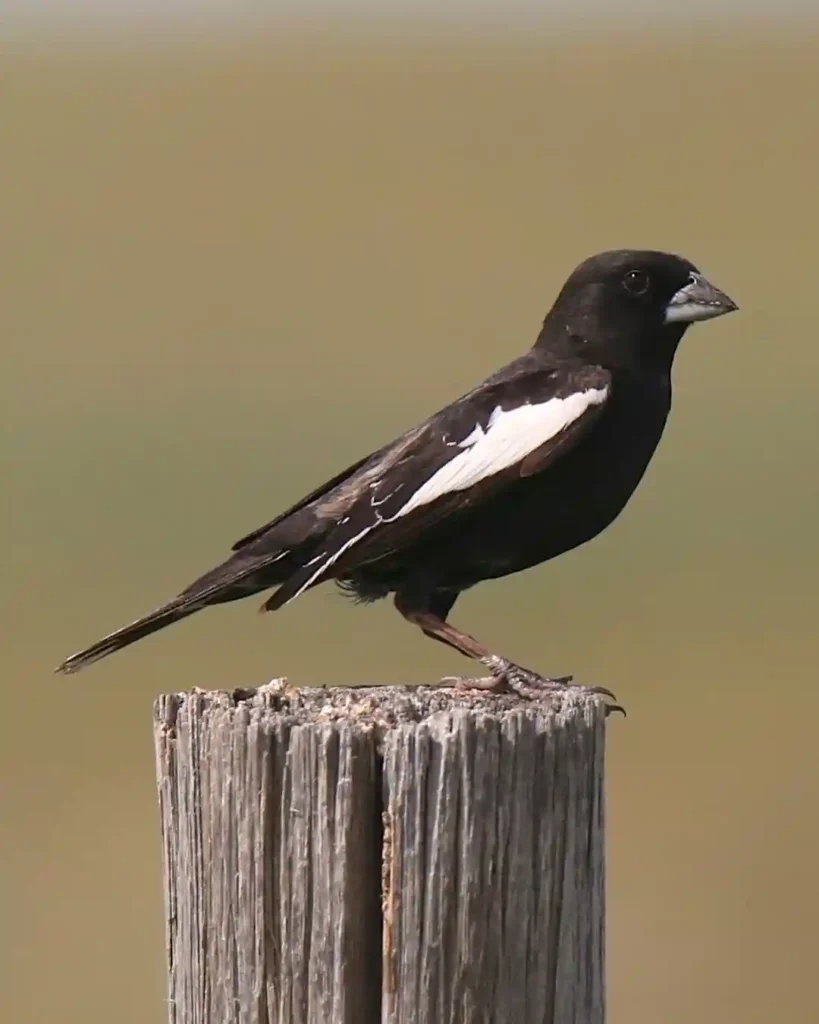
The male Lark Bunting becomes mostly black during the breeding season, with a broad white patch on each wing. Females and nonbreeding males are brown and heavily streaked, which can make them look like entirely different birds.
This chunky sparrow lives in the grasslands and shrublands of central and western North America. Males may sing while perched on shrubs or during short display flights. Lark Buntings often forage on the ground for seeds and insects, sometimes joining loose flocks outside the breeding season.
- Scientific name: Calamospiza melanocorys
- Length: 5.5–7.1 inches
- Range: Great Plains and interior West
- Habitat: Prairies, sagebrush, farmland, and dry grasslands
- Best ID clue: White wing patch on an otherwise black breeding male
11. Rose-breasted Grosbeak
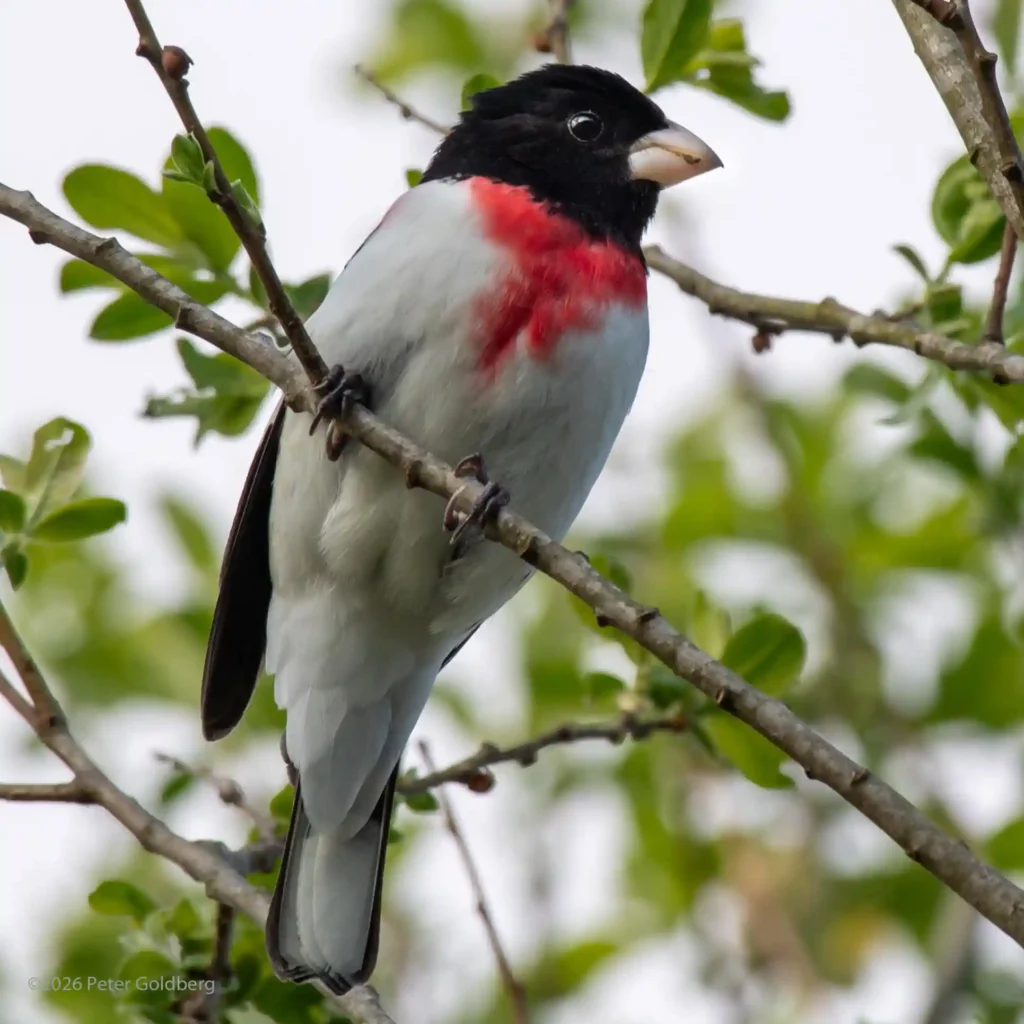
Male Rose-breasted Grosbeaks are mostly black and white, but a triangular red patch on the chest gives them away. They have a black head and back, white belly, white wing patches, and a thick pale bill. Females are brown and heavily streaked.
These grosbeaks usually forage among the leaves of deciduous trees, where they eat insects, seeds, buds, and fruit. During spring and fall migration, they may stop at backyard feeders for sunflower seeds. Their rich song is sometimes compared to that of an American Robin, but it is smoother and more musical.
- Scientific name: Pheucticus ludovicianus
- Length: 7.1–8.3 inches
- Range: Eastern and central North America during breeding
- Habitat: Deciduous forests, woodland edges, parks, and gardens
- Best ID clue: Red chest patch on the male
12. Black-throated Gray Warbler
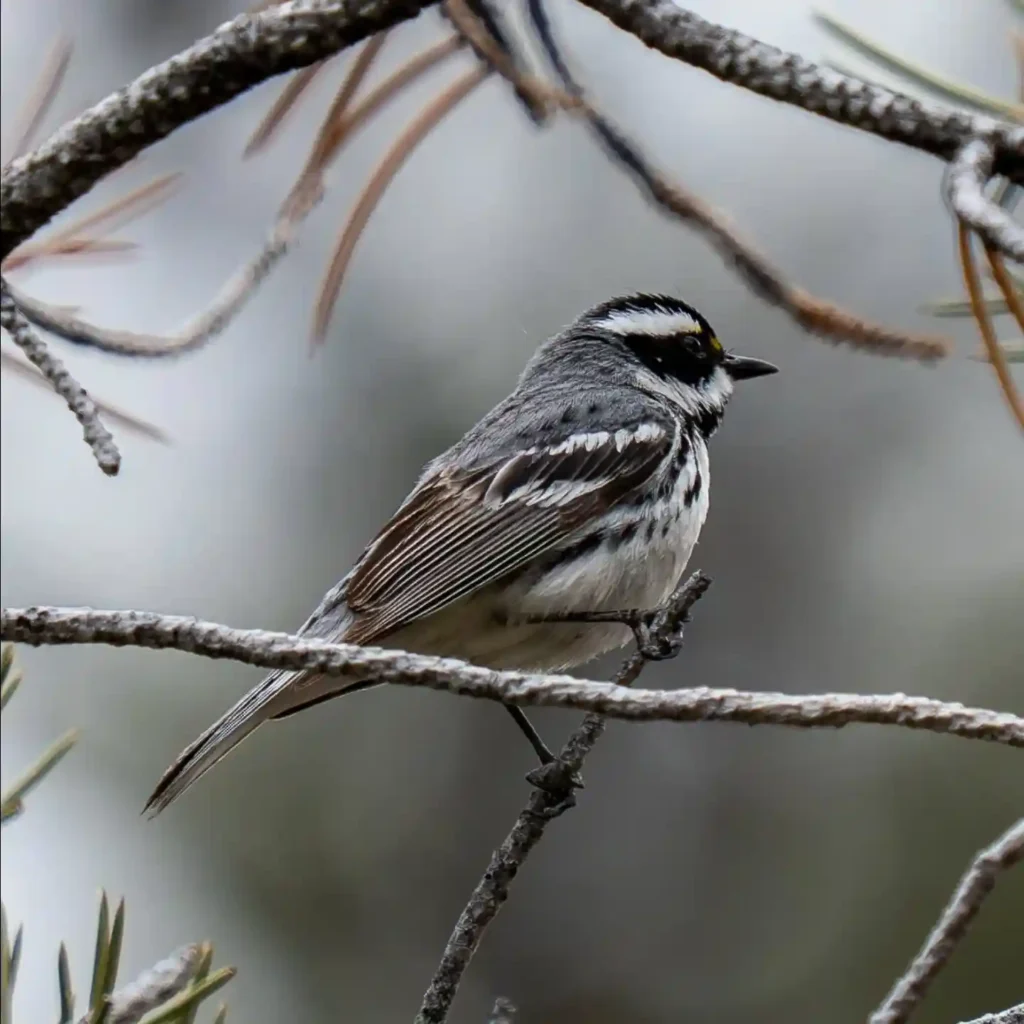
The Black-throated Gray Warbler is a small western bird with a striped black and white face, gray back, white belly, and black throat. A tiny yellow spot in front of each eye adds a touch of color but can be difficult to see from a distance.
This warbler moves through tree branches searching for insects. It often stays in the middle or upper portions of the canopy, so listening for its buzzy song can help you locate it. Adult females have less black on the throat but retain the bold facial pattern.
- Scientific name: Setophaga nigrescens
- Length: 4.7–5.1 inches
- Range: Western North America
- Habitat: Coniferous forests, oak woodlands, and mixed woods
- Best ID clue: Striped face with a small yellow spot near the eye
13. Common Loon
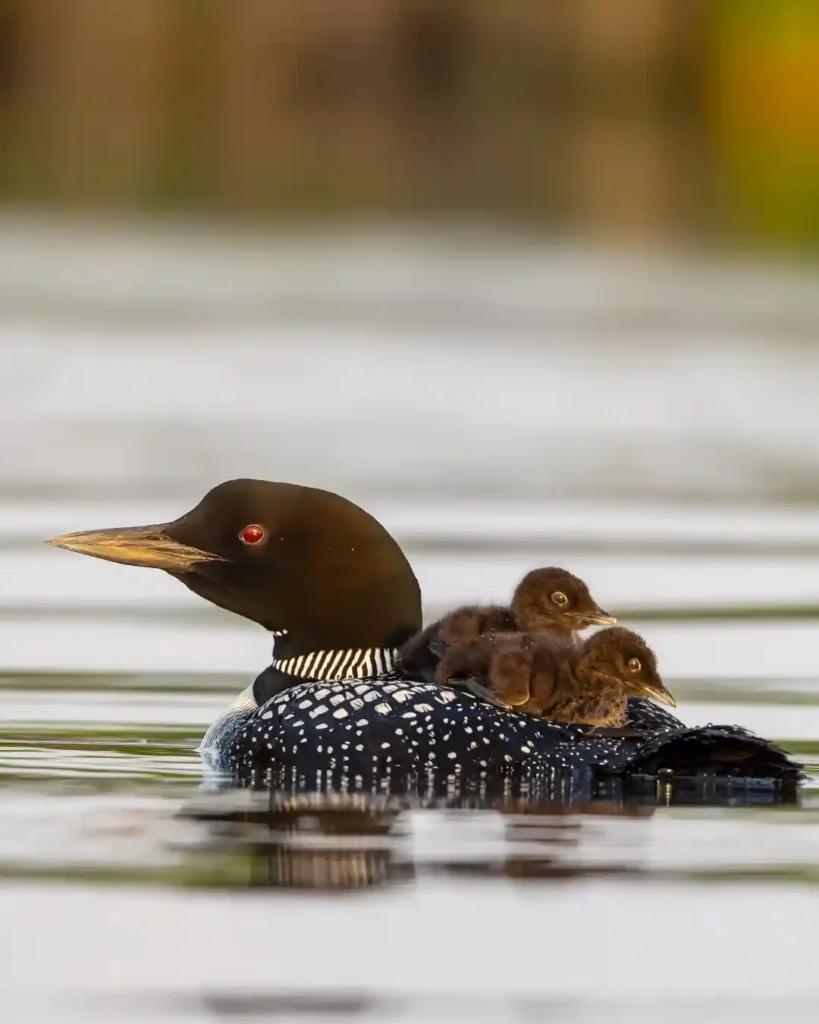
A Common Loon in breeding plumage has a glossy black head, white necklace, red eyes, and a black back covered with neat white squares. Its long body sits low in the water, while its straight, pointed bill gives it a sharp profile.
Loons are powerful underwater swimmers that catch fish using their feet for propulsion. They need a long stretch of open water to take off because their legs sit far back on the body. During winter, their bold pattern fades to gray and white. Their haunting calls are most often heard on northern lakes in summer.
- Scientific name: Gavia immer
- Length: 26–36 inches
- Range: Northern lakes in summer and coastal waters in winter
- Habitat: Clear lakes, reservoirs, bays, and ocean coasts
- Best ID clue: Black head and checkered back in breeding plumage
14. Bufflehead
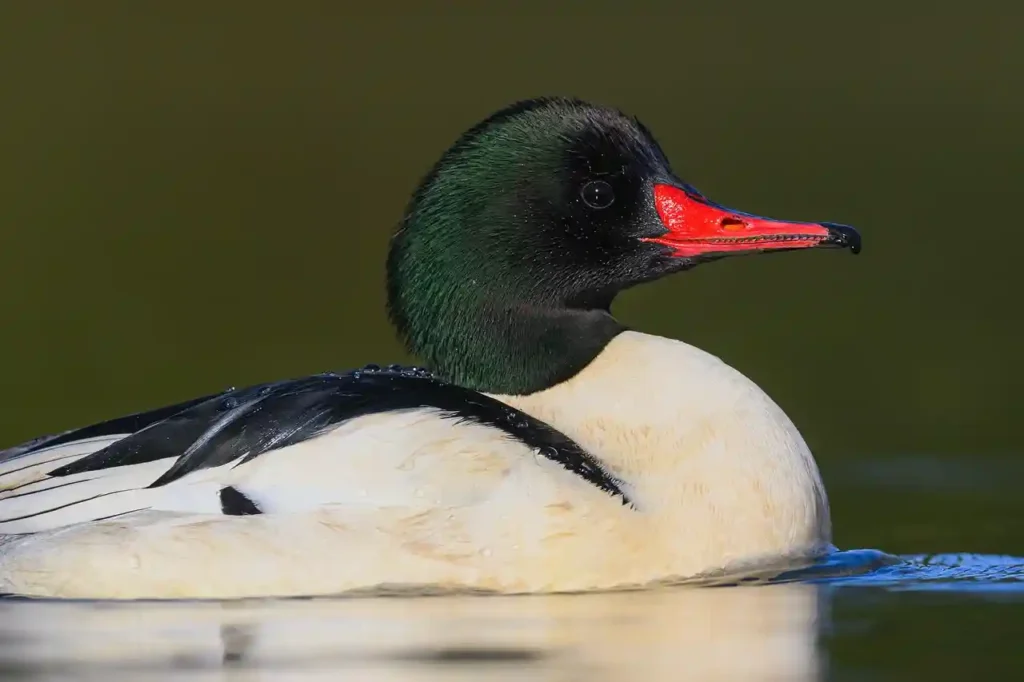
Male Buffleheads are compact black and white ducks with an oversized white patch wrapping around the back of the head. The remaining dark head feathers can reflect purple and green in good light. Their bodies are mostly white with a black back.
These small diving ducks repeatedly disappear beneath the surface while searching for aquatic insects, crustaceans, and mollusks. They are most commonly seen across the United States during winter. Buffleheads frequently use small ponds and sheltered bays that larger diving ducks may avoid.
- Scientific name: Bucephala albeola
- Length: 12.6–15.8 inches
- Range: Breeds in Canada and Alaska; winters across much of the United States
- Habitat: Lakes, ponds, rivers, estuaries, and bays
- Best ID clue: Large white patch on the back of the male’s head
15. Common Goldeneye
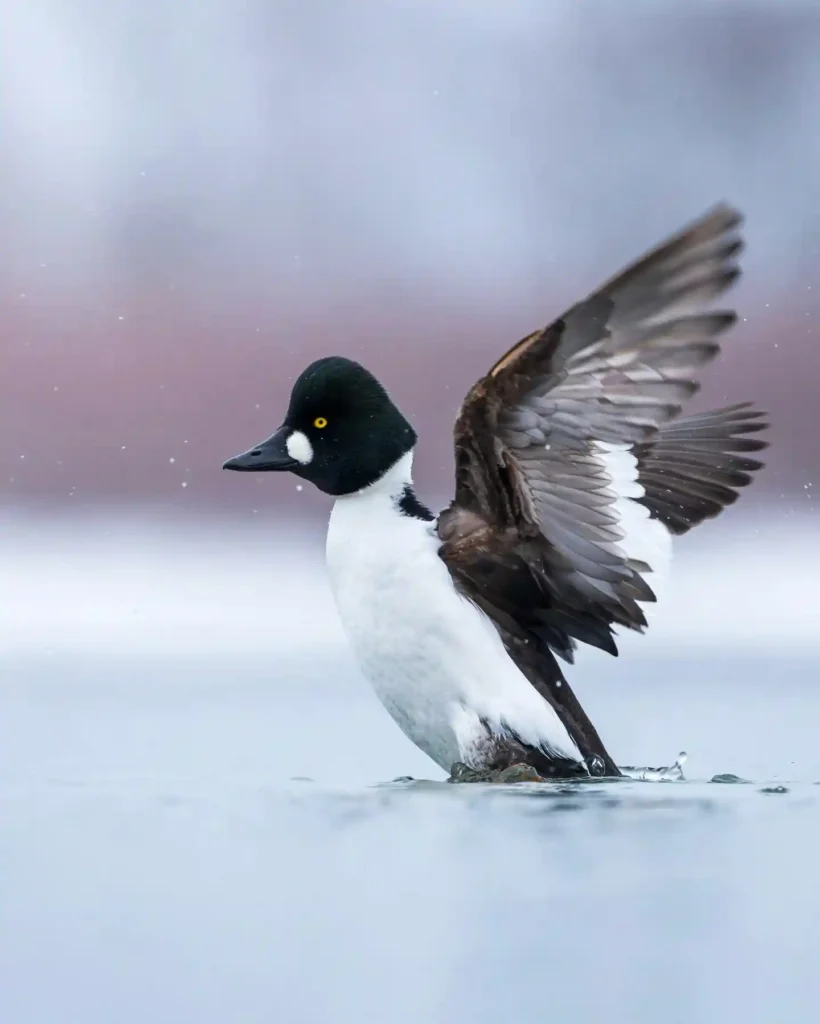
The male Common Goldeneye has a dark greenish-black head, golden-yellow eye, white body, and a round white spot between the eye and bill. Females have brown heads, gray bodies, and yellow-tipped bills.
Goldeneyes are active diving ducks that feed on aquatic insects, crustaceans, mollusks, and small fish. They frequently gather on open lakes and rivers during winter. Their rapid wingbeats produce a whistling sound in flight, which has earned them the nickname “whistlers.”
- Scientific name: Bucephala clangula
- Length: 15.8–20.1 inches
- Range: Breeds across northern forests and winters farther south
- Habitat: Lakes, large rivers, reservoirs, and coastal bays
- Best ID clue: Round white cheek spot on the adult male
16. Razorbill
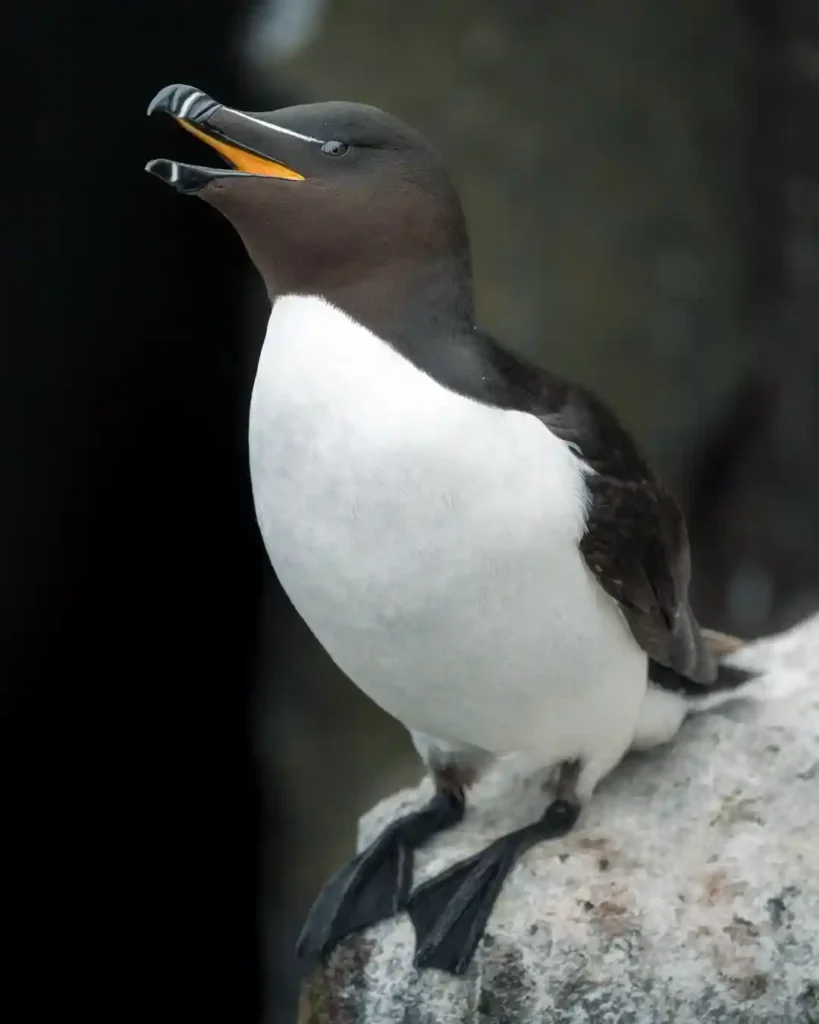
Razorbills are stocky black and white seabirds of the North Atlantic. Breeding adults have black heads and backs, white underparts, and a thick black bill crossed by a thin white line. Their upright posture can make them resemble small penguins when standing on coastal rocks.
These birds use their wings to swim underwater while chasing fish. Razorbills nest in rocky crevices and on narrow cliff ledges, often near murres and Atlantic Puffins. In North America, they are mainly found along the coasts of eastern Canada and the northeastern United States.
- Scientific name: Alca torda
- Length: 16.9–18.5 inches
- Range: North Atlantic coast
- Habitat: Rocky islands, sea cliffs, and offshore waters
- Best ID clue: Deep, blunt bill with a white line
17. Black Skimmer
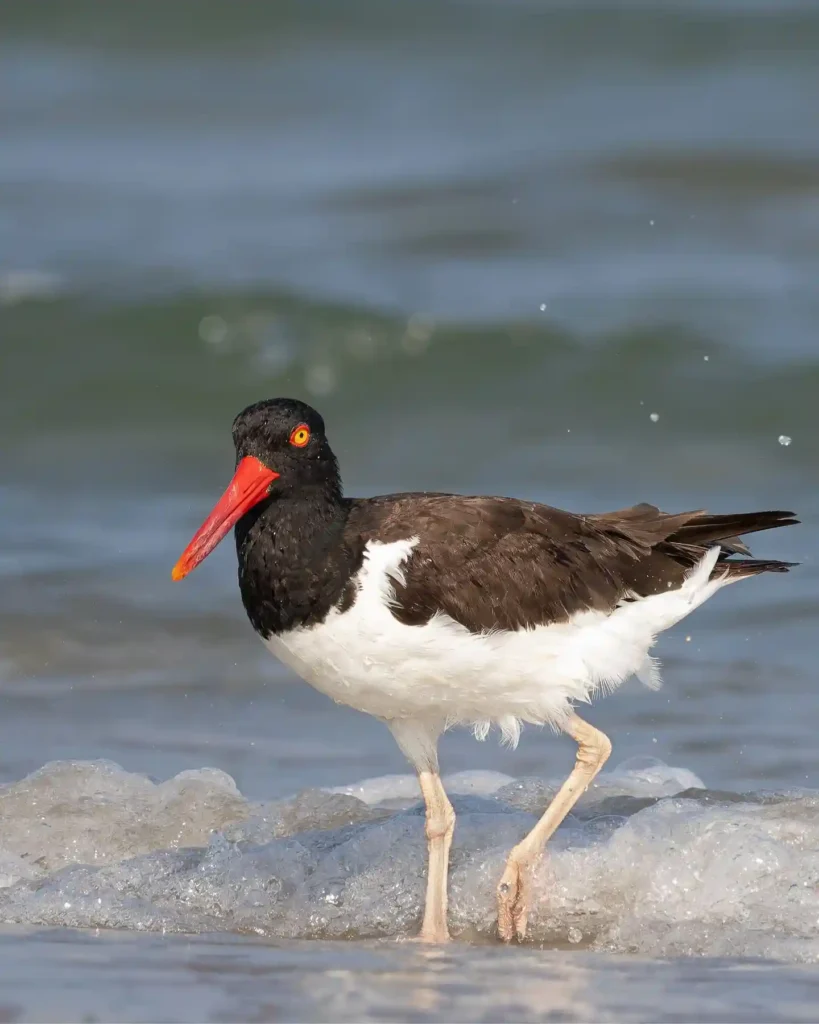
The Black Skimmer is a long-winged coastal bird with a black back and cap, white face and underparts, and a bright red-and-black bill. Its lower bill extends farther than the upper bill, a feature unlike that of any other North American bird.
A feeding skimmer flies low over calm water with its lower bill cutting through the surface. When the bill touches a fish, the bird snaps its mouth shut. Black Skimmers often rest in groups on open sandbars and beaches, where their unusual bills and short red legs make them easy to recognize.
- Scientific name: Rynchops niger
- Length: 15.8–19.7 inches
- Range: Atlantic, Gulf, and parts of the Pacific coast
- Habitat: Beaches, estuaries, lagoons, and coastal bays
- Best ID clue: Lower bill longer than the upper bill
How to Identify a Black and White Bird
Start by noting where the bird is spending its time. A small bird climbing down a trunk is probably a nuthatch, while one tapping on bark may be a woodpecker. A bird making short flights from a fence to catch insects could be an Eastern Kingbird.
Next, check its size, bill shape, tail pattern, and behavior. Color alone is rarely enough. Seasonal plumage also matters because Bobolinks, loons, Lark Buntings, and several waterbirds look different outside the breeding season.
A clear photograph can help you check details later. Bird identification apps such as Merlin Bird ID can also suggest species based on location, date, appearance, or sound.
FAQs
What is the most common small black and white bird?
Black-capped Chickadees, Carolina Chickadees, Downy Woodpeckers, and White-breasted Nuthatches are among the most common. The species you encounter depends on your region and surrounding habitat.
What black and white bird walks down tree trunks?
The White-breasted Nuthatch frequently moves headfirst down tree trunks. Black-and-white Warblers also creep along bark, although they are seasonal visitors in much of North America.
What black and white bird has a red spot on its head?
Male Downy and Hairy Woodpeckers have small red patches on the back of the head. Red-bellied Woodpeckers also have red on the crown and nape, along with black and white barring across the back.
What black and white bird has a very long tail?
The Black-billed Magpie has a remarkably long tail that may account for more than half its total length. It is mainly found across western and central parts of North America.
Are all black and white birds male?
No. Both sexes can have black and white plumage. However, in species such as Bobolinks, Lark Buntings, Buffleheads, and Rose-breasted Grosbeaks, adult males display the strongest black and white patterns during the breeding season.
Why do some birds change from black and white to brown?
Seasonal molting can give birds better camouflage outside the breeding season. Male Bobolinks and Lark Buntings lose much of their bold breeding plumage and become brown or streaked later in the year.
