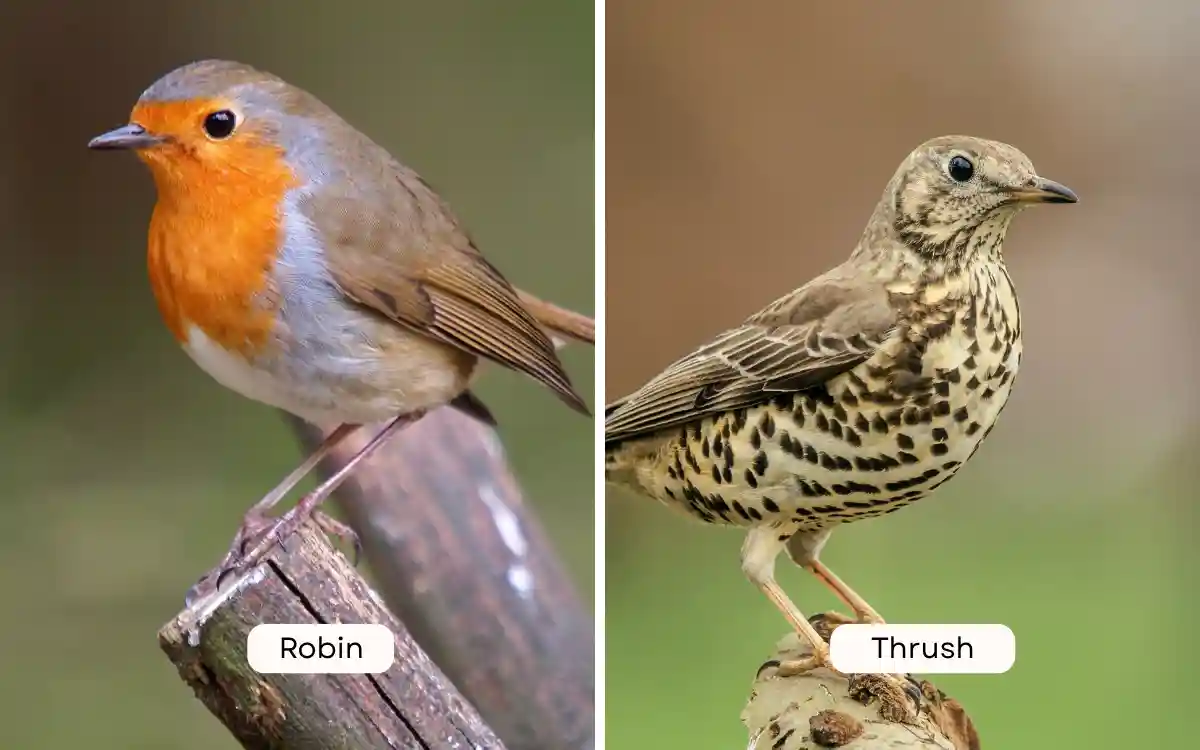
This comparison needs one important clarification first: an American Robin is a thrush. It belongs to the same bird family as Wood Thrushes, Hermit Thrushes, Veeries, and Swainson’s Thrushes.
So when people search “Robin vs Thrush,” they usually mean: How is an American Robin different from other thrushes?
The fastest answer is this: American Robins are larger, more open-yard birds with a warm orange breast, gray-brown back, dark head, and yellowish bill. Most other North American thrushes are smaller, browner, more forest-loving, and have spotted breasts instead of a solid orange belly.
Cornell describes American Robins as gray-brown birds with warm orange underparts and dark heads, while Hermit Thrushes are smaller robin-shaped birds with pale underparts and breast spots.
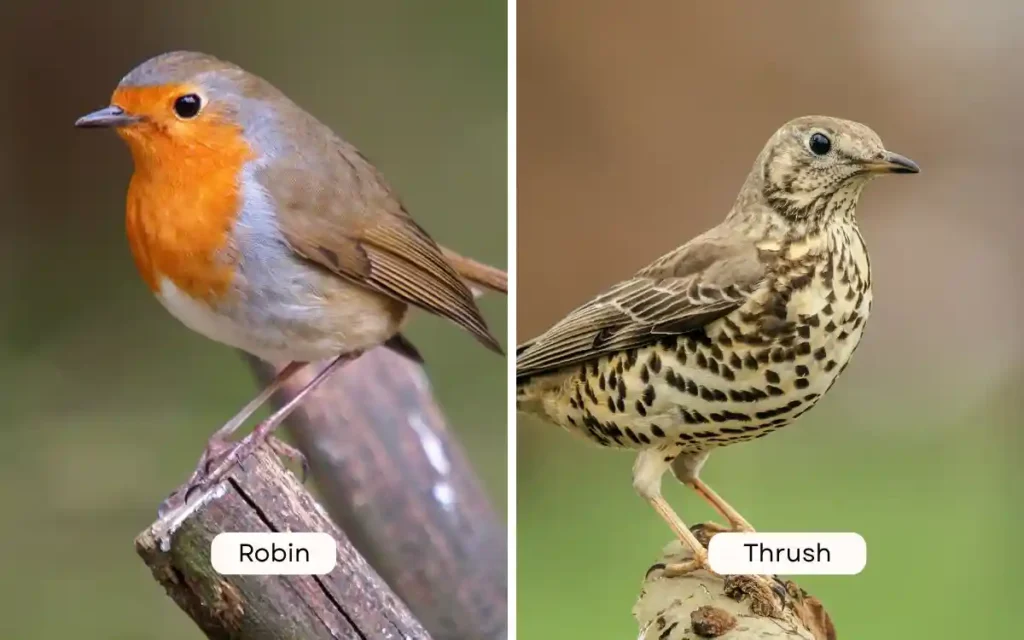
Quick Difference Table
| Feature | American Robin | Other Thrushes |
| Family | Thrush family | Thrush family |
| Size | Larger | Usually smaller |
| Breast | Solid warm orange | Pale, buff, or white with spots |
| Head | Often darker than back | Usually brown, plain, or softly marked |
| Bill | Yellowish, medium-length | Slimmer, often darker |
| Habitat | Lawns, parks, yards, open woods | Forests, thickets, understory, wooded edges |
| Behavior | Hops on lawns, pulls worms | Walks/hops in leaf litter, often shy |
| Best clue | Orange breast + open lawn | Spotted breast + forest cover |
Robin
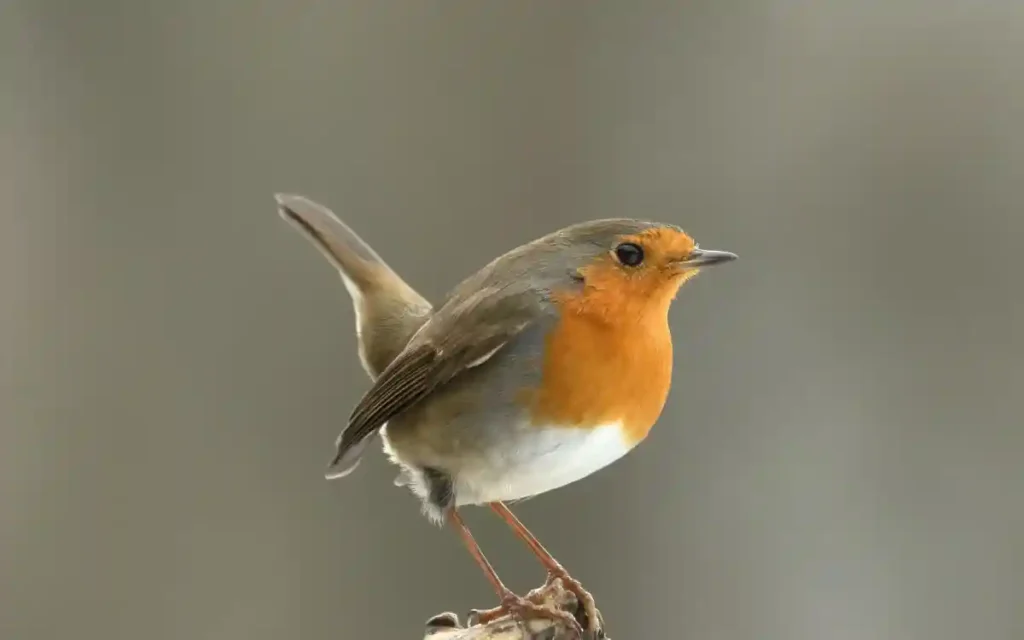
Quick ID: Large gray-brown thrush with a warm orange breast, dark head, and yellowish bill.
What It Looks Like:
American Robins are large thrushes with gray-brown upperparts, a warm orange breast and belly, a darker head, and a yellowish bill. In flight, they may show white under the tail and lower belly. They are bigger and bolder-looking than most other North American thrushes. Cornell lists American Robins at about 7.9–11 inches long.
Where You’ll Find It:
Look for robins on lawns, parks, gardens, golf courses, open woods, forest edges, and suburban yards. They are often easy to see because they spend a lot of time in open areas.
Behavior Clues:
Robins often hop across grass, pause, tilt their heads, and pull worms or insects from the ground. Cornell describes them as common lawn birds often seen tugging earthworms from the ground.
How to Tell It Apart:
The solid orange breast is the biggest clue. Most other thrushes have spotted breasts, paler underparts, and more secretive forest behavior.
Best Time to See:
Spring and summer are very good, but robins can also be seen in fall and winter in many areas, especially near berry trees.
Backyard Tip:
Plant native berry shrubs, keep some leaf litter near garden edges, and avoid heavy lawn chemicals so worms and insects remain available.
Related article: Birds That Look Like Robins
Wood Thrush
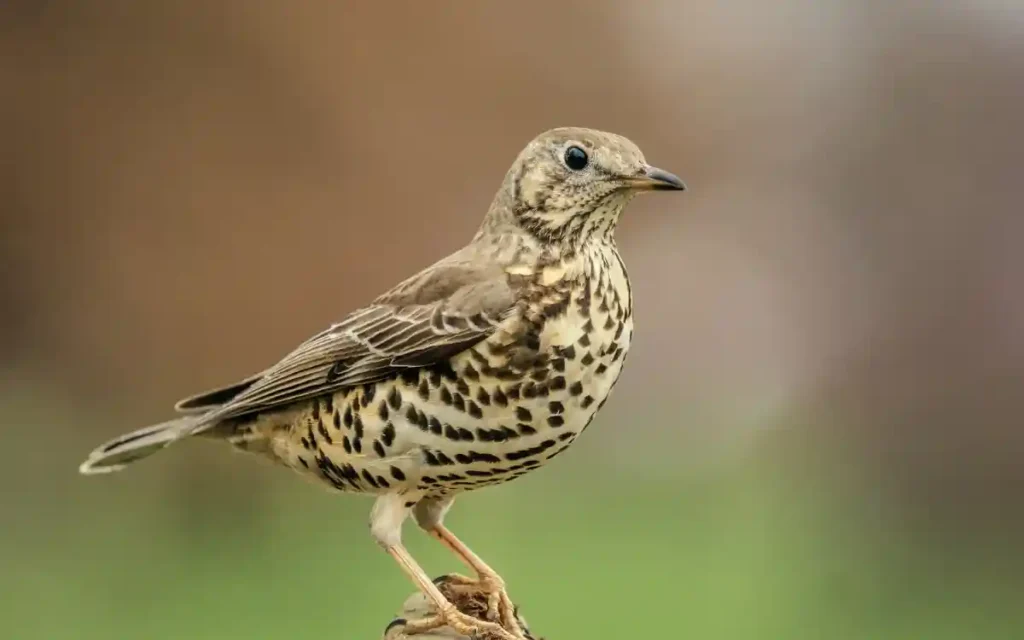
Quick ID: Brown upperparts, white underparts, and bold dark spots on the chest and belly.
What It Looks Like:
Wood Thrushes are smaller than American Robins but still fairly chunky. They have warm brown upperparts, a white belly, and large dark spots across the breast and sides. Cornell lists Wood Thrush as smaller than an American Robin and larger than a Hermit Thrush.
Where You’ll Find It:
Look for Wood Thrushes in mature deciduous forests, shaded woods, leafy ravines, and damp forest understory.
Behavior Clues:
They spend much of their time on or near the forest floor, flipping through leaves and searching for insects.
How to Tell It Apart:
A Wood Thrush has a spotted white breast, not a solid orange breast. It is also more tied to forest habitat than lawns.
Best Time to See:
Spring and summer are best in breeding areas.
Backyard Tip:
If your yard borders woods, native understory plants and leaf litter can make the area more useful for thrushes.
Hermit Thrush
Quick ID: Brown thrush with spotted breast and warm reddish tail.
What It Looks Like:
Hermit Thrushes are smaller than robins and have brown upperparts, pale underparts, and spots on the throat and breast. Their warm reddish tail is one of the best clues. Cornell describes Hermit Thrushes as robin-shaped but smaller, with a reddish tail and spotted underparts.
Where You’ll Find It:
They use forests, wooded edges, thickets, and migration stopover areas. In winter, they may appear in brushy areas and berry patches.
Behavior Clues:
Hermit Thrushes often stand upright, then flick or slowly raise and lower the tail.
How to Tell It Apart:
The spotted breast and reddish tail separate it from a robin. Robins have a plain orange breast and are much more open-lawn birds.
Best Time to See:
Migration and winter are good in many areas, depending on location.
Backyard Tip:
Native berry plants and quiet brushy corners may attract them during migration or winter.
Swainson’s Thrush
Quick ID: Brown thrush with buffy eye ring, spotted breast, and soft face pattern.
What It Looks Like:
Swainson’s Thrushes are smaller and slimmer than robins. They have brown upperparts, pale underparts with spotting, and a buffy eye ring that gives the face a soft, gentle look.
Where You’ll Find It:
Look for them in forests, wooded edges, migration stopover areas, and shaded undergrowth.
Behavior Clues:
They are usually quieter and more hidden than robins. During migration, they may appear in parks and wooded yards.
How to Tell It Apart:
A Swainson’s Thrush has breast spots and a buffy eye ring. A robin has a solid orange breast and a larger, bolder body.
Best Time to See:
Migration is often the best time for many backyard birders.
Backyard Tip:
Keep native shrubs, leaf litter, and insect-friendly planting to support migrating thrushes.
Gray-cheeked Thrush
Quick ID: Plain brown thrush with spotted breast and less obvious eye ring.
What It Looks Like:
Gray-cheeked Thrushes are plain, cool-brown birds with pale underparts and breast spots. Compared with Swainson’s Thrush, the face usually looks less buffy and less warm.
Where You’ll Find It:
They are most often noticed during migration in woods, parks, thickets, and shaded edges.
Behavior Clues:
They tend to be quiet and secretive, often staying low in cover.
How to Tell It Apart:
Compared with a robin, the Gray-cheeked Thrush is smaller, browner, and spotted below. It does not have the robin’s orange belly.
Best Time to See:
Migration is usually the best time.
Backyard Tip:
Native shrubs and dense cover help migrating thrushes rest and feed.
Veery
Quick ID: Warm cinnamon-brown thrush with faint spotting and a plain face.
What It Looks Like:
Veeries are warm reddish-brown or cinnamon-brown above, with pale underparts and lighter, less bold spotting than Wood Thrush. They look softer and less heavily marked than many thrushes.
Where You’ll Find It:
Look for them in damp woods, streamside forests, leafy ravines, and shaded understory.
Behavior Clues:
They spend time low in the forest and can be hard to see well.
How to Tell It Apart:
A Veery is smaller than a robin, lacks a solid orange breast, and has a softer spotted pattern.
Best Time to See:
Spring and summer in breeding range; migration elsewhere.
Backyard Tip:
If you live near woods, keep natural understory and avoid removing all leaf litter.
Fast ID: Robin or Other Thrush?
| What You Saw | More Likely Bird |
| Large bird with solid orange breast on lawn | American Robin |
| Bird pulling worms from grass | American Robin |
| Spotted breast in forest understory | Other thrush |
| Smaller brown bird with reddish tail | Hermit Thrush |
| White belly with bold dark spots | Wood Thrush |
| Buffy eye ring and spotted breast | Swainson’s Thrush |
| Warm cinnamon-brown bird with faint spots | Veery |
| Quiet brown bird hiding in leaf litter | Other thrush |
Biggest Difference: Solid Orange Breast vs Spotted Breast
This is the easiest visual clue.
American Robin: solid orange breast and belly.
Most other thrushes: pale breast with dark spots.
If the bird has heavy spots across the chest and belly, it is probably not an American Robin.
Behavior Difference
Robin: open lawns, parks, yards, worm-pulling, visible hopping.
Other thrushes: forest floor, leaf litter, thickets, shy movement, more hidden.
A robin often acts comfortable in open areas. Other thrushes usually feel more secretive and forest-based.
Size Difference
American Robins are usually larger than the other thrushes people confuse them with. Wood Thrushes are smaller than robins, and Hermit Thrushes are smaller still.
Still, size can be hard to judge in the field, so use it with color and behavior.
Common Mistakes
Mistake 1: Thinking robins are not thrushes
Robins are thrushes. The better comparison is American Robin vs other thrushes.
Mistake 2: Calling every spotted young robin a different thrush
Juvenile robins can show spots on the breast. If the bird is robin-sized, in a yard, and near adult robins, it may be a young robin.
Mistake 3: Ignoring habitat
A large orange-breasted bird in open grass is usually a robin. A smaller spotted bird in shaded woods may be another thrush.
Mistake 4: Looking only at brown color
Many thrushes are brown above. The breast pattern, tail color, face pattern, and behavior matter more.
Simple Memory Trick
Use this:
Robin = orange breast, open lawn, worm hunter.
Other thrush = spotted breast, forest floor, shy mover.
Final Answer
An American Robin is a type of thrush, but it is larger and easier to recognize than most other thrushes. It has a gray-brown back, dark head, yellowish bill, and solid orange breast. It often hops across lawns and pulls worms from the ground.
Other thrushes, such as Wood Thrush, Hermit Thrush, Swainson’s Thrush, Gray-cheeked Thrush, and Veery, are usually smaller, browner, more secretive, and marked with spots on the breast.
For fast ID, check the breast pattern first. Solid orange points to robin. Pale with spots points to another thrush.
Read also: Robin vs Oriole
FAQs
Is a robin a thrush?
Yes. The American Robin is a member of the thrush family. It is one of the most familiar thrushes in North America.
What is the difference between a robin and a thrush?
A robin is one type of thrush. Compared with many other thrushes, American Robins are larger, more open-yard birds with a solid orange breast instead of a spotted breast.
What thrush looks like a robin?
Hermit Thrushes can look robin-shaped but are smaller, with a spotted breast and reddish tail. Wood Thrushes also have a chunky shape but show a white, heavily spotted underside.
How do you tell a juvenile robin from a thrush?
Juvenile robins can have spots, which makes them confusing. Check size, location, behavior, and nearby adults. A young robin is usually larger and often found near lawns, yards, or adult robins.
Do thrushes come to feeders?
Most thrushes do not visit seed feeders often. They are more likely to eat insects, worms, berries, and fruit.
Which is bigger, a robin or a Wood Thrush?
The American Robin is bigger. Cornell lists Wood Thrush as smaller than an American Robin.
