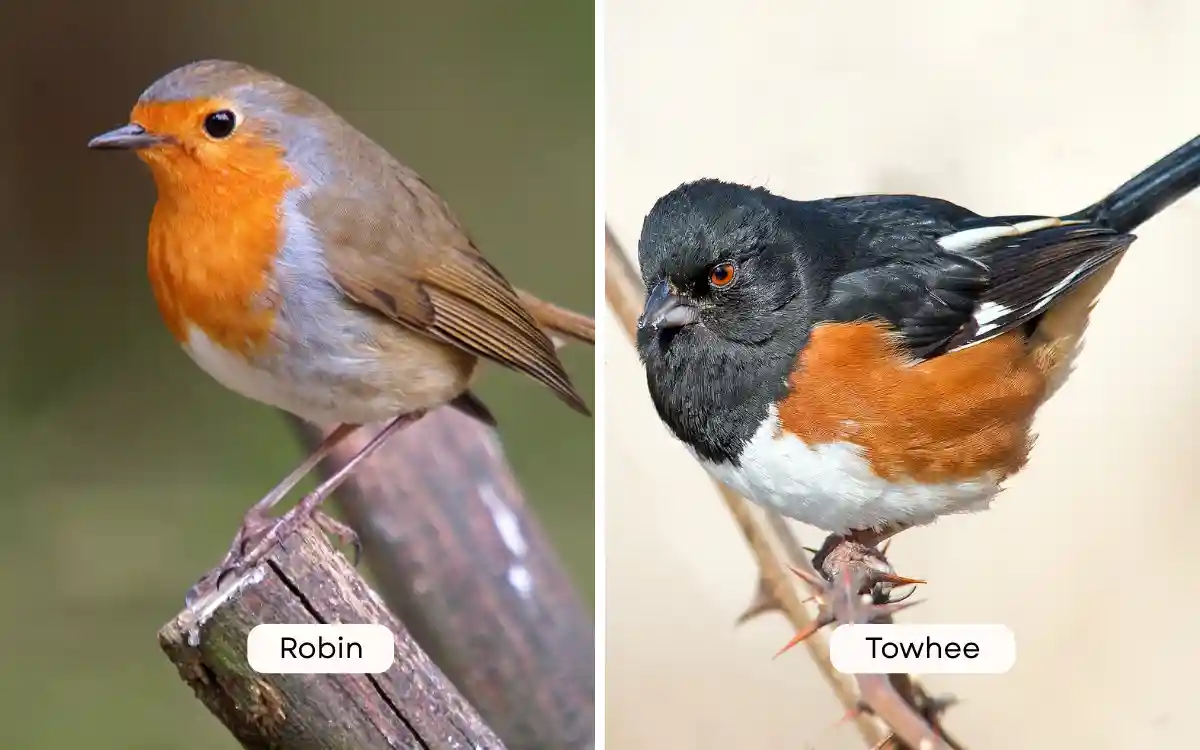
Robins and towhees can confuse beginners because both can show warm orange or reddish-brown coloring. From a quick look, a towhee’s rusty sides may seem similar to a robin’s orange breast.
The fastest way to tell them apart is this: American Robins are larger gray-brown thrushes with orange breasts that often hop across lawns, while towhees are smaller, sparrow-like birds with dark heads, rusty sides, white bellies, and a habit of scratching in leaf litter.
Behavior is one of the best clues. Robins often stand upright on lawns and pull worms from the ground. Towhees usually stay near brush, thickets, and forest edges, where they scratch through dry leaves with a backward hopping motion. Cornell describes American Robins as large thrushes with round bodies and long legs, while Eastern Towhees spend much of their time on the ground scratching at leaves with both feet.
Quick Difference Table
| Feature | American Robin | Towhee |
| Bird family | Thrush | Sparrow family |
| Size | Larger | Smaller and chunkier |
| Main color | Gray-brown back, orange breast | Black or brown upperparts, rusty sides, white belly |
| Bill | Slender, yellowish | Shorter, thicker, seed-cracking bill |
| Behavior | Hops on lawns, pulls worms | Scratches in leaf litter |
| Habitat | Lawns, parks, gardens, woods | Brush, thickets, forest edges, leaf litter |
| Tail | Fairly long, plain dark | Long, often flicked, with white corners |
| Feeder visits | Rare at seed feeders | May visit ground seed or platform feeders |
| Best clue | Orange breast and lawn-hopping | Rusty sides and leaf-scratching |
American Robin
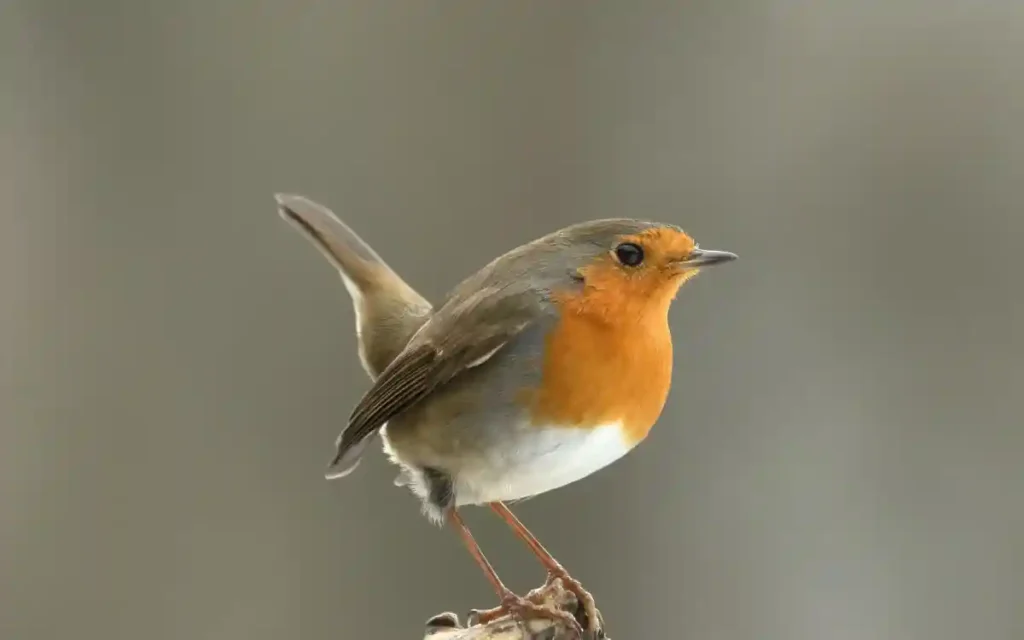
Quick ID: Large gray-brown bird with a warm orange breast and yellowish bill.
What It Looks Like:
American Robins are larger than towhees, with gray-brown upperparts, a warm orange breast, a darker head, and a yellowish bill. They have a rounder body, longer legs, and a more upright posture than most towhees. Cornell describes them as the largest North American thrushes and notes their large round body, long legs, and fairly long tail.
Where You’ll Find It:
Look for robins on lawns, parks, gardens, golf courses, open woods, forest edges, and suburban yards. They are often out in the open where you can see them clearly.
Behavior Clues:
Robins often hop across grass, pause, tilt the head, then pull worms or insects from the soil. Cornell notes that they are common on lawns, where they are often seen tugging earthworms from the ground.
How to Tell It Apart:
A robin has an orange breast across the front of the body. A towhee usually has rusty sides, a white belly, and stronger contrast between dark upperparts and pale underparts.
Best Time to See:
Robins are easy to see in spring and summer, but many areas also have them in fall and winter, especially near fruiting trees.
Backyard Tip:
Plant native berry shrubs, keep some leaf litter around garden edges, and avoid heavy lawn chemicals so worms and insects remain available.
Related article:- Birds That Look Like Robins
Eastern Towhee
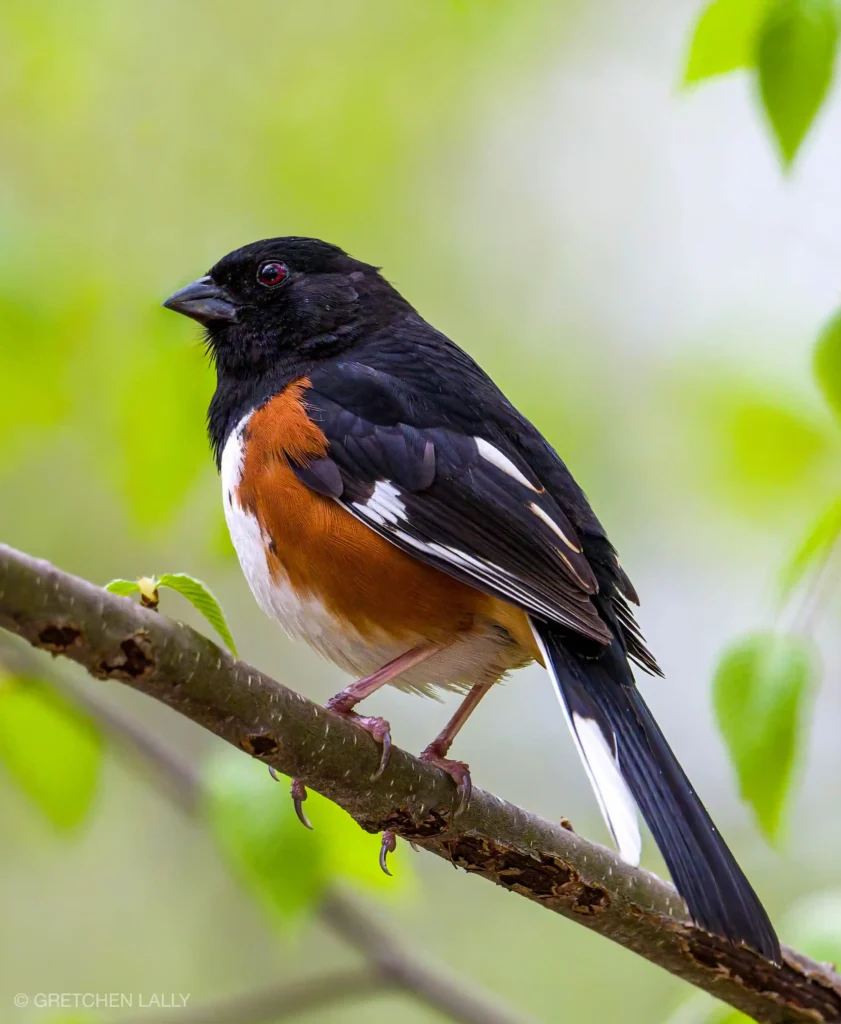
Quick ID: Black or brown upperparts, rusty sides, white belly, and long tail.
What It Looks Like:
Male Eastern Towhees have a black head, back, and throat, with rusty sides and a white belly. Females have the same pattern but are brown where males are black. They look chunkier and more sparrow-like than robins. Cornell calls Eastern Towhees a strikingly marked oversized sparrow of the East, with bold black and warm reddish-brown coloring.
Where You’ll Find It:
Look for Eastern Towhees in brush, tangles, thickets, forest edges, overgrown areas, and places with plenty of leaf litter. Cornell notes that Eastern Towhees spend lots of time concealed beneath thick underbrush.
Behavior Clues:
Eastern Towhees often scratch through dry leaves using both feet at once in a backward hop. This noisy leaf-scratching is one of the best clues, even before you see the bird.
How to Tell It Apart:
Compared with a robin, an Eastern Towhee is smaller, darker, and more hidden. It has rusty sides rather than a full orange breast, and it spends more time in brush than out on open lawns.
Best Time to See:
Spring and summer are good because males may sing from shrubs or low trees. In other seasons, listen for scratching in dry leaves.
Backyard Tip:
Leave a natural brushy edge or leaf-litter area. Towhees like cover and ground foraging space more than tidy open lawn.
Spotted Towhee
Quick ID: Black or dark upperparts with white spots on the wings and back, rusty sides, and white belly.
What It Looks Like:
Male Spotted Towhees have black upperparts, black throat, white spots on the wings and back, rusty sides, and a white belly. Females have the same pattern but are grayish-brown where males are black. Cornell notes that the white spots and warm rufous flanks are key marks.
Where You’ll Find It:
Spotted Towhees are western birds. Look for them in thickets, shrubby slopes, woodland edges, chaparral, brushy yards, and dry leaf litter.
Behavior Clues:
Like Eastern Towhees, Spotted Towhees spend a lot of time on or near the ground. Cornell notes they can be hard to see in leaf litter, and your best clear view may come when males climb into shrub tops to sing.
How to Tell It Apart:
The white spots on the wings and back separate Spotted Towhee from a robin. A robin is larger, plainer above, and has a full orange breast rather than rusty side patches.
Best Time to See:
Spring is often best because singing males perch higher and become easier to spot.
Backyard Tip:
Keep dense shrubs, brush piles, and leaf litter if you live in their range. Ground seed may attract them, but cover matters most.
Read also: Western Tanager vs Summer Tanager
Fast ID: Which Bird Did You See?
| What You Saw | More Likely Bird |
| Orange-breasted bird hopping on lawn | American Robin |
| Bird pulling worms from grass | American Robin |
| Larger gray-brown bird standing upright | American Robin |
| Dark bird scratching noisily in leaves | Towhee |
| Bird with rusty sides and white belly | Towhee |
| Bird hiding under shrubs or brush | Towhee |
| Bird with white spots on dark wings/back | Spotted Towhee |
| Black-and-rusty bird in eastern thickets | Eastern Towhee |
| Bird with yellowish bill | American Robin |
| Bird with thick sparrow-like bill | Towhee |
Biggest Difference: Orange Breast vs Rusty Sides
A robin has a broad orange breast across the front of the body.
A towhee usually has rusty sides, not a full orange breast. The center of the belly is often white. This is the key visual difference when the bird is facing sideways.
Behavior Difference
Behavior may be even easier than color.
Robin: open lawn, upright stance, hopping, worm-pulling.
Towhee: brushy cover, leaf litter, scratching, hiding low.
If the bird is in the middle of a lawn, think robin. If it is making noise in dry leaves under shrubs, think towhee.
Bill Shape Difference
Robins have a longer, slimmer, often yellowish bill because they eat worms, insects, and fruit.
Towhees have a shorter, thicker, seed-cracking bill, more like a large sparrow. This makes sense because towhees eat many seeds along with insects and berries.
Robin vs Female Towhee
Female towhees cause more confusion because they are brown instead of black.
| Feature | American Robin | Female Towhee |
| Size | Larger | Smaller |
| Breast | Orange across front | White belly with rusty sides |
| Back | Gray-brown | Brown, often darker and richer |
| Bill | Slimmer, yellowish | Thicker, darker |
| Habitat | Lawns, open areas | Brush, shrubs, leaf litter |
| Behavior | Hops and pulls worms | Scratches with both feet |
My opinion: the belly pattern is the best clue. A robin has orange across the chest and belly. A female towhee has rusty sides with a pale or white center.
Do Robins and Towhees Eat the Same Food?
They overlap a little, but their feeding style is different.
| Food | Robin | Towhee |
| Earthworms | Yes | Sometimes, but not the main clue |
| Insects | Yes | Yes |
| Berries | Yes | Yes |
| Seeds | Not a main food | Yes |
| Feeder seed | Rare | Sometimes on ground/platform |
| Fruit | Yes | Sometimes |
Robins are more likely to feed in open grass. Towhees are more likely to forage under shrubs and in leaf litter.
Common Mistakes
Mistake 1: Calling any orange-sided bird a robin
Towhees have rusty sides that can look orange, but their white belly and dark upperparts make a different pattern.
Mistake 2: Ignoring habitat
Robins like open lawns and parks. Towhees prefer brush, thickets, and leaf litter.
Mistake 3: Missing the scratching behavior
Towhees are famous for scratching in leaves. If the bird is kicking leaves backward with both feet, it is probably a towhee.
Mistake 4: Confusing female towhees with young robins
Young robins can look spotted and dull. Female towhees still show the towhee pattern: brown upperparts, rusty sides, white belly, and thick bill.
Simple Memory Trick
Use this:
Robin = orange breast, open lawn, worm hunter.
Towhee = rusty sides, white belly, brush scratcher.
Final Answer
An American Robin is a larger thrush with a gray-brown back, orange breast, yellowish bill, and open-lawn feeding behavior.
A towhee is a smaller, sparrow-like bird with dark or brown upperparts, rusty sides, white belly, long tail, and a strong habit of scratching in leaf litter.
For fast ID, check where the orange color is. If it covers the breast, think robin. If it is mainly on the sides with a white belly, think towhee.
FAQs
Is a towhee the same as a robin?
No. A robin is a thrush, while a towhee is a large sparrow-like bird. They may both show warm orange or rusty color, but they are not the same type of bird.
What bird looks like a robin but has a white belly?
An Eastern Towhee or Spotted Towhee may look robin-like from a quick side view, but towhees have rusty sides and a white belly instead of a full orange breast.
How do you tell a robin from an Eastern Towhee?
A robin is larger, gray-brown above, orange below, and often hops on lawns. An Eastern Towhee is smaller, black or brown above, rusty on the sides, white on the belly, and often scratches in leaf litter.
Do towhees come to feeders?
Towhees may visit ground seed, platform feeders, or spilled seed under feeders, especially if there is nearby cover. They are less likely to perch openly on tube feeders.
Do robins eat birdseed?
Robins do not usually eat birdseed. They mainly eat worms, insects, berries, and fruit.
Which towhee is found in the East?
The Eastern Towhee is the main towhee of the eastern United States. The Spotted Towhee is more common in the West.
