The American Robin is one of the most familiar birds in North America. It has a gray-brown back, dark head, yellow bill, white eye marks, and a warm orange or rusty-red breast. Cornell describes adult male American Robins as large, round-bellied thrushes with a dark head, yellow bill, black throat streaks, and rusty belly.
But many birds can look robin-like at first glance. Some have orange breasts. Some feed on lawns. Some have the same upright posture. A few, like the Varied Thrush, are close enough in shape and color to confuse even careful backyard birdwatchers.
The easiest way to identify a robin lookalike is to check body shape, bill shape, orange placement, wing markings, eye marks, and habitat.
1. Varied Thrush
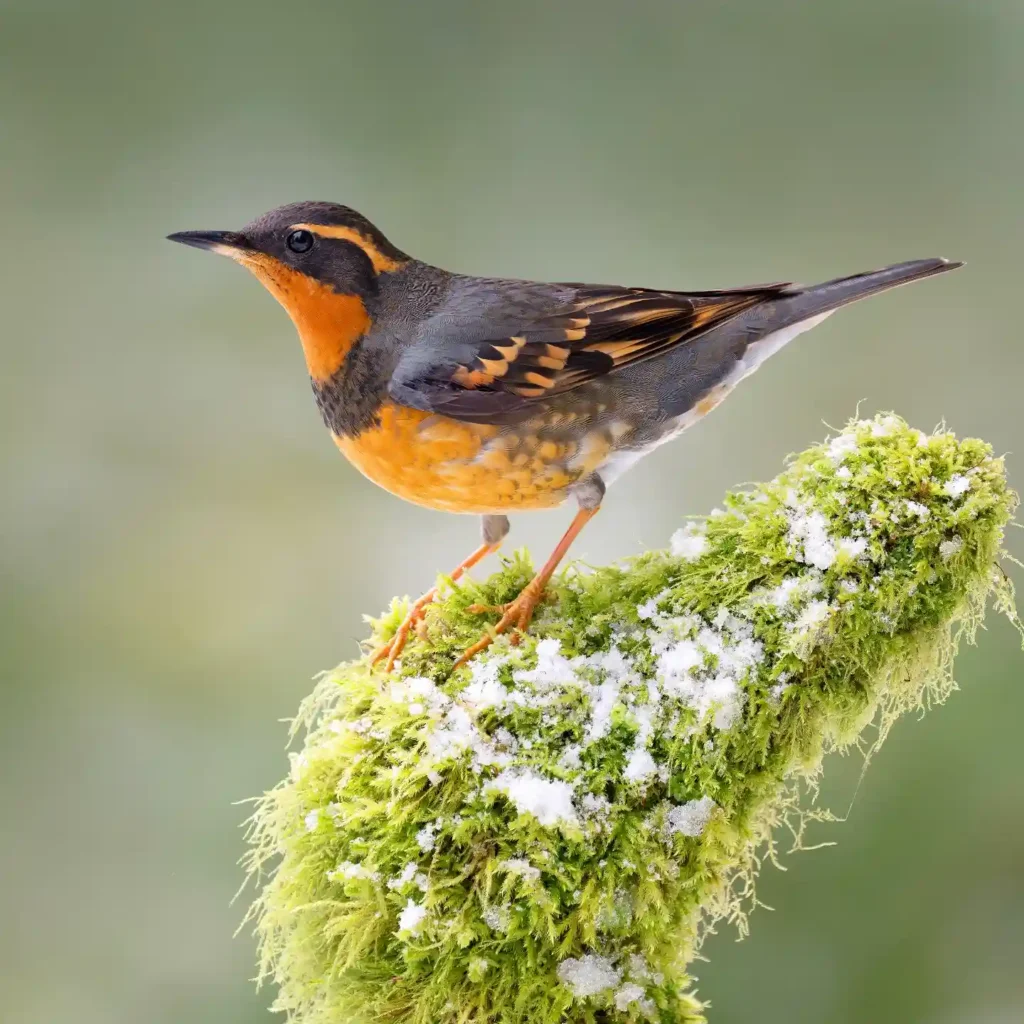
The Varied Thrush is the best bird to start with because it is one of the closest American Robin lookalikes. It has a similar size, upright posture, orange coloring, and thrush body shape.
The main difference is the pattern. A male Varied Thrush has a bold orange eyebrow, orange wingbars, and a dark breastband across the chest. Cornell notes that Varied Thrushes of the Pacific Coast have an orange eyebrow, black breastband, and orange wingbars that American Robins do not have.
How to tell it apart from a robin
Look for the breastband. A robin has a more open orange breast and belly. A Varied Thrush looks more marked, with a strong dark band cutting across the orange chest.
Also check location. Varied Thrushes are more tied to the Pacific Northwest, western forests, and winter movements into nearby areas.
Best field mark: Orange eyebrow plus black breastband.
2. Eastern Towhee
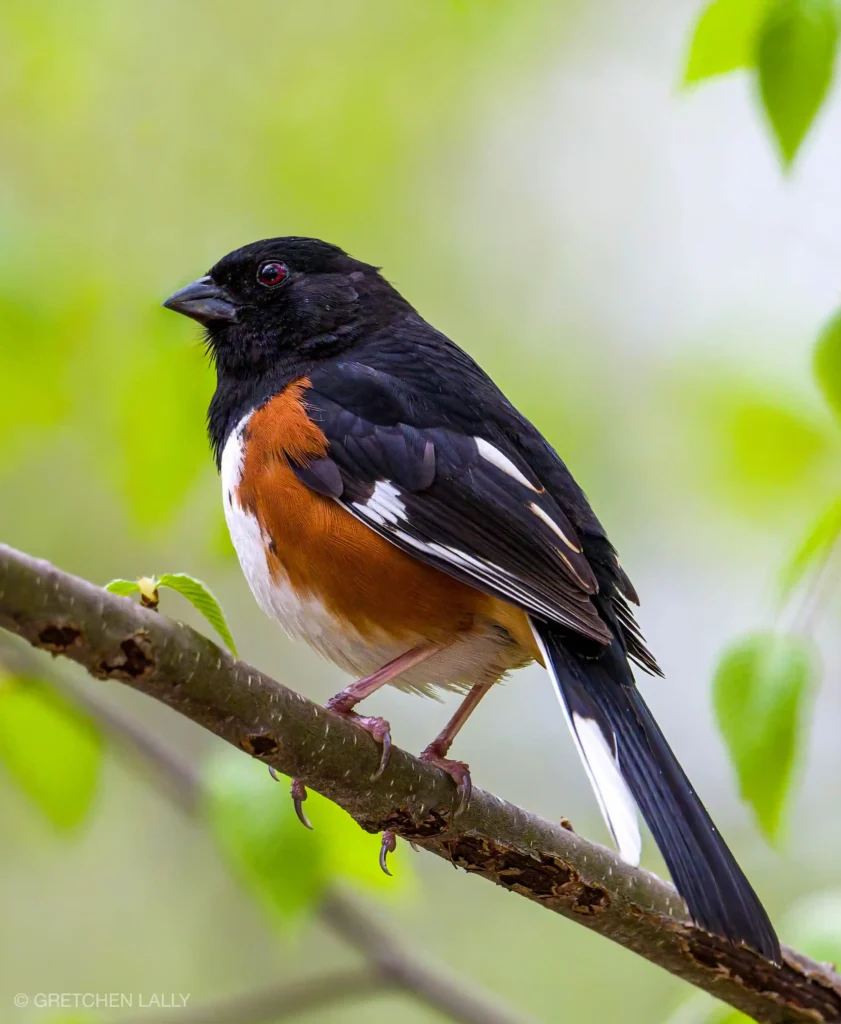
The Eastern Towhee is often mistaken for a robin because males have a dark head and warm rusty-orange sides. They also spend a lot of time on or near the ground.
But the orange is not placed the same way. A robin has orange across the breast and belly. An Eastern Towhee has orange mainly along the sides, with a white belly in the middle.
Cornell compares Eastern Towhees with American Robins and notes that Eastern Towhees are smaller, have a stouter bill, and have rusty color restricted to the sides instead of the full reddish breast and belly of a robin.
How to tell it apart from a robin
Look at the belly. If the center of the belly is white and the orange sits along the sides, you are likely looking at a towhee.
Eastern Towhees also spend more time scratching in leaf litter under shrubs, while robins often hop across lawns and open ground.
Best field mark: Black hood, white belly, orange sides.
3. Spotted Towhee
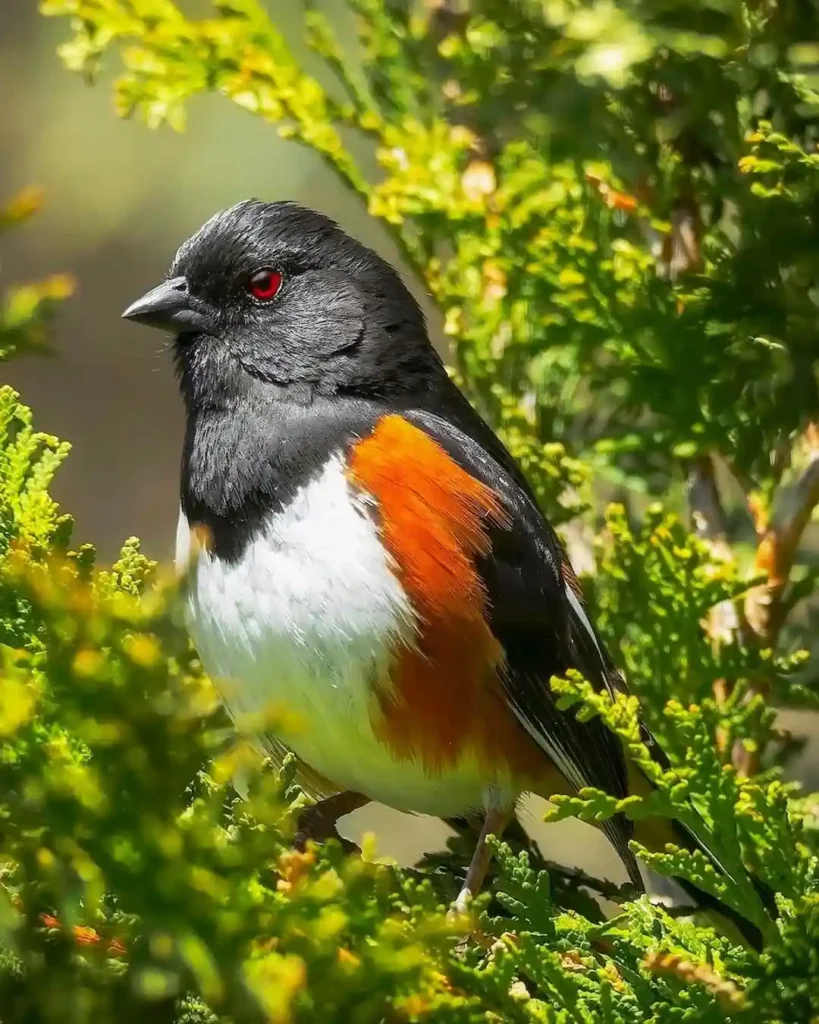
The Spotted Towhee is the western cousin of the Eastern Towhee and can also look robin-like from a distance. It has a dark head, orange sides, and a ground-feeding habit.
The difference is in the details. Spotted Towhees have white spots on the wings and back, which American Robins do not show. Cornell notes that Spotted Towhees are smaller than American Robins, have a stouter bill, and keep the rusty color mainly on the sides instead of across the full belly.
How to tell it apart from a robin
Check for white spots on the wings and back. Then look at the orange. If it sits on the sides instead of covering the belly, it is not a robin.
Best field mark: White wing spots with orange sides.
4. Orchard Oriole
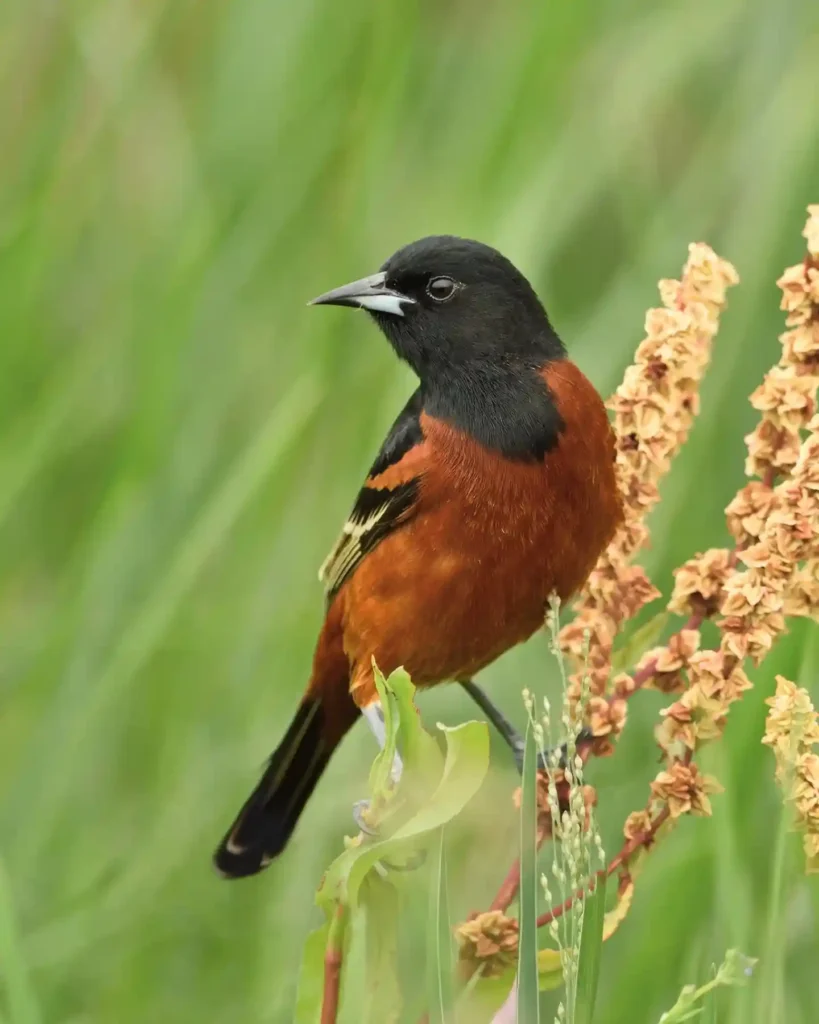
The Orchard Oriole can fool people because adult males have a dark head and rich chestnut-orange underparts. In dim light, the color can look robin-like.
But orioles are shaped differently. They are slimmer, more pointed-billed, and often move through trees rather than hopping across lawns.
How to tell it apart from a robin
A robin is bulkier, round-bellied, and has a yellow bill. An Orchard Oriole is smaller and more slender, with a sharper bill suited for insects, nectar, and fruit.
The color is also different. Adult male Orchard Orioles are more chestnut or burnt orange, not the robin’s softer orange breast with gray-brown back.
Best field mark: Small, slender oriole shape with pointed bill.
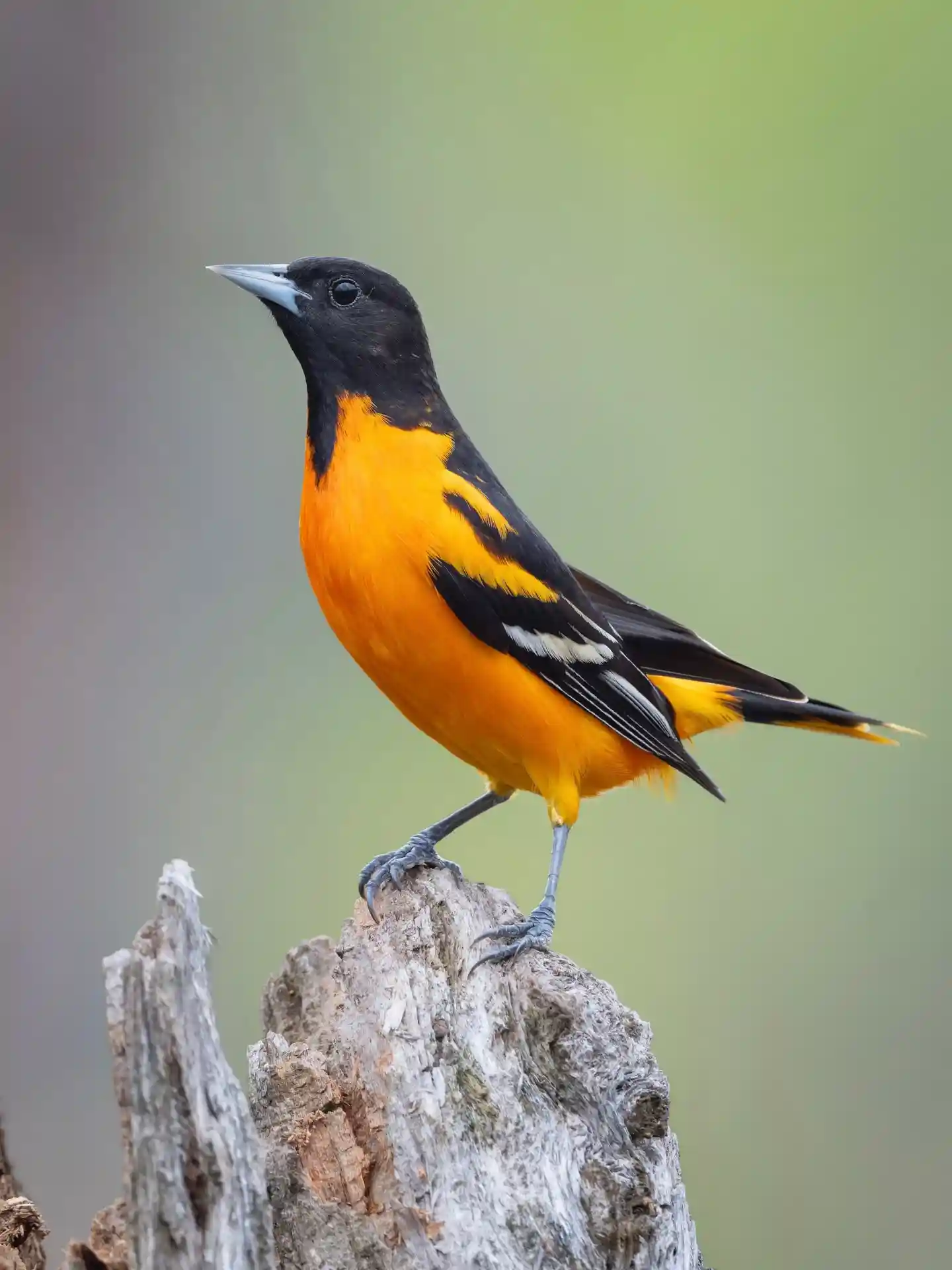
5. Baltimore Oriole
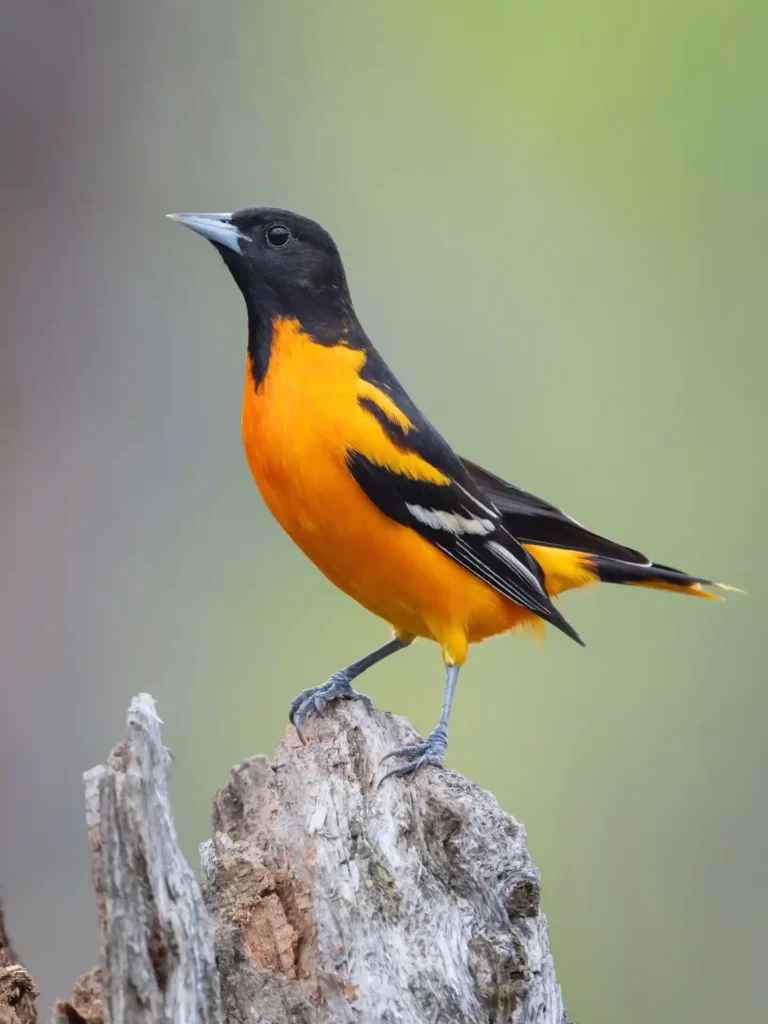
The Baltimore Oriole is much brighter than a robin, but people still confuse them because both can show orange underparts and dark upper areas.
Male Baltimore Orioles have rich orange below, black head and back, and black wings with white wingbars. Robins are gray-brown above, not jet black, and they do not have the same sharp black-and-orange contrast.
How to tell it apart from a robin
Look at the wings. A Baltimore Oriole has black wings with clear white bars. A robin has plainer gray-brown wings.
Also check behavior. Orioles often stay in trees, visit fruit or nectar feeders, and move more lightly through branches.
Best field mark: Bright orange body with black wings and white wingbars.
6. Black-headed Grosbeak
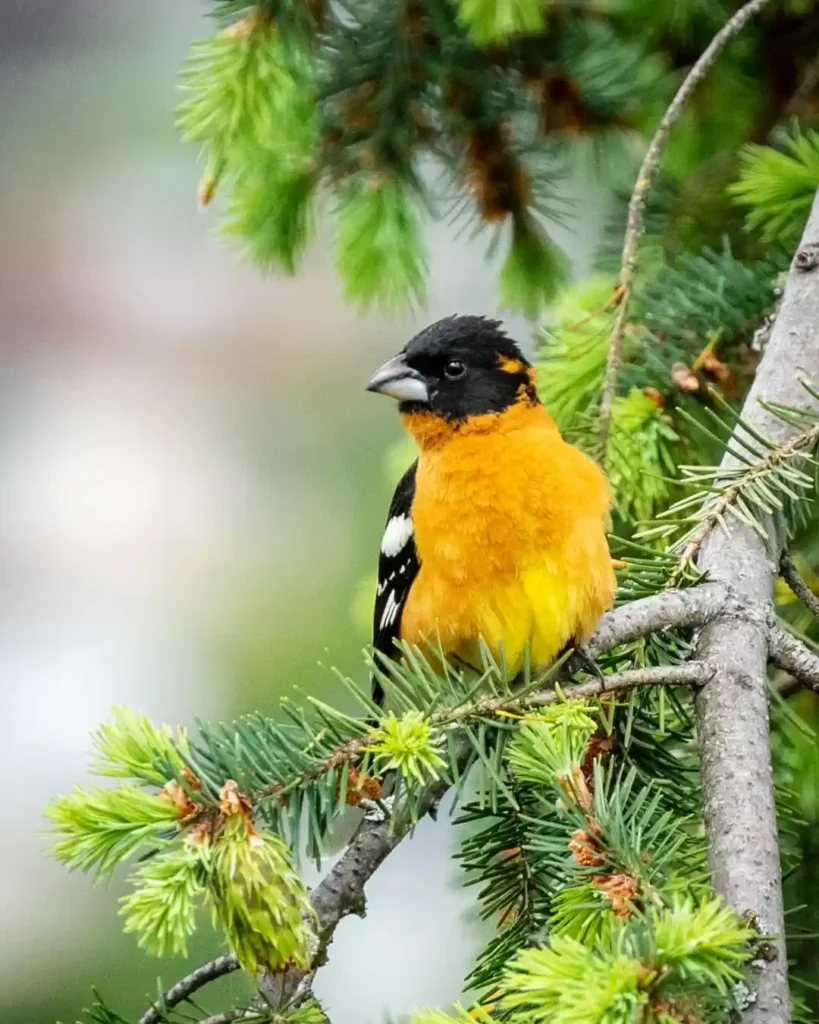
The Black-headed Grosbeak has a warm orange breast and a dark head, which can make it seem robin-like at first. But the bill is the giveaway.
This bird has a large, thick, pale bill. Robins have a slimmer yellow bill. Black-headed Grosbeaks also show wingbars and a more patterned back.
How to tell it apart from a robin
Focus on the bill. A grosbeak’s bill looks heavy and seed-cracking. A robin’s bill looks slimmer and more pointed.
The orange color on a Black-headed Grosbeak is often richer on the chest, with more contrast in the wings and back.
Best field mark: Big pale bill and wingbars.
7. American Redstart
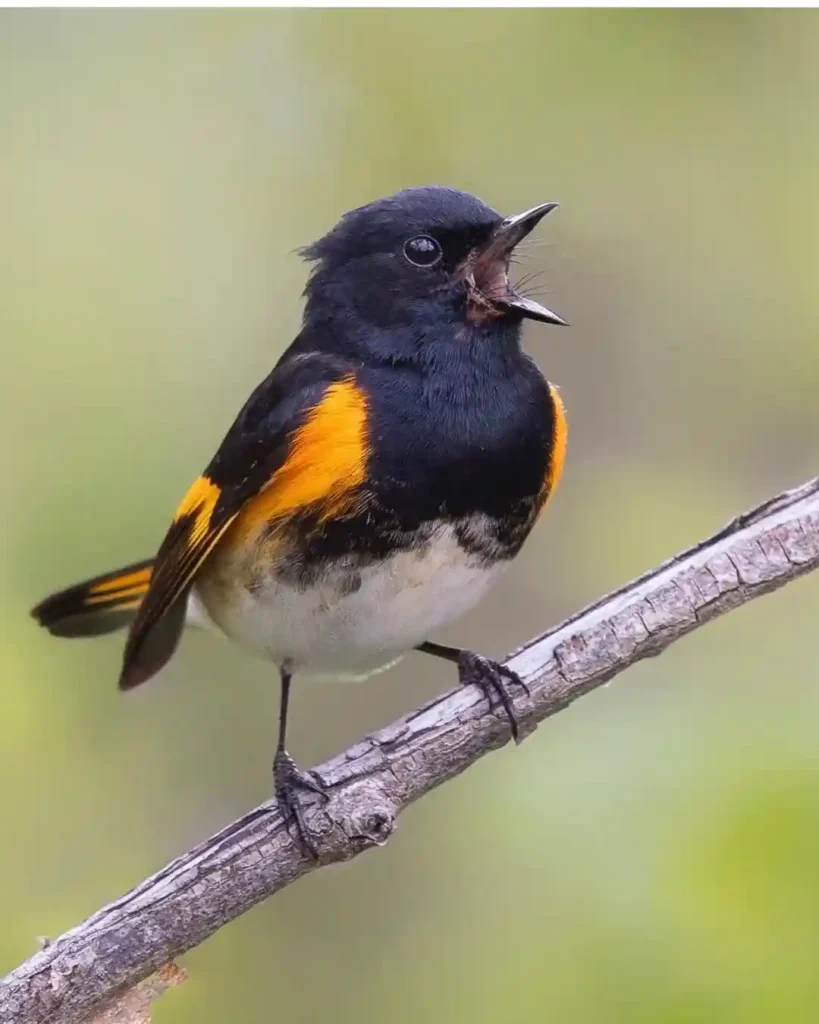
The American Redstart does not look like a robin when seen well, but quick flashes of orange can confuse new birdwatchers. Adult males are black with orange patches on the wings, sides, and tail.
They are much smaller than robins and move quickly through branches, often fanning the tail.
How to tell it apart from a robin
A robin is larger, rounder, and often seen hopping on open ground. An American Redstart is small, active, and usually seen flicking its tail in trees and shrubs.
The orange is in patches, not a full breast.
Best field mark: Small black bird with orange patches and tail-fanning behavior.
8. Red-breasted Nuthatch
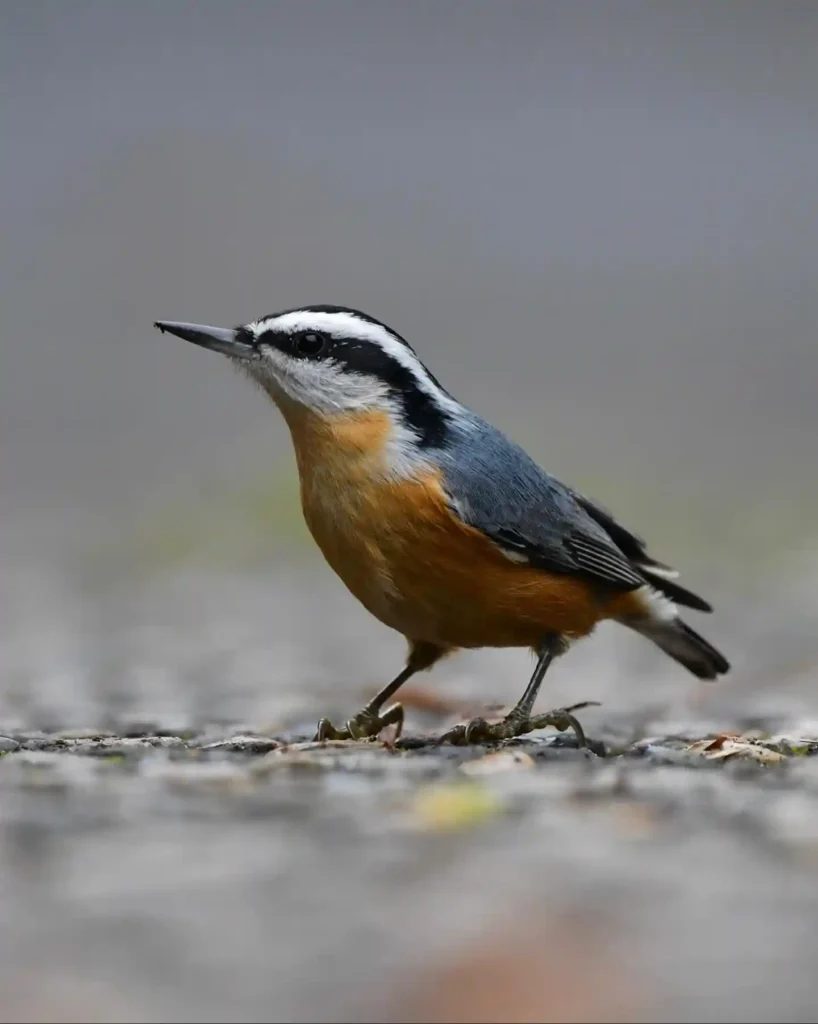
The Red-breasted Nuthatch has a rusty-orange underside and gray-blue upperparts, so a beginner may connect it with a robin for a moment.
But this bird is tiny compared with a robin. It also behaves very differently, climbing up, down, and sideways on tree trunks.
How to tell it apart from a robin
Watch how it moves. Robins hop on the ground. Red-breasted Nuthatches climb tree bark.
It also has a strong white eyebrow and a black eye line, giving the face a striped look.
Best field mark: Tiny tree-climbing bird with white eyebrow.
9. Western Bluebird
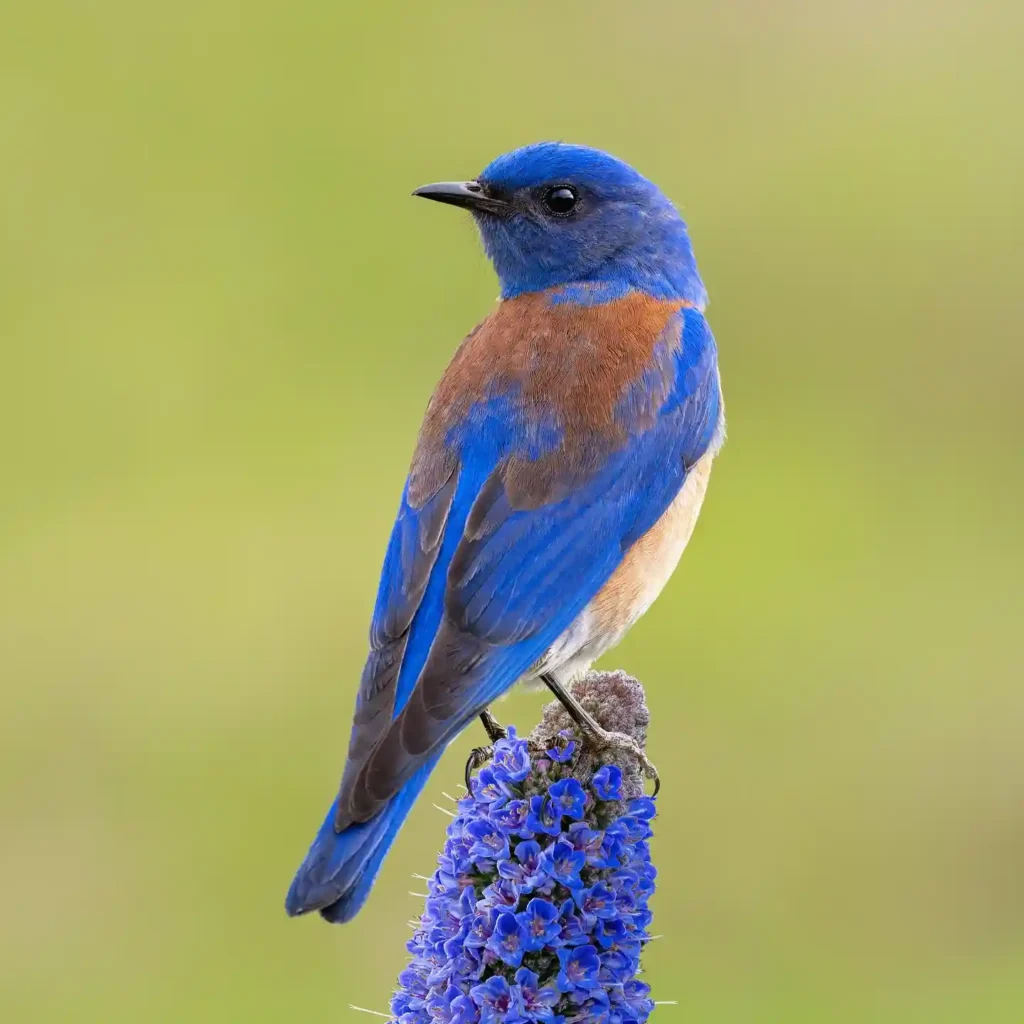
The Western Bluebird has an orange chest and blue-gray upperparts. From a distance, the orange breast may make someone think of a robin.
But Western Bluebirds are smaller and rounder, with blue on the wings, back, and tail. Robins are larger, longer-legged, and more gray-brown above.
How to tell it apart from a robin
Look for blue. A robin does not have blue wings or a blue back. Western Bluebirds also often perch on fences, posts, and low branches while hunting insects.
Best field mark: Small bird with blue upperparts and orange chest.
10. Juvenile American Robin
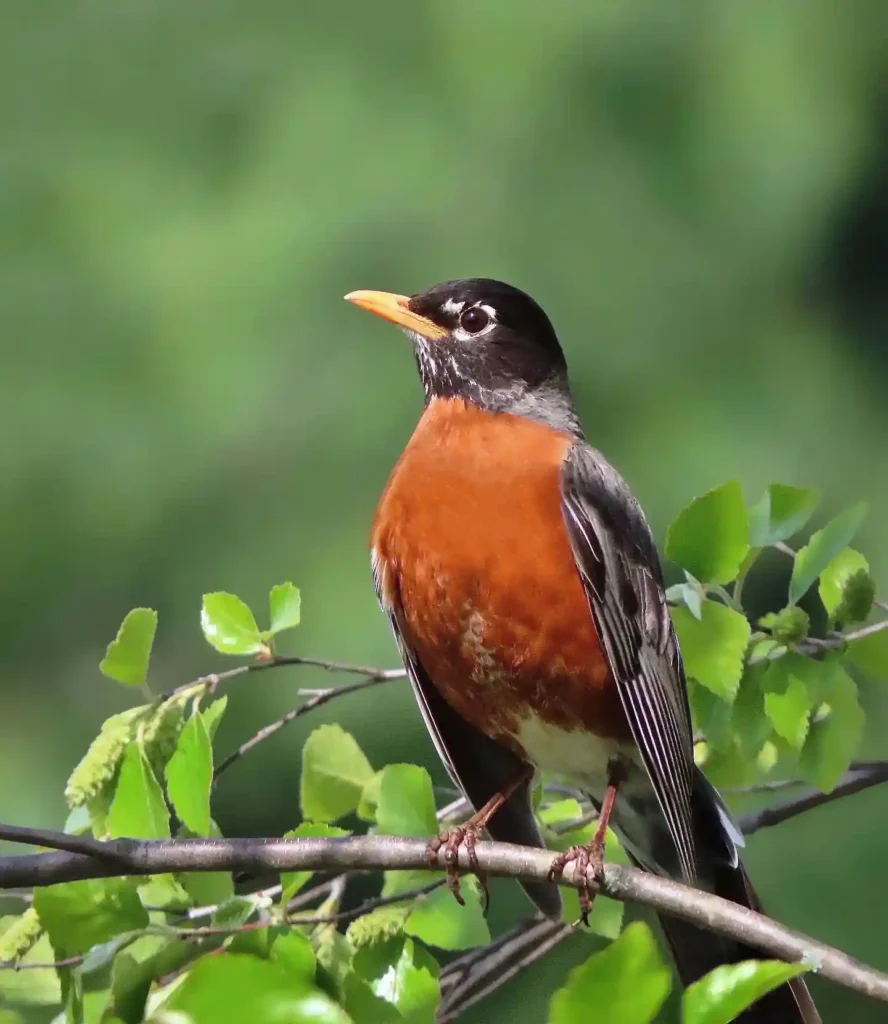
Sometimes the “bird that looks like a robin” is actually a young robin. Juvenile American Robins can confuse people because their breasts are spotted instead of plain orange.
Audubon notes that juvenile American Robins can look confusing at first because they are heavily spotted below, mottled on the back, and show pale face marks, but they usually still have a reddish tinge on the chest.
How to tell it apart from other birds
Look at the overall shape. A juvenile robin still has the same robin posture, body size, long legs, and ground-hopping behavior.
If you see adult robins nearby feeding or calling, that is another clue.
Best field mark: Robin shape with spotted young-bird breast.
Robin vs. Towhee vs. Thrush
| Feature | American Robin | Towhee | Varied Thrush |
| Size | Medium-large songbird | Smaller than robin | Similar to robin |
| Orange area | Breast and belly | Mostly sides | Breast with bold band |
| Head | Dark gray to blackish | Black hood in males | Dark head with orange eyebrow |
| Bill | Yellow, slim | Shorter and thicker | Thrush-like bill |
| Behavior | Hops on lawns, eats worms and berries | Scratches in leaf litter | Forest floor and dense cover |
How to Identify a Robin Lookalike Fast
Start with the orange. A true American Robin usually has orange across the breast and belly. If the orange is only on the sides, think towhee. If the orange is paired with a black breastband and orange eyebrow, think Varied Thrush.
Next, check the bill. Robins have a yellow bill that is fairly slim. Grosbeaks have thick seed-cracking bills. Orioles have sharper, pointed bills. Nuthatches have small pointed bills and climb bark.
Then check the behavior. Robins often hop across lawns, pause, tilt their head, and pull worms from the ground. Towhees scratch under leaves. Orioles move through trees. Nuthatches climb trunks. Bluebirds perch low and drop to the ground for insects.
FAQs
What bird looks most like a robin?
The Varied Thrush looks most like an American Robin because it has a similar body shape and orange coloring. The easiest difference is the Varied Thrush’s orange eyebrow, black breastband, and orange wingbars.
What bird looks like a robin but has a black head?
Eastern Towhee, Spotted Towhee, Orchard Oriole, Baltimore Oriole, and Black-headed Grosbeak can all show dark heads with orange or rusty coloring. Look at the belly, bill, and wings to separate them.
What bird looks like a robin but has spots on its chest?
A juvenile American Robin often has a spotted chest. Young robins can look different from adults, but they still have robin-like size, shape, posture, and behavior.
What bird looks like a robin but is smaller?
Eastern Towhee, Spotted Towhee, Western Bluebird, Orchard Oriole, and Red-breasted Nuthatch are all smaller than American Robins.
What bird looks like a robin in the Pacific Northwest?
The Varied Thrush is the main robin lookalike in the Pacific Northwest. It has orange and dark coloring like a robin but shows a bold eyebrow, breastband, and wingbars.
