
A Blue Jay is one of the easiest backyard birds to notice. It has a raised crest, blue wings and tail, white underparts, black markings around the neck and face, and a loud call. Cornell describes the Blue Jay as a large crested songbird with blue, white, and black plumage and noisy calls.
But not every blue bird with a long tail is a Blue Jay. Some birds share the same blue color. Some are also jays. Some have a crest. Others only look similar for a second before you notice the missing black necklace, different range, or gray body.
The fastest way to identify a Blue Jay lookalike is to check crest, necklace, wing pattern, body color, and location.
1. Steller’s Jay
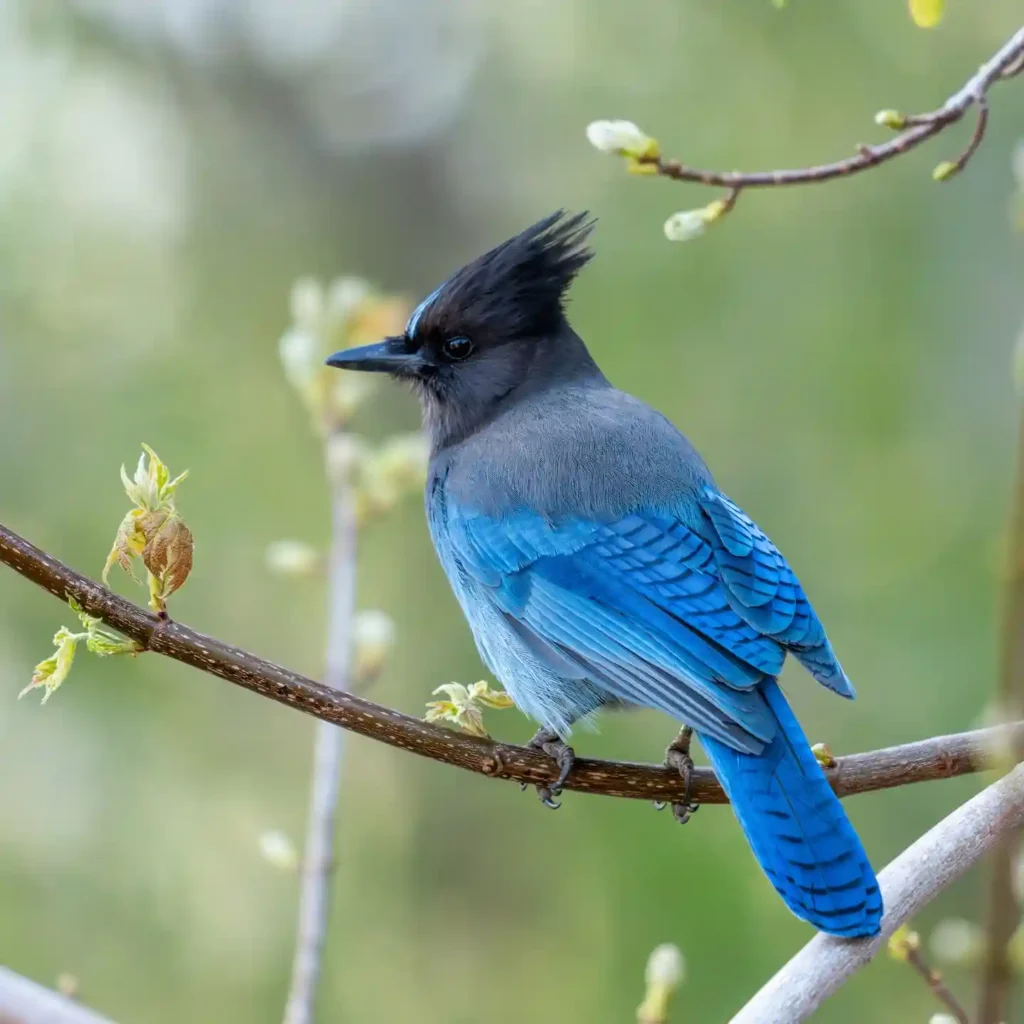
The Steller’s Jay is probably the closest Blue Jay lookalike in North America. It has a strong crest, a blue body, and the same bold jay attitude. If someone sees one quickly in the western mountains, it is easy to think “Blue Jay.”
The key difference is the head and upper body. A Blue Jay has a pale face, white underparts, blue wings, and a black necklace. A Steller’s Jay is much darker. Audubon describes it as the only all-dark jay with a crest, with a dark overall look and blue body.
How to tell it apart
Look at the head. If the bird has a dark charcoal or blackish head with a blue body, it is likely a Steller’s Jay, not a Blue Jay.
Best field mark: Dark head and crest with blue lower body.
2. California Scrub-Jay
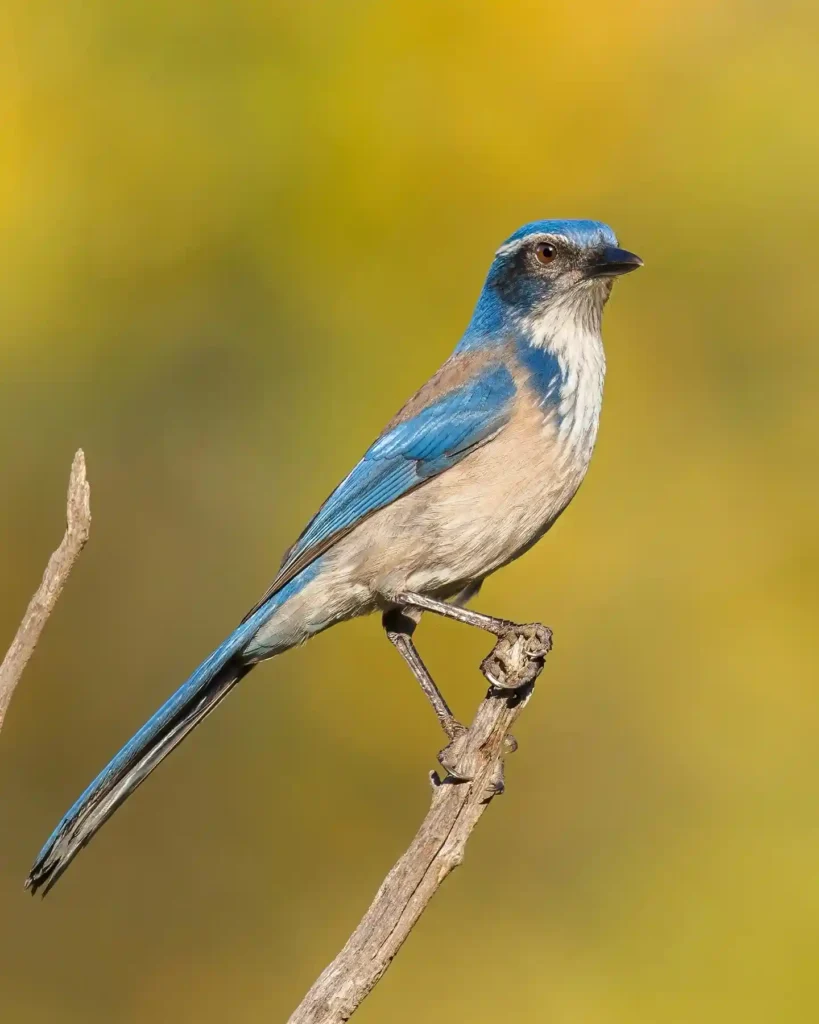
The California Scrub-Jay is often called a “blue jay” by people in the western United States, but it is not the same bird as the Blue Jay of eastern and central North America.
It has a blue head, blue wings, blue tail, pale underparts, and bold behavior around yards, parks, oak woodlands, and open country. The big missing feature is the crest. California Scrub-Jays have rounded heads, not raised crests. Cornell’s Celebrate Urban Birds notes that California Scrub-Jays are blue, white, and gray-brown, and their rounded, crestless head separates them from Steller’s Jays.
How to tell it apart
Check the head shape first. A Blue Jay has a clear crest. A California Scrub-Jay does not. The California Scrub-Jay also has a softer gray-brown back instead of the Blue Jay’s crisp black, white, and blue pattern.
Best field mark: No crest and gray-brown back.
3. Woodhouse’s Scrub-Jay
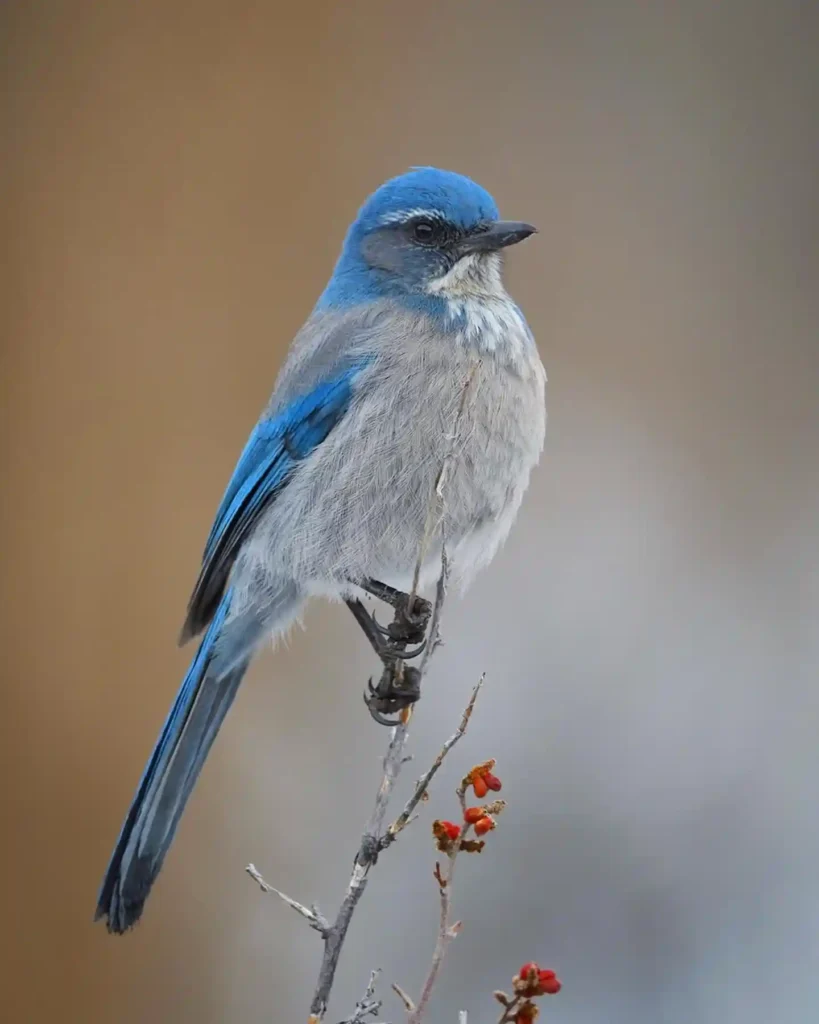
The Woodhouse’s Scrub-Jay is another western jay that can look like a Blue Jay because of its blue and gray coloring, long tail, and strong bill.
It lives more in dry interior areas from Nevada south toward Mexico. Cornell describes it as a dusty blue bird with gray-brown and white, similar to the California Scrub-Jay, but duller, with almost no necklace and a rounded, crestless head.
How to tell it apart
A Blue Jay has a raised crest and strong black necklace. A Woodhouse’s Scrub-Jay has no crest and usually looks more muted, with a thin or weak breast band.
Best field mark: Dull blue-gray body with no crest.
4. Florida Scrub-Jay
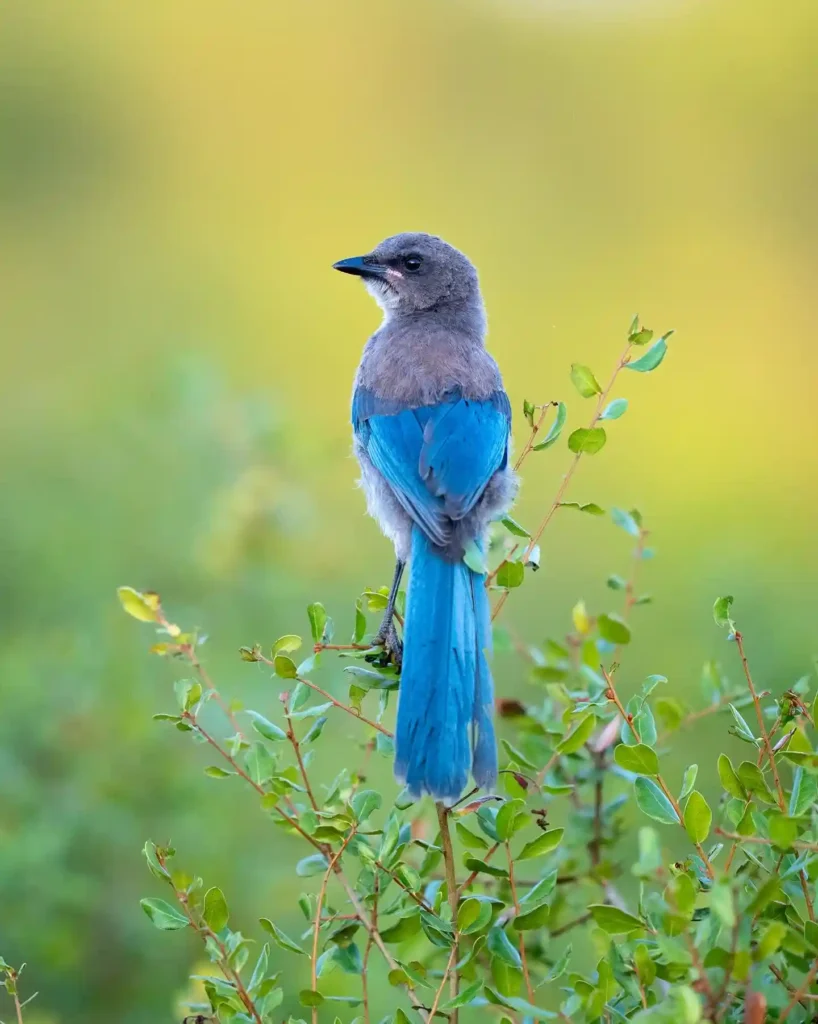
The Florida Scrub-Jay looks like a softer, crestless Blue Jay. It has blue on the head, wings, and tail, with a pale gray back and belly. It also has a long tail and sturdy bill.
The biggest clue is range. This bird is found only in Florida. Cornell calls it the only bird species that lives exclusively in Florida, mainly in low-growing scrub oak habitat.
How to tell it apart
Look for the missing crest and black markings. Florida Fish and Wildlife says Florida Scrub-Jays are about the size of a Blue Jay but lack the Blue Jay’s black markings and crest.
Best field mark: Crestless blue-and-gray jay found only in Florida.
5. Canada Jay
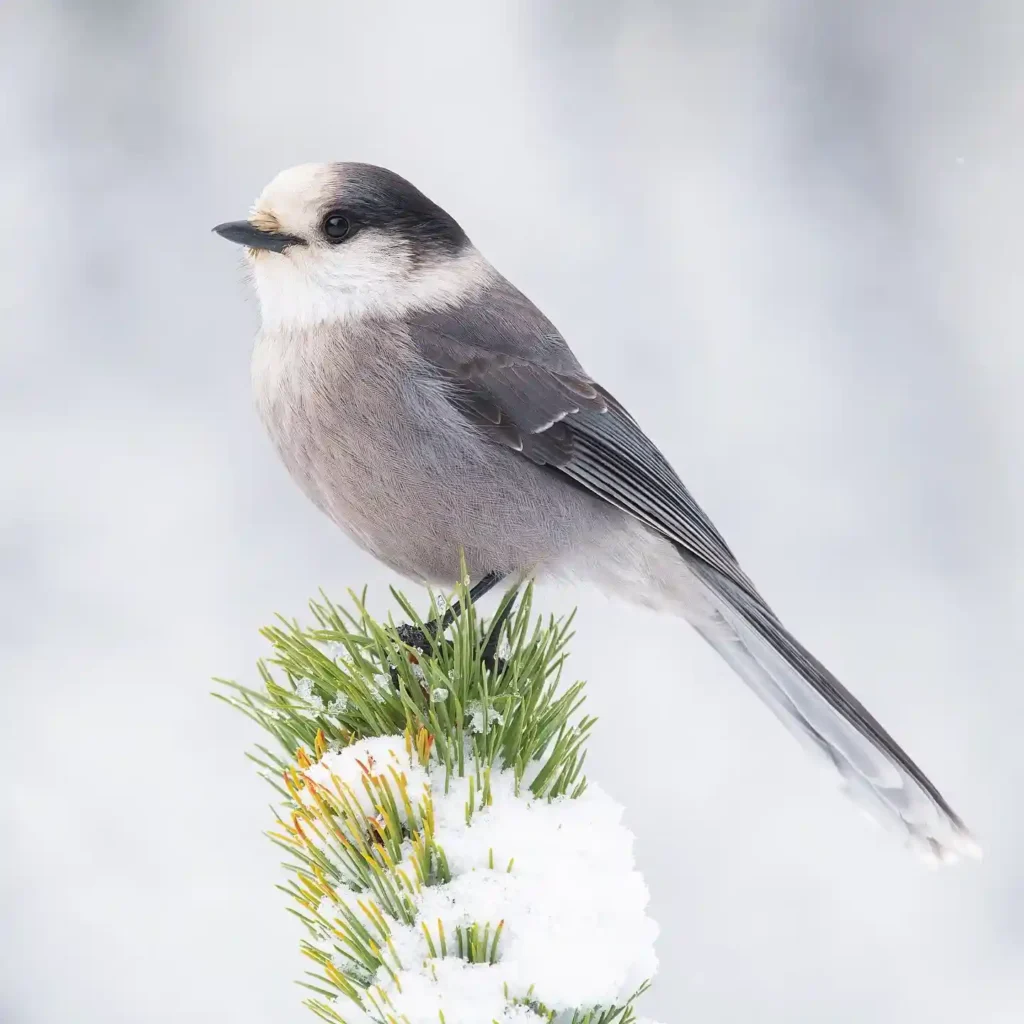
The Canada Jay does not have the bright blue color of a Blue Jay, but it can still confuse people because it has a similar jay shape, long tail, and bold behavior around campsites and forest edges.
This bird is mostly gray with a pale face. Cornell describes adult Canada Jays as gray overall, paler on the belly, with a white cheek, throat, and forehead.
How to tell it apart
A Canada Jay looks softer and fluffier than a Blue Jay. It has no crest, no blue wings, and no black necklace. Audubon also notes that Canada Jays are known as “camp robbers” because they often steal food around cabins and campsites.
Best field mark: Gray body with white face and no blue wings.
6. Pinyon Jay
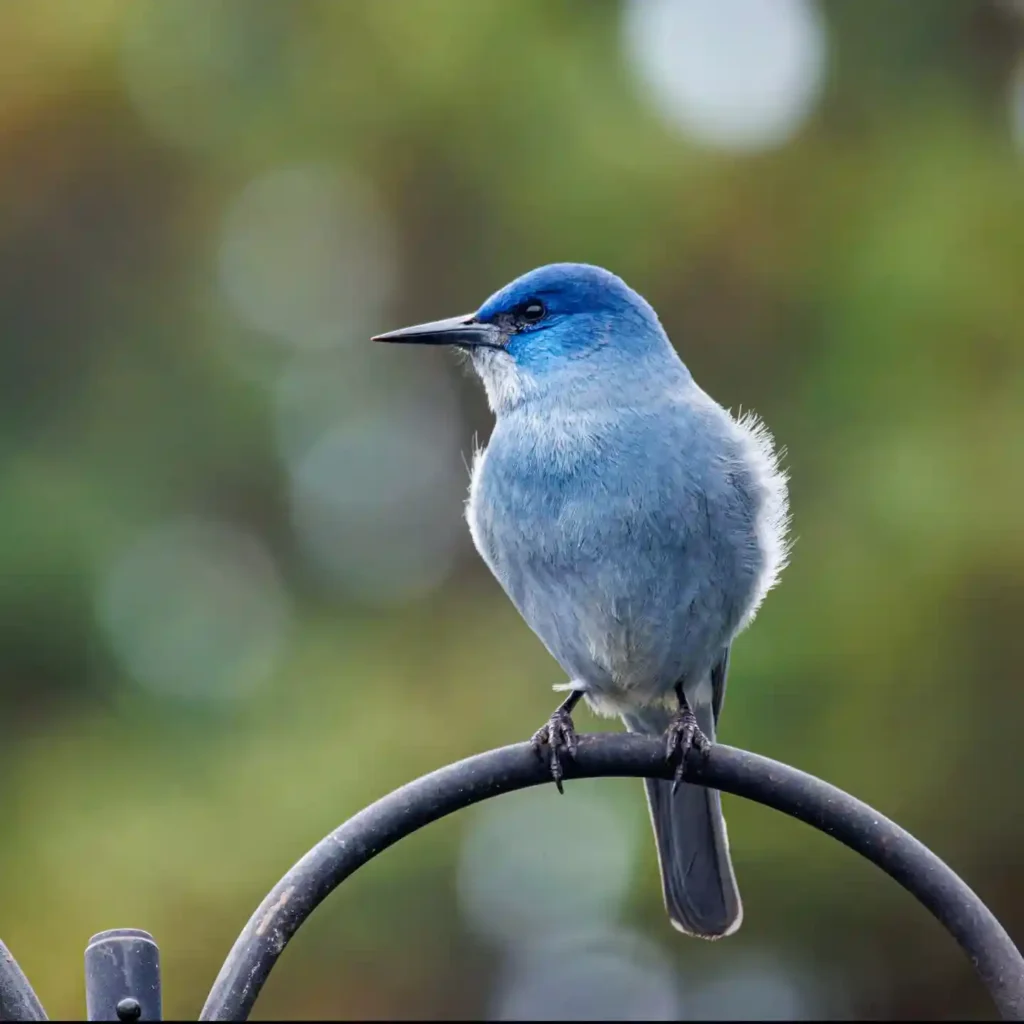
The Pinyon Jay can look like a plain blue version of a Blue Jay from far away. It is a blue-gray bird that often moves in groups, especially in pinyon-juniper country.
Unlike Blue Jays, Pinyon Jays do not have crests, white wing patches, or bold black necklace markings. They usually look plainer and more uniform.
How to tell it apart
Look for a crest and wing pattern. A Blue Jay has both a raised crest and strong black-white-blue wing markings. A Pinyon Jay is smoother-headed and more evenly blue-gray.
Best field mark: Plain blue-gray jay with no crest.
7. Mexican Jay
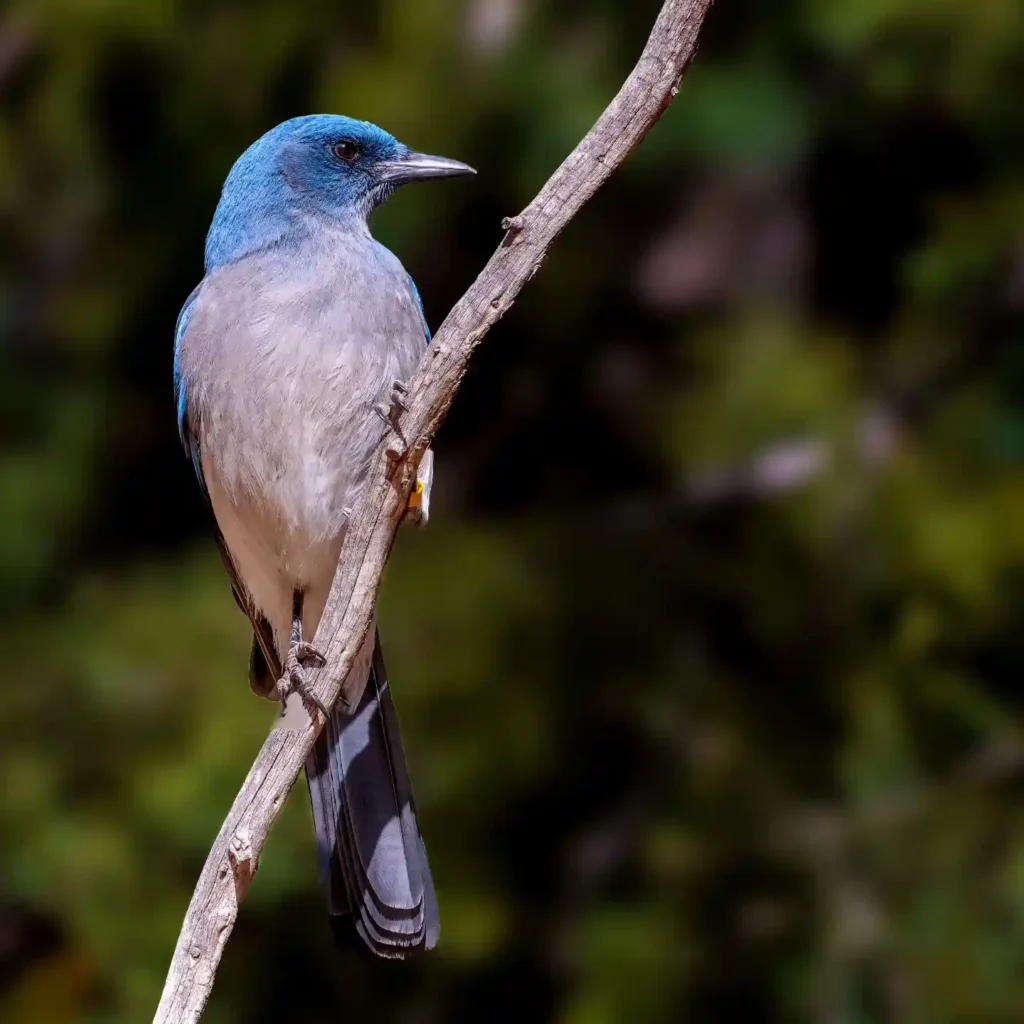
The Mexican Jay is another blue-gray jay that may remind people of a Blue Jay. It has a long tail, strong bill, and social behavior, but its coloring is much softer.
This bird is mainly found in parts of the southwestern United States and Mexico. It lacks the Blue Jay’s crisp black necklace, bold crest, and white wing pattern.
How to tell it apart
A Mexican Jay looks more washed-out and grayish below. A Blue Jay looks sharper, with a white underside, black necklace, and patterned wings and tail.
Best field mark: Blue-gray jay with no crest and no black necklace.
8. Green Jay
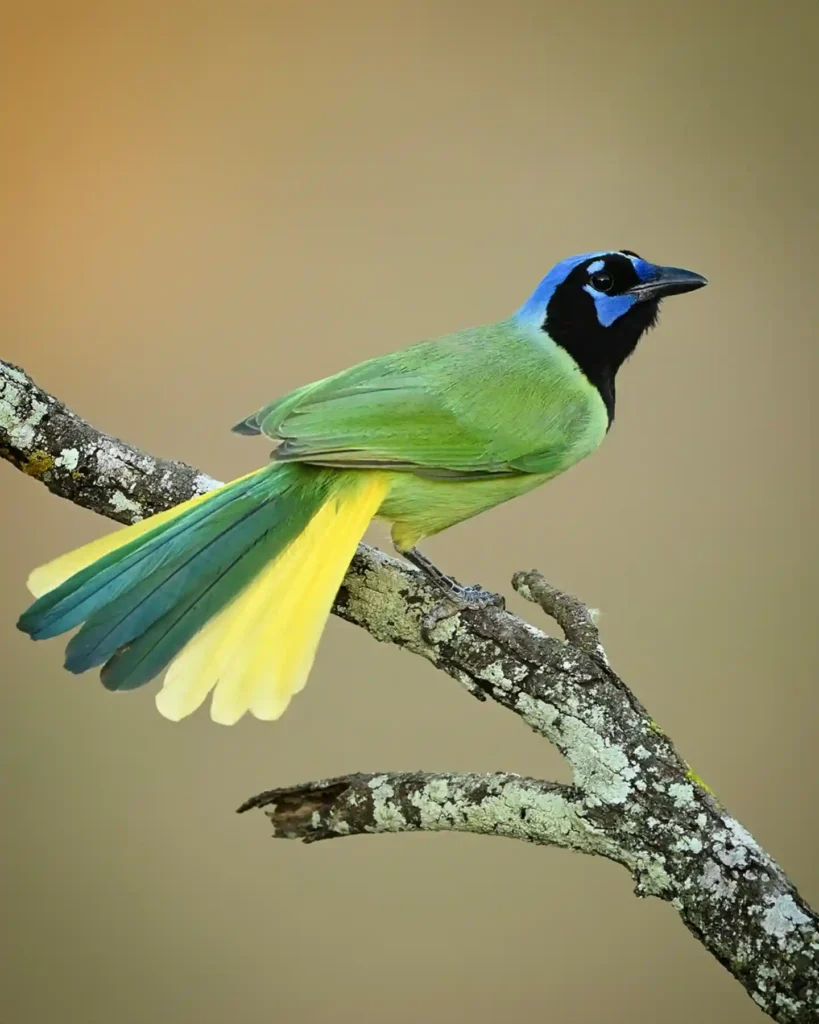
The Green Jay is a colorful jay that may be confused with a Blue Jay because it has blue on the head and a strong jay shape. But the body color is very different.
Instead of being mostly blue, white, and black, Green Jays have a green back and yellowish underparts. They are mainly found in southern Texas and farther south into Mexico and Central America.
How to tell it apart
Do not focus only on the blue head. Check the back and belly. If the bird has a green body and yellow tones, it is not a Blue Jay.
Best field mark: Blue head with green body.
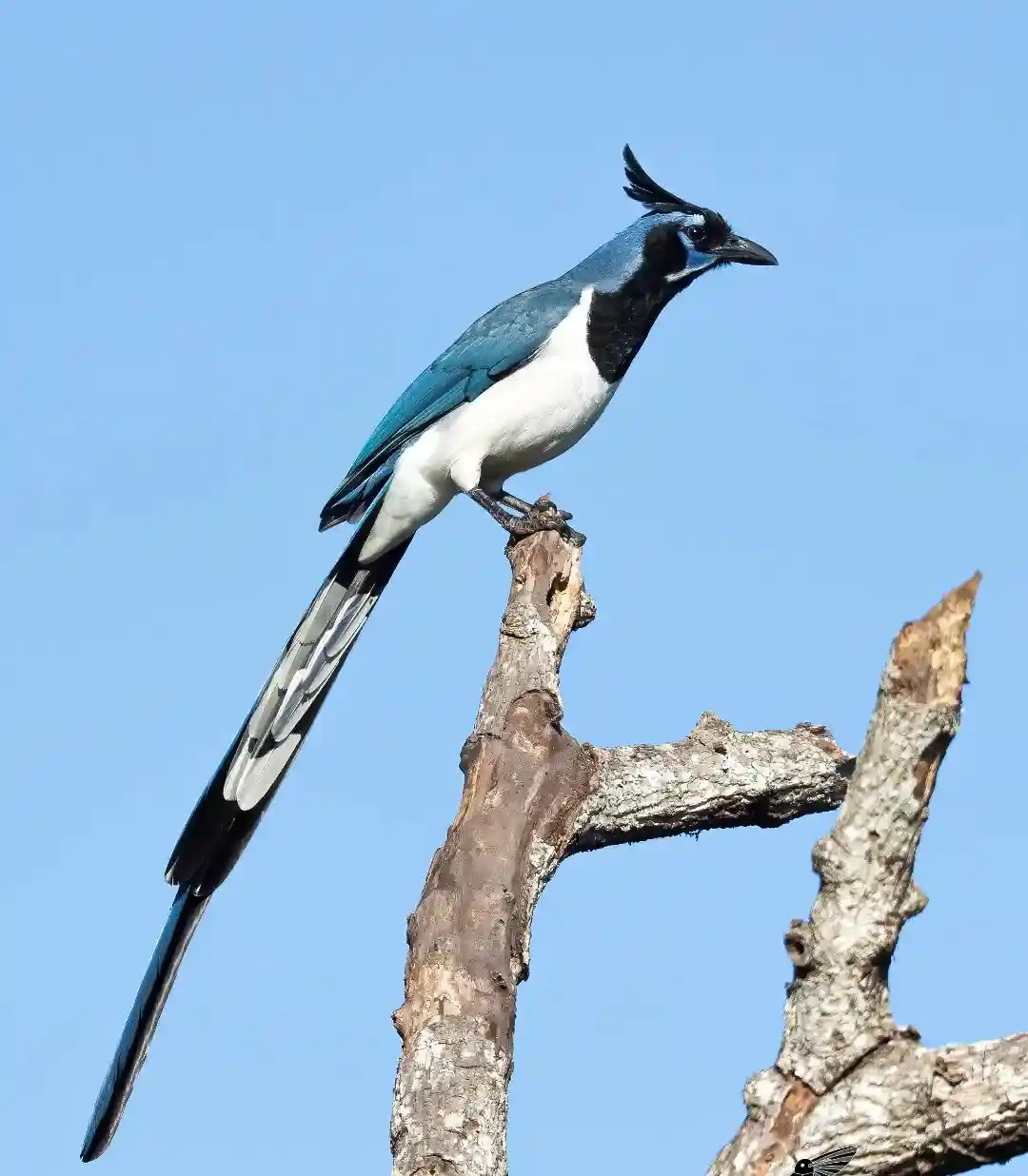
9. Black-throated Magpie-Jay
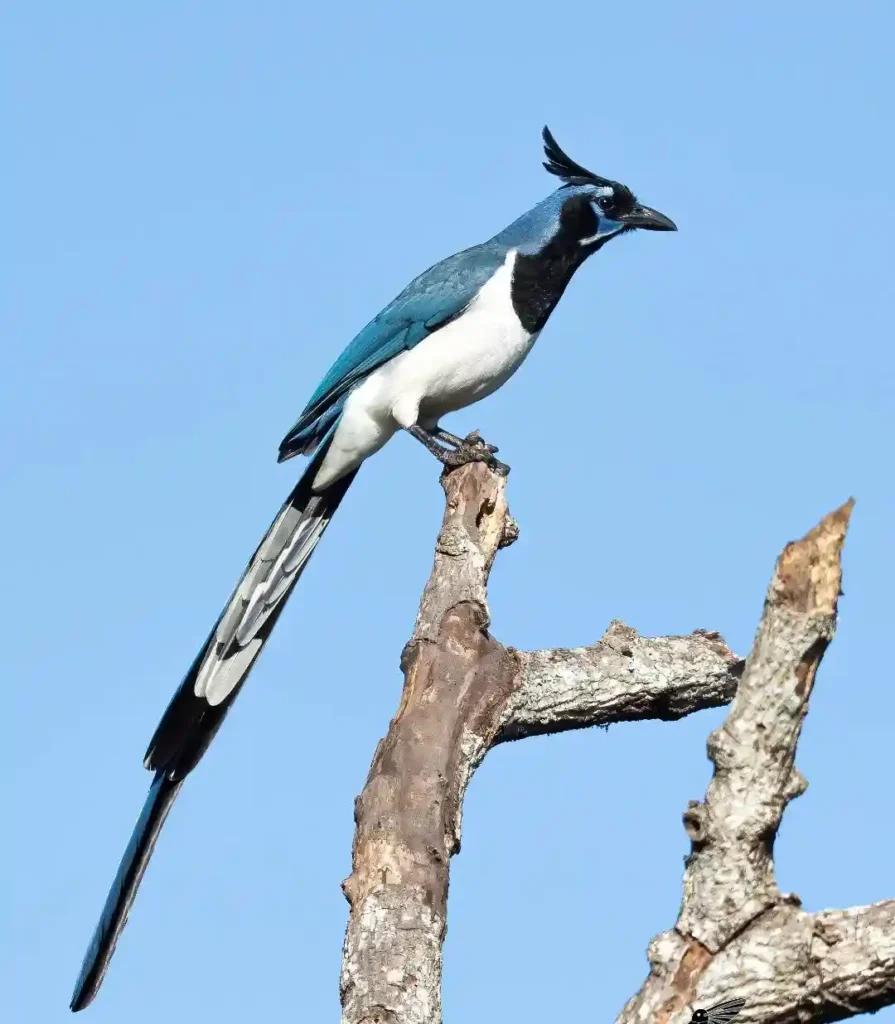
The Black-throated Magpie-Jay is a striking bird with blue, white, black, and a crest, so it can remind some people of a Blue Jay. But it is much longer-tailed and more dramatic in shape.
This bird is native to western Mexico and is sometimes seen in captivity or as an escapee outside its natural range.
How to tell it apart
A Blue Jay has a medium-length tail and compact jay shape. A Black-throated Magpie-Jay has an extremely long tail, a black throat, and a more stretched body shape.
Best field mark: Very long tail and black throat.
10. Belted Kingfisher
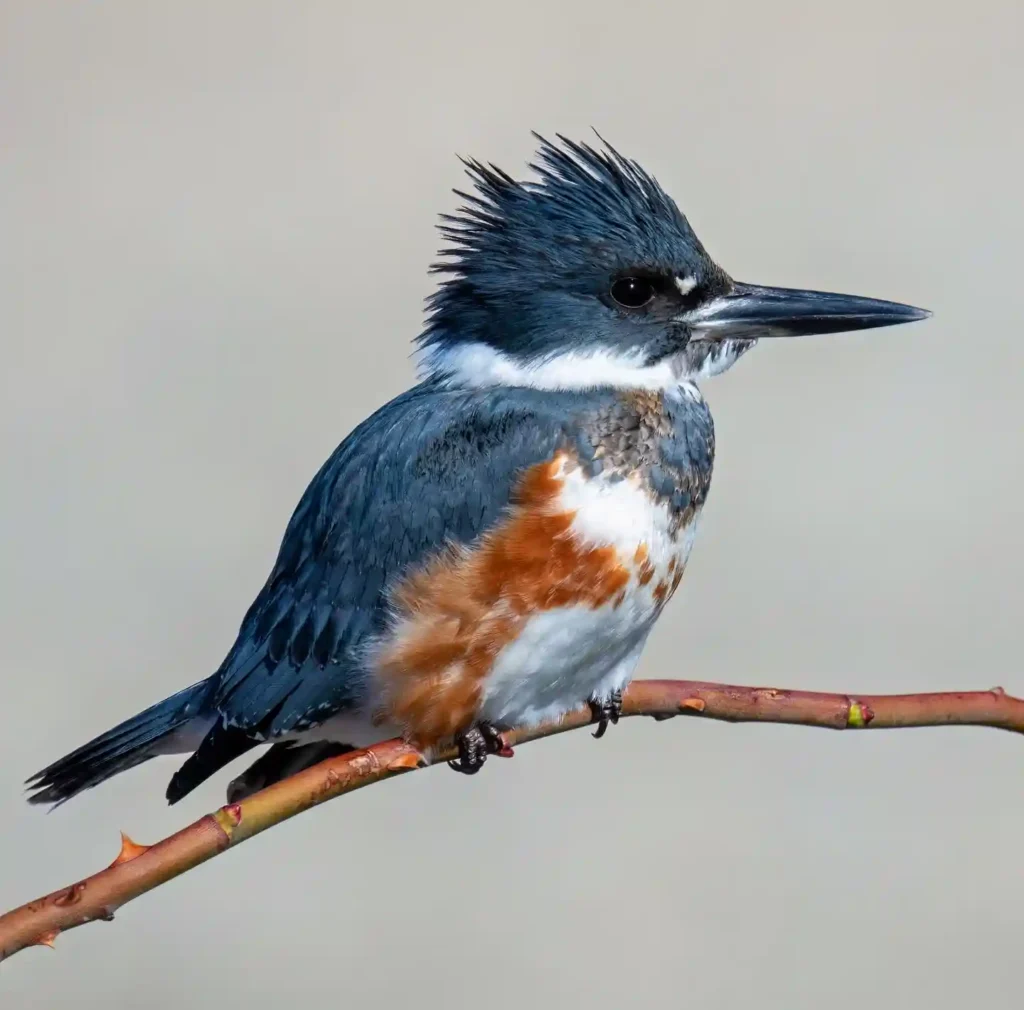
The Belted Kingfisher is not a jay, but many casual birdwatchers confuse it with one because it has blue-gray coloring, a shaggy crest, white underparts, and a loud call.
The shape gives it away quickly. A Belted Kingfisher has a large head, thick dagger-like bill, short legs, and often perches near water before diving for fish.
How to tell it apart
A Blue Jay often moves through trees, yards, and feeders. A Belted Kingfisher is usually near rivers, ponds, lakes, or shorelines. Its oversized bill and fishing behavior make it easy to separate.
Best field mark: Large bill and water-side hunting behavior.
Blue Jay vs. Scrub-Jay: The Simple Difference
| Feature | Blue Jay | Scrub-Jay |
| Crest | Yes | No |
| Necklace | Strong black necklace | Weak, partial, or absent |
| Body pattern | Blue, white, and black | Blue, gray, white, sometimes gray-brown |
| Range | Eastern and central North America | Mostly western U.S. or Florida, depending on species |
| Feeder behavior | Common at feeders | May visit feeders, especially in western areas |
How to Identify a Blue Jay Lookalike Fast
Start with the crest. A real Blue Jay has a noticeable crest. If the bird is blue but has a smooth round head, think scrub-jay, Pinyon Jay, Mexican Jay, or another jay.
Next, check the black necklace. Blue Jays have a clear black collar around the throat and sides of the head. Many similar jays do not.
Then check your location. A Blue Jay is common in much of the eastern and central United States and parts of southern Canada. Western blue jays are often Steller’s Jays, California Scrub-Jays, or Woodhouse’s Scrub-Jays instead.
Finally, watch behavior. Blue Jays often visit feeders, carry peanuts, call loudly, and move through trees in a bold, alert way. Similar jays can act bold too, but their shape and markings usually give them away.
FAQs
What bird looks most like a Blue Jay?
The Steller’s Jay looks most like a Blue Jay because it has a crest, blue body, long tail, and loud jay behavior. The easiest difference is the dark head and upper body of the Steller’s Jay.
What bird looks like a Blue Jay but has no crest?
California Scrub-Jay, Woodhouse’s Scrub-Jay, Florida Scrub-Jay, Mexican Jay, and Pinyon Jay can all look like Blue Jays without a crest.
What bird looks like a Blue Jay but is gray?
Canada Jay, Mexican Jay, and Woodhouse’s Scrub-Jay can look grayish compared with a Blue Jay. Canada Jays are mostly gray with a white face, while Woodhouse’s and Mexican Jays are more blue-gray.
Are Blue Jays and Scrub-Jays the same?
No. They are related because they are jays, but they are different birds. Blue Jays have crests and bold black-white-blue markings. Scrub-jays usually have no crest and look more blue-gray or blue-brown.
What bird looks like a Blue Jay in California?
In California, the most likely Blue Jay lookalikes are the California Scrub-Jay and Steller’s Jay. California Scrub-Jays have no crest, while Steller’s Jays have a dark crest and dark head.
