
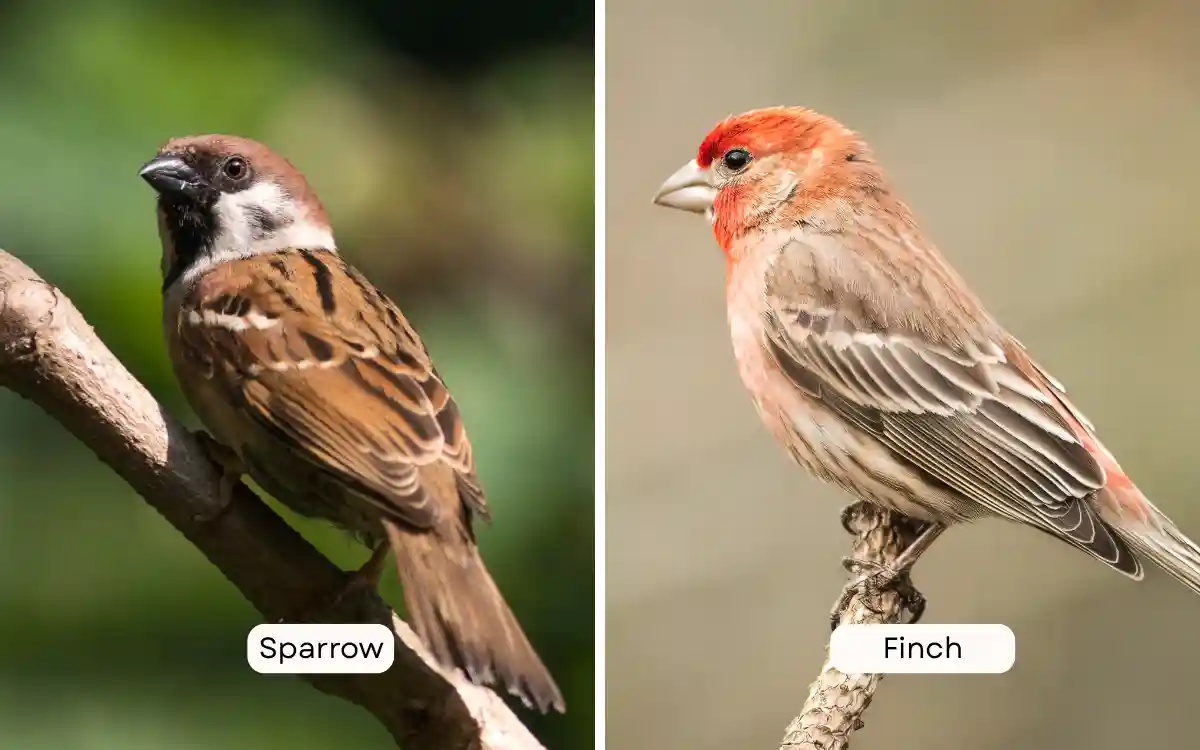
Sparrows and finches are two of the most common small birds people see in yards, parks, gardens, and feeders. They can be confusing because many are small, brownish, streaky, and seed-eating.
The fastest way to tell them apart is this: finches usually have thicker, more cone-shaped bills and often look more colorful, while sparrows are usually browner, more patterned, and often spend more time on the ground or in low cover.
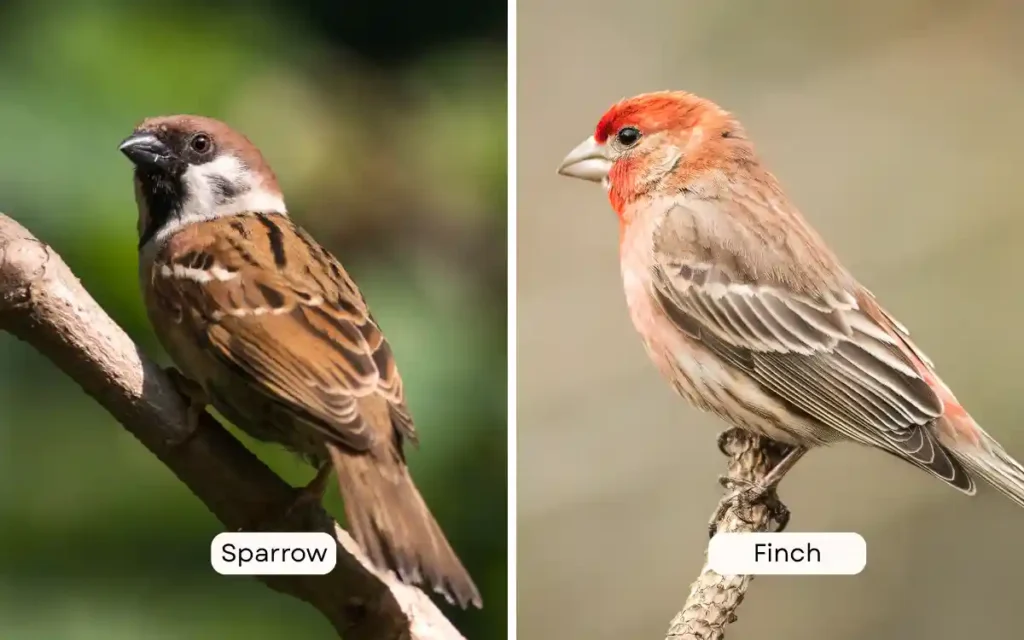
A House Finch male may show red on the head and chest, while a House Sparrow male has a gray crown, white cheeks, chestnut neck, and black bib. Cornell describes House Sparrows as chunky birds with round heads and stout bills, while House Finches often gather at feeders and shell seeds with rapid bites.
Quick Difference Table
| Feature | Sparrow | Finch |
| Overall look | Brown, streaky, patterned | Often cleaner or more colorful |
| Bill shape | Short, stout, often less sharply conical | Thick, cone-shaped seed-cracking bill |
| Common colors | Brown, tan, gray, black, white | Red, yellow, purple, brown, olive |
| Behavior | Ground feeding, scratching, hopping in cover | Feeder flocks, seed heads, trees |
| Feeder style | Ground/platform feeding | Tube feeders, nyjer, sunflower |
| Body shape | Often chunky, round-headed | Often slimmer or more compact |
| Best clue | Brown pattern + ground behavior | Cone bill + color + feeder flock |
| Common example | House Sparrow, Song Sparrow | House Finch, American Goldfinch |
Sparrow
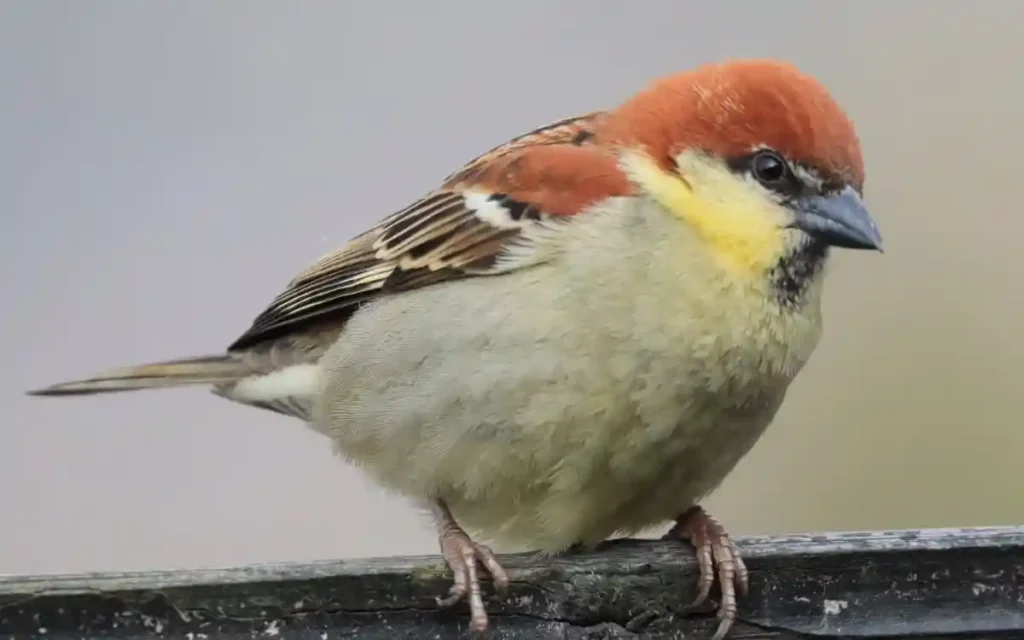
Quick ID: Small brown or gray-brown bird, often streaky, with a stout bill and ground-feeding behavior.
What It Looks Like:
Sparrows are usually brown, tan, gray, black, or white with streaks, stripes, or face patterns. Some sparrows look plain, while others have bold head stripes or chest markings. House Sparrows are chunky, full-breasted birds with round heads and stout bills; males have a gray crown, white cheeks, chestnut neck, and black bib.
Where You’ll Find It:
Sparrows can be found in yards, cities, farms, fields, grasslands, marsh edges, roadsides, brush piles, and woodland edges. House Sparrows especially stay close to people and are common around buildings, sidewalks, parking lots, and outdoor dining areas. Audubon notes that House Sparrows are strongly associated with humans and are widespread in urban and farming areas.
Behavior Clues:
Many sparrows feed on or near the ground. They hop through grass, scratch in leaf litter, pick seeds from weeds, and hide in shrubs or low cover. Some visit feeders, but they often prefer platform feeders, ground seed, or spilled seed under feeders.
How to Tell It Apart:
Compared with finches, sparrows usually look more brown and patterned. They often show stripes on the head, streaks on the back, or markings on the chest. They may also seem more secretive and ground-based.
Best Time to See:
Many sparrows are visible year-round, depending on species and location. Migration and winter can bring more sparrow species into fields, brushy areas, and feeders.
Backyard Tip:
Leave some native grasses, seed heads, shrubs, and leaf litter. Sparrows like natural cover and ground-level feeding areas.
Related article: Sparrow Symbolic Meaning
Finch
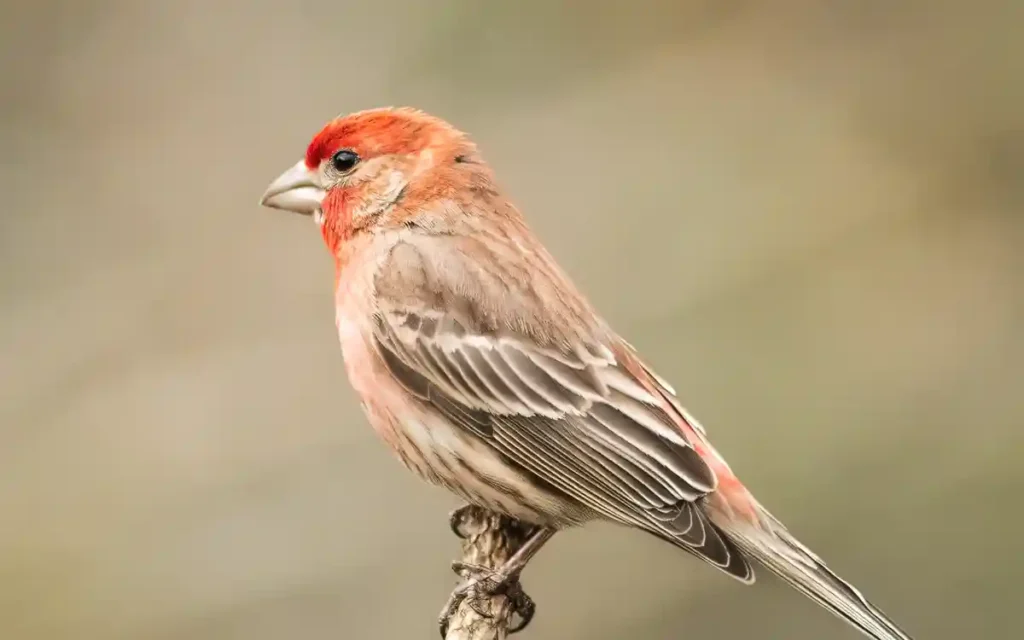
Quick ID: Small seed-eating bird with a cone-shaped bill; many species show red, yellow, purple, or strong streaking.
What It Looks Like:
Finches often have strong conical bills built for cracking seeds. Some are colorful, like American Goldfinches and male House Finches. Others are brown and streaky, especially females and young birds. Male House Finches often show red on the face, eyebrow, throat, and chest, while females are gray-brown and streaked. Audubon notes that female and young House Finches have blurry streaks below, while House Sparrows lack that same streaked-underpart look.
Where You’ll Find It:
Finches are common in backyards, gardens, parks, open woods, weedy fields, orchards, and feeder areas. House Finches often gather at feeders or perch high in nearby trees.
Behavior Clues:
Finches often feed in flocks. They may sit at tube feeders, cling to seed heads, or perch in trees while shelling seeds. House Finches move fairly slowly at feeders and crush seeds with quick bites. Their flight can look bouncy, which is common in many finches.
How to Tell It Apart:
Compared with sparrows, finches often show more color and a more obvious seed-cracking bill. Male finches may show red, yellow, or purple tones. Female finches can be harder, but they often have stronger streaking below than House Sparrows.
Best Time to See:
Many finches visit feeders year-round, though some species are seasonal or move around depending on food supply.
Backyard Tip:
Offer black oil sunflower seed, sunflower chips, or nyjer seed. Leave seed-bearing flowers like sunflowers, coneflowers, and native grasses.
Read also: American Goldfinch vs Lesser Goldfinch
Fast ID: Sparrow or Finch?
| What You Saw | More Likely Bird |
| Small red bird at feeder | Finch |
| Yellow bird eating nyjer seed | Finch |
| Brown bird with black bib near buildings | House Sparrow |
| Brown bird scratching under shrubs | Sparrow |
| Streaky brown female with red male nearby | House Finch |
| Bird hopping around sidewalk cafés or parking lots | House Sparrow |
| Bird clinging to seed heads | Finch |
| Bird with bold head stripes in brush | Sparrow |
| Flock at tube feeder | Finch |
| Brown bird feeding on ground under feeder | Could be sparrow; check bill and pattern |
Biggest Difference: Color and Pattern
Finches are often more colorful. Think of American Goldfinches, House Finches, Purple Finches, and Lesser Goldfinches.
Sparrows are often more earth-toned. They may look brown, tan, gray, buff, or streaky. Some have bold head stripes, black bibs, rusty caps, or central breast spots.
But color alone is not enough. Female finches can look brown and streaky, which makes them easy to confuse with sparrows.
Bill Shape Difference
Both sparrows and finches eat seeds, so both can have sturdy bills. But finches usually have a more obvious cone-shaped seed-cracking bill.
Sparrow bills are also strong, but many look shorter, less sharply conical, or more blended into a rounder head shape.
My opinion: bill shape is helpful, but not perfect. Use it with color, behavior, and habitat.
House Sparrow vs House Finch
This is the most common backyard confusion.
| Feature | House Sparrow | House Finch |
| Male color | Gray crown, black bib, chestnut neck | Red head, throat, and chest |
| Female color | Plain buffy-brown, less streaked below | Brown-gray with blurry streaks below |
| Bill | Stout, chunky | Conical, seed-cracking |
| Behavior | Around buildings, ground, sidewalks | Feeders, trees, flocks |
| Underparts | Female looks plainer | Female/young birds are streaked |
| Best clue | Black bib on male | Red on male, streaky female |
If the bird is a male with red on the head and chest, it is likely a House Finch. If it is a male with a black bib, gray crown, and chestnut neck, it is likely a House Sparrow.
Female Sparrow vs Female Finch
Females are harder because many are brown.
| Feature | Female Sparrow | Female Finch |
| Color | Brown, tan, buff, gray | Brown or gray-brown |
| Streaking | Often on back, sometimes chest | Often strong blurry streaks below |
| Face | May show eyebrow, crown stripes, cheek pattern | Often plainer face, depending species |
| Bill | Stout but often shorter-looking | More cone-shaped |
| Behavior | Ground, shrubs, cover | Feeders, trees, seed heads |
| Best clue | Face pattern and habitat | Streaked belly and feeder flock |
Do Sparrows and Finches Eat the Same Food?
They overlap, but feeder habits can differ.
| Food | Sparrows | Finches |
| Millet | Yes | Sometimes |
| Cracked corn | Some | Less common |
| Black oil sunflower | Yes | Yes |
| Sunflower chips | Yes | Yes |
| Nyjer seed | Rare | Yes, especially goldfinches |
| Weed seeds | Yes | Yes |
| Insects | Yes, especially during nesting | Some, but seeds are key |
| Berries | Some | Some |
Finches are more strongly linked with tube feeders, sunflower, and nyjer. Sparrows often feed on the ground, on platforms, or around spilled seed.
Common Mistakes
Mistake 1: Calling every small brown bird a sparrow
Many female finches are brown and streaky. Check for a cone-shaped bill, feeder flock behavior, and nearby colorful males.
Mistake 2: Thinking all finches are colorful
Male finches can be bright, but female finches are often brown or gray-brown.
Mistake 3: Ignoring behavior
A bird at a tube feeder may be a finch. A bird scratching under shrubs or hopping on the ground may be a sparrow.
Mistake 4: Confusing House Sparrow with native sparrows
House Sparrows are not the same as native North American sparrows. They are strongly tied to human areas and often look chunkier and more urban than many native sparrows.
Simple Memory Trick
Use this:
Sparrow = brown pattern, ground, brush, chunky look.
Finch = cone bill, feeder flock, often red or yellow.
Final Answer
A sparrow is usually a small brown or gray-brown bird with streaks, stripes, or face markings. Sparrows often feed on the ground, stay near shrubs or buildings, and use low cover.
A finch is usually a small seed-eating bird with a stronger cone-shaped bill. Many finches show red, yellow, purple, or strong streaking, and they often gather at feeders or seed heads.
For fast ID, check color, bill shape, and behavior together. If it is colorful and feeding in a flock at a tube feeder, think finch. If it is brown, patterned, and feeding on the ground or in brush, think sparrow.
FAQs
Is a sparrow the same as a finch?
No. Sparrows and finches are different bird groups, though both are small songbirds and many eat seeds.
How do you tell a House Sparrow from a House Finch?
Male House Sparrows have a gray crown, white cheeks, chestnut neck, and black bib. Male House Finches often have red on the head and chest. Female House Finches are more streaked below than female House Sparrows.
Are finches bigger than sparrows?
Not always. Size overlaps a lot. Some finches are similar in size to sparrows, so size alone is not the best clue.
What small brown bird looks like a sparrow but has streaks?
It may be a female House Finch, Purple Finch, Song Sparrow, Savannah Sparrow, or another small brown bird. Look at the bill, face pattern, habitat, and whether colorful males are nearby.
Do sparrows and finches both come to feeders?
Yes. Finches often use tube feeders with sunflower or nyjer seed. Sparrows often feed on platforms, ground seed, millet, or spilled seed below feeders.
Which is more colorful, sparrow or finch?
Finches are usually more colorful, especially males. Sparrows are usually browner and more patterned, though some sparrows have attractive head stripes and warm tones.
