
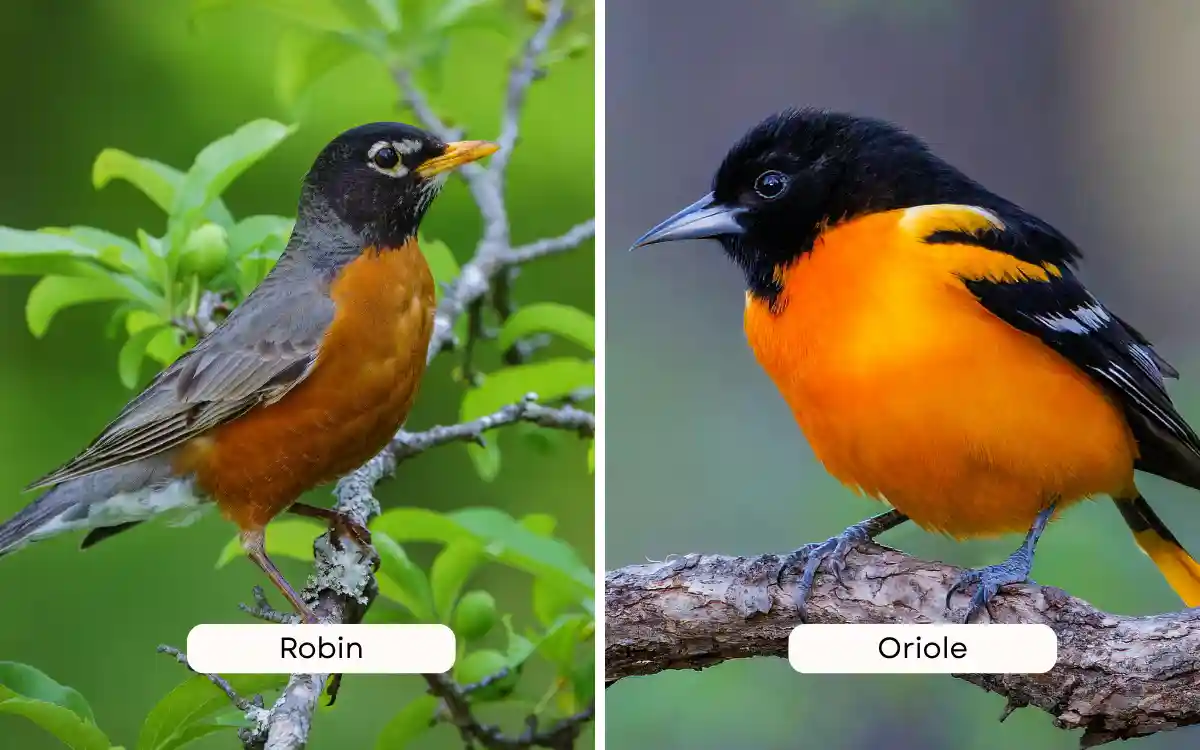
Robins and orioles can both show orange on the body, so it is easy to mix them up from a quick look. But once you know what to check, they are very different birds.
The fastest way to tell them apart is this: American Robins are larger gray-brown birds with warm orange underparts that often walk on lawns, while orioles are smaller, slimmer tree birds with pointed bills, wing bars, and brighter orange or yellow-orange coloring.
A robin is usually seen hopping across grass and pulling worms from the ground. An oriole is more likely to stay in trees, visit orange halves or jelly, and move through branches with a sharper, more slender shape. Cornell describes American Robins as gray-brown birds with warm orange underparts, while male Baltimore Orioles are flame-orange and black with a solid black head and white wing bar.
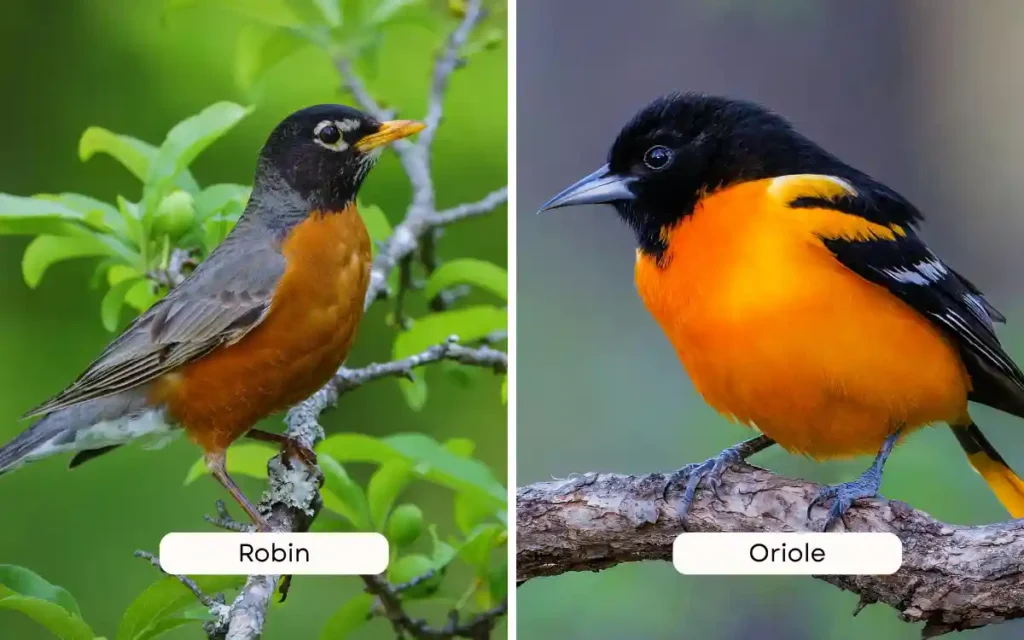
Quick Difference Table
| Feature | American Robin | Oriole |
| Main color | Gray-brown back, orange breast | Orange, yellow-orange, black, or yellow-green |
| Size | Larger and rounder | Smaller, slimmer |
| Bill | Straight, medium, yellowish | Longer, pointed, often dark |
| Wings | Plain gray-brown | Often black or dark with white wing bars |
| Behavior | Hops on lawns, pulls worms | Stays in trees, eats fruit, nectar, insects |
| Feeder food | Rarely uses seed feeders | May visit oranges, jelly, nectar |
| Nest | Cup nest | Hanging woven nest in many orioles |
| Best clue | Orange breast + lawn-hopping | Bright color + pointed bill + trees |
American Robin
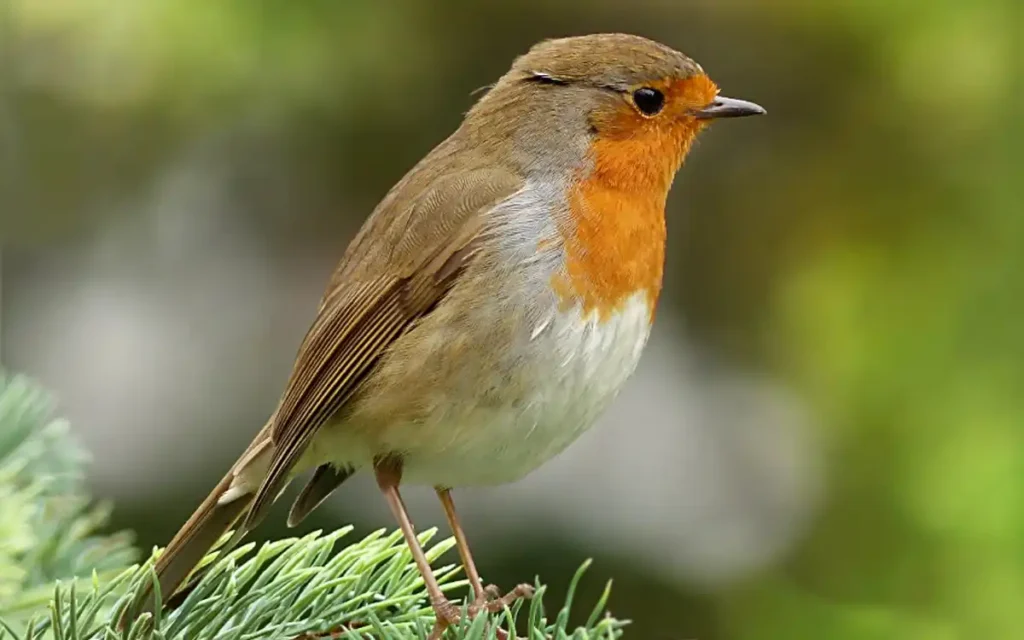
Quick ID: Large gray-brown bird with a warm orange breast and dark head.
What It Looks Like:
American Robins have gray-brown upperparts, a warm orange breast and belly, a dark head, and a yellowish bill. They also show white around the lower belly and under the tail, especially in flight. Males often look darker-headed and richer in color, while females can look slightly duller. Cornell lists American Robins at about 7.9–11 inches long, making them larger than Baltimore Orioles.
Where You’ll Find It:
Look for robins on lawns, parks, golf courses, gardens, open woods, yards, and forest edges. They are one of the most familiar backyard birds across much of North America.
Behavior Clues:
Robins often hop across grass, pause, tilt their heads, and pull worms or insects from the ground. In fall and winter, they may gather in flocks around berry trees.
How to Tell It Apart:
A robin is bulkier and more ground-focused than an oriole. It does not have bold black-and-orange wings like a male Baltimore Oriole or the long pointed bill of an oriole.
Best Time to See:
Robins are easy to see in spring and summer on lawns, but many areas also have them in fall and winter, especially near fruiting trees.
Backyard Tip:
Plant native berry shrubs, keep some leaf litter, and avoid heavy lawn chemicals so worms and insects remain available.
Baltimore Oriole
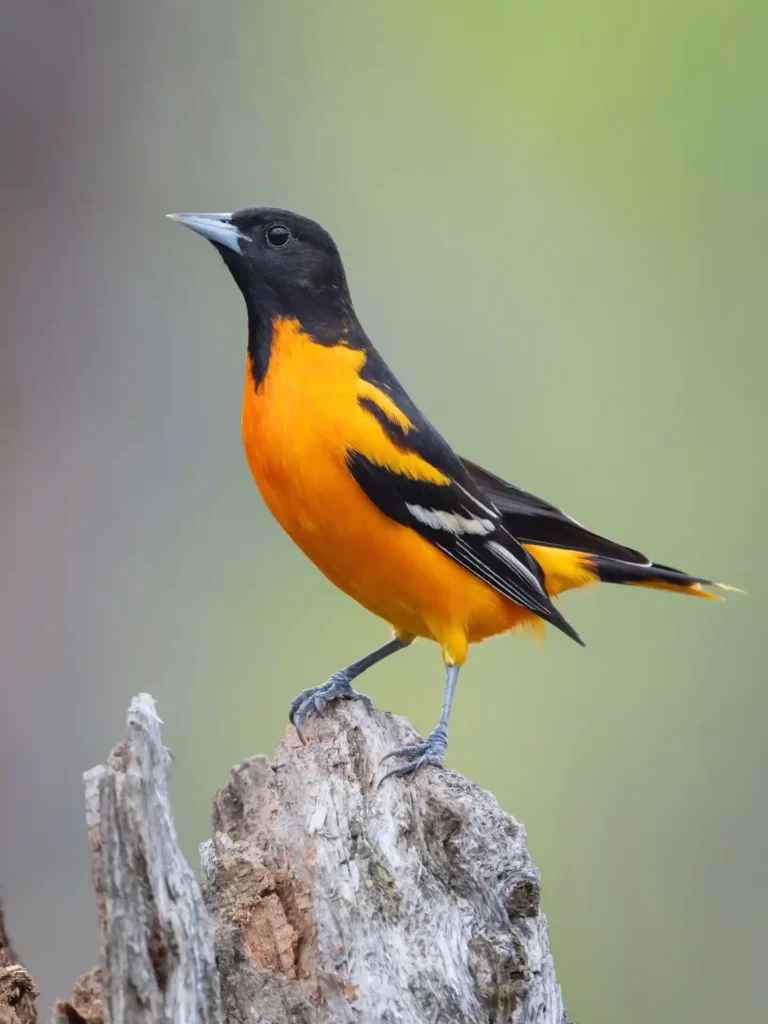
Quick ID: Smaller orange-and-black tree bird with a pointed bill and white wing bar.
What It Looks Like:
Male Baltimore Orioles are bright orange below with a black head, black back, black wings, and a white wing bar. Females and young males are more yellow-orange with grayish or brownish upperparts and two bold white wing bars. Cornell lists Baltimore Orioles at about 6.7–7.5 inches long, smaller and lighter than American Robins.
Where You’ll Find It:
Look for Baltimore Orioles in open woods, parks, orchards, riverside trees, backyards, and tall shade trees.
Behavior Clues:
Orioles often stay higher in trees than robins. They may visit orange halves, grape jelly, nectar feeders, flowering trees, and fruiting plants.
How to Tell It Apart:
The pointed bill, bright orange-and-black pattern, and white wing bars separate it from a robin. A robin has a gray-brown back and spends much more time on the ground.
Best Time to See:
Spring migration and breeding season are usually best. Orioles are often easiest to attract soon after they arrive in spring.
Backyard Tip:
Offer orange halves, keep nectar feeders clean, and plant native fruiting trees or berry shrubs.
Related article: Birds That Look Like Robins
Fast ID: Which Bird Did You See?
| What You Saw | More Likely Bird |
| Orange breast bird hopping on lawn | American Robin |
| Orange bird high in tree | Oriole |
| Bird pulling worms from grass | American Robin |
| Bird eating orange halves or jelly | Oriole |
| Larger gray-brown bird | American Robin |
| Smaller slim bird with pointed bill | Oriole |
| Black-and-orange male with wing bar | Baltimore Oriole |
| Yellow-orange female with wing bars | Female oriole |
| Bird with hanging woven nest | Oriole |
| Bird in cup nest on branch or ledge | American Robin |
Biggest Difference: Shape and Behavior
Color can trick you. Shape and behavior are more reliable.
American Robin: bigger, rounder, often on the ground.
Oriole: slimmer, sharper-billed, usually in trees.
If the bird is walking across a lawn, it is probably a robin. If it is feeding in flowering trees or visiting orange halves, it is probably an oriole.
Robin vs Female Oriole
Female orioles create most of the confusion because they can look yellow-orange instead of bold black-and-orange.
| Feature | American Robin | Female Baltimore Oriole |
| Body shape | Larger, rounder | Smaller, slimmer |
| Back | Gray-brown | Grayish, brownish, or olive-toned |
| Wing bars | Not bold | Usually clear white wing bars |
| Bill | Medium, yellowish | Longer and pointed |
| Behavior | Hops on ground | Moves through trees |
| Food | Worms, insects, berries | Fruit, nectar, insects |
My opinion: wing bars and bill shape are the best clues for female orioles. If the bird has strong white wing bars and a long pointed bill, it is not a robin.
Robin vs Male Oriole
Male orioles are much easier.
A male Baltimore Oriole has a black head, black wings, bright orange body, and white wing bar. A robin has a gray-brown back, dark head, orange breast, and no bold black-and-orange wing pattern.
Do Robins and Orioles Eat the Same Food?
They overlap a little, but their feeding style is different.
| Food | Robin | Oriole |
| Worms | Yes | Rarely |
| Ground insects | Yes | Sometimes |
| Tree insects | Sometimes | Yes |
| Berries | Yes | Yes |
| Orange halves | Rare | Yes |
| Grape jelly | Rare | Yes |
| Nectar | No | Yes |
| Seeds | Not a main food | Not a main food |
Nest Difference
Robins build open cup nests made from grass, twigs, and mud. They may nest in trees, shrubs, ledges, gutters, or other supported spots.
Many orioles, including Baltimore Orioles, build hanging woven nests that dangle from tree branches. This nest shape is one of the best signs that orioles are nearby.
Common Mistakes
Mistake 1: Calling every orange bird a robin
A robin has an orange breast, but orioles, tanagers, and some thrushes can also show orange or warm coloring.
Mistake 2: Ignoring where the bird is feeding
Ground bird on lawn usually points to robin. Tree bird eating fruit or nectar often points to oriole.
Mistake 3: Confusing female orioles with robins
Female orioles are yellow-orange and less bold than males. Check for white wing bars and a pointed bill.
Mistake 4: Using size without context
Robins are larger than Baltimore Orioles, but size can be hard to judge unless another bird is nearby. Use size with behavior and markings.
Simple Memory Trick
Use this:
Robin = orange belly, gray-brown back, lawn hopper.
Oriole = orange or yellow-orange tree bird with pointed bill and wing bars.
FAQs
Is an oriole the same as a robin?
No. Orioles and robins are different birds. American Robins are thrushes, while American orioles are in the blackbird family.
What bird looks like a robin but is more orange?
A Baltimore Oriole, Orchard Oriole, or some tanagers may look more orange than a robin. Check for black wings, wing bars, and a pointed bill.
Which is bigger, a robin or an oriole?
The American Robin is bigger. Cornell lists American Robins at 7.9–11 inches long, while Baltimore Orioles are 6.7–7.5 inches long.
Do robins eat oranges like orioles?
Robins may eat fruit and berries, but they are not regular orange-half feeder birds like orioles. Orioles are much more likely to visit oranges, jelly, and nectar.
How do you tell a female oriole from a robin?
A female oriole is slimmer, has a longer pointed bill, and usually shows white wing bars. A robin is larger, rounder, gray-brown above, and often hops on lawns.
Do robins and orioles both have orange breasts?
Yes, but the pattern is different. Robins have a warm orange breast with a gray-brown back. Orioles often show brighter orange or yellow-orange with dark wings and wing bars.
