
Bird identification gets confusing fast. Two birds can share a color, a size, or a backyard, and suddenly you’re not sure what you’re looking at.
Most look-alike confusion breaks down into a handful of predictable patterns color, size, family, or habitat overlap. Once you know which pattern you’re dealing with, the ID gets a lot easier.
Use the groups below to find your birds fast, or run through the checklist first if you’re not sure where to start.
The 4-Point ID Checklist
Before you dive into a specific comparison, check these four things in order. In most cases, the first two alone will solve the ID.
- Bill shape — Thick and cone-shaped points to a seed-eater. Thin, pointed, or curved points to an insect-eater.
- Tail position — Held flat and relaxed, or cocked upward? A raised tail narrows things down fast.
- Behavior — Ground-feeding and hopping is different from probing bark, hawking insects mid-air, or creeping through brush.
- Habitat — Open lawn and feeders vs. brush, woodpiles, and dense cover point to very different birds even when color looks similar.
Each guide below walks through this same framework for its specific pair, so once it clicks once, it clicks everywhere.
Confused by Red
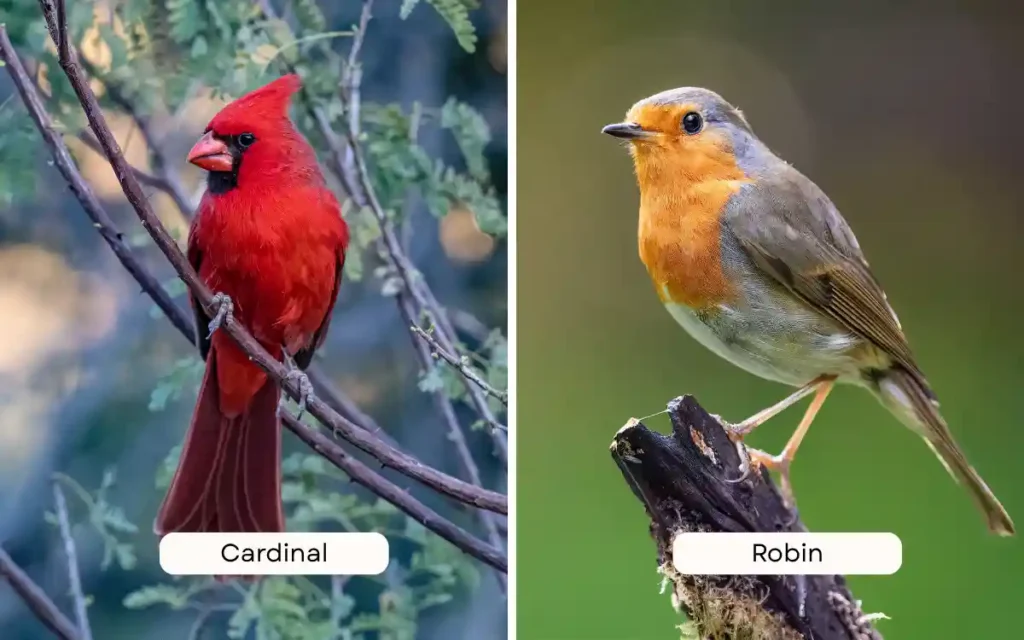
Red is one of the most eye-catching colors in the backyard which means it’s also one of the most misidentified.
- Cardinal vs Robin — red body vs. orange breast, an easy fix once you know what to check
- Cardinal vs Tanager — both bright red, but bill shape and crest settle it
- Blue Jay vs Cardinal — two of the most recognizable backyard birds, compared head-to-head
- Birds That Look Like Cardinals — every red or crested look-alike in one place
Confused by Orange & Warm Tones
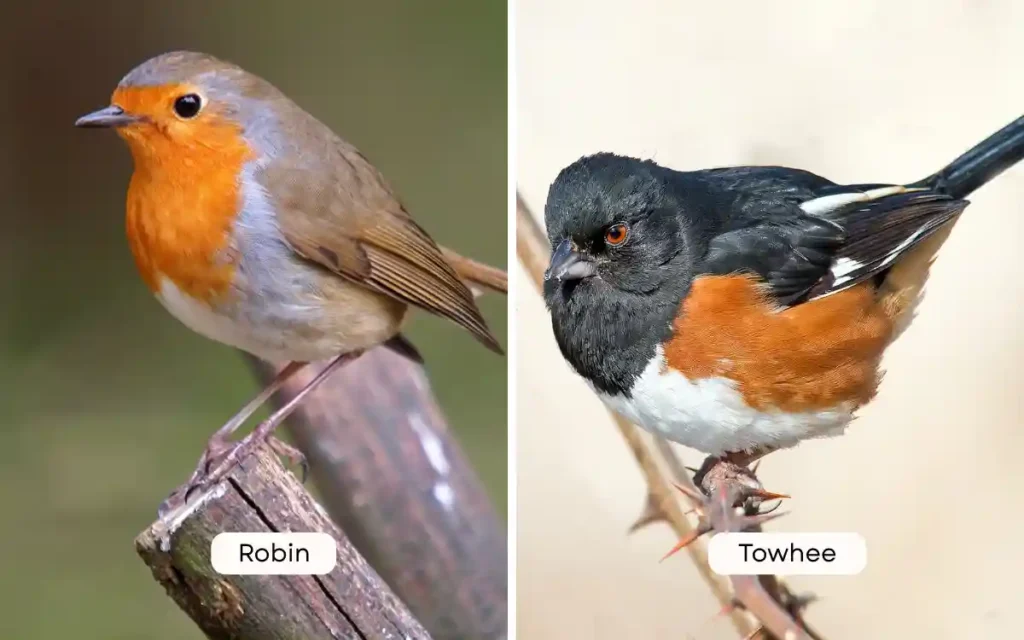
- Robin vs Towhee — both show warm orange, but very different size and shape
- Robin vs Oriole — orange breast vs. orange body, easy to confuse from a distance
- Birds That Look Like Robins — the full lineup of robin-colored look-alikes
Confused by Blue
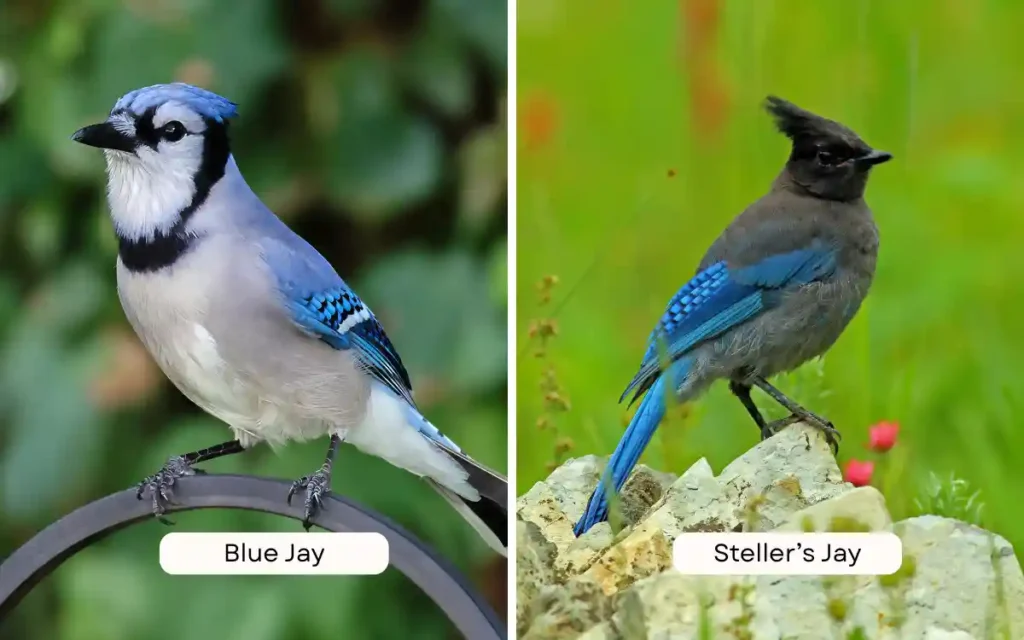
- Blue Jay vs Steller’s Jay — same family, split by range and head pattern
- Birds That Look Like Blue Jays — every blue-crested look-alike side by side
Confused by Yellow
- Yellow Warbler vs Goldfinch — both solid yellow, bill shape and wing pattern are the tell
- American Goldfinch vs Lesser Goldfinch — size and breeding-male color are the fastest clues
Confused by “Small and Brown”
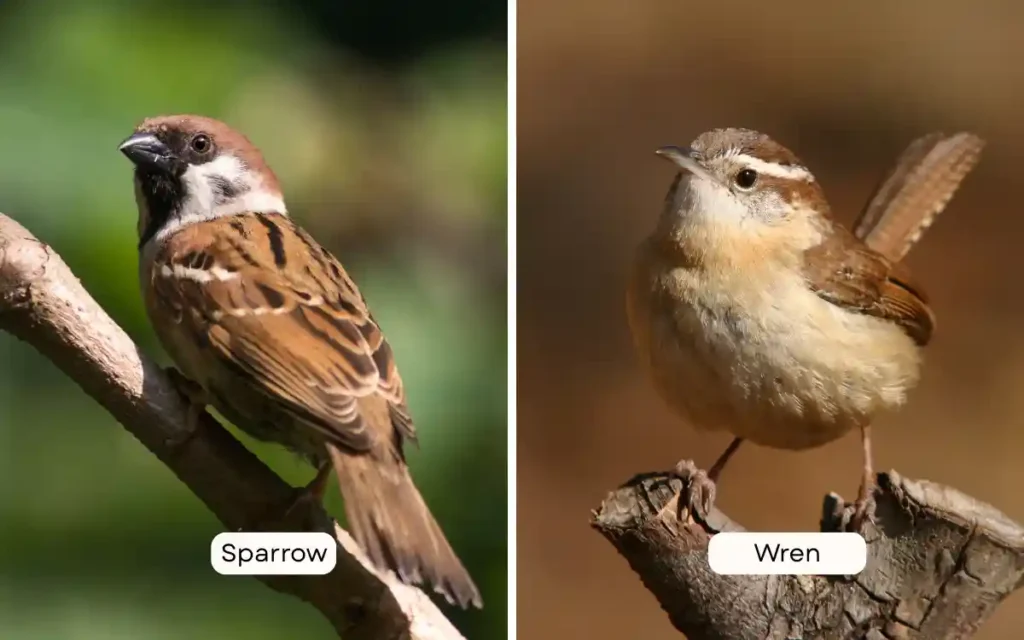
The hardest category — small brown birds all start to look the same until you check bill shape and behavior.
- Sparrow vs Wren — thick seed bill vs. thin curved bill is the fastest tell
- Sparrow vs Finch — both streaky and seed-eating, color and bill shape are key
Same Family, Subtle Differences
These birds are close relatives or near-identical builds, so the differences come down to range, song, or a single field mark.
- Robin vs Thrush — a Robin is a thrush, so this is really “Robin vs other thrushes”
- Eastern Meadowlark vs Western Meadowlark — nearly identical, song and range are the real ID
- Western Tanager vs Summer Tanager — males are easy, females take a closer look
Unexpected Comparisons
Not every mix-up is about looking alike — sometimes it’s about two birds sharing a niche or a surprising trait people search to compare.
- Hummingbird vs Kingfisher — wildly different sizes, but both fast, colorful, and often confused by new birders
More Comparisons Coming Soon
We’re regularly adding new guides for the pairs birders ask about most woodpeckers, hawks, finches, and more. Check back or explore the categories above for the comparison you need right now.